By AvikIn Fashion17 min read
Green suit color combinations are the shirt, tie, shoe, belt, and accessory colors you pair with a green suit so the whole outfit looks deliberate. The short answer is simple. Start with a white shirt, wear brown shoes with olive, forest, and sage, and save black shoes for very dark green at formal events. Navy, burgundy, brown, and charcoal ties rarely fail. Everything else is fine tuning by shade, occasion, and season.
Green is harder to style than navy or gray because it is a color, not a neutral. A forest suit and an emerald suit behave differently, and a mint suit plays by different rules than both. This guide explains why green needs more thought, gives you a step-by-step method for building an outfit, and lists pairings for each shade. It then covers shirts, ties, shoes, and accessories, how to match the occasion and season, and the mistakes that spoil a good suit.
At ShirtsMockup we build PSD mockups of suits, jackets, and dress shirts for designers and menswear brands. The last section shows how to apply that same test-first habit to a green suit, whether you are a designer building a collection or a brand preparing product images.
Why green suits need more thought than navy or gray
Green suit color combinations need more care because green is a true color with an undertone, not a neutral. Navy, charcoal, and gray sit close to neutral, so almost any shirt and tie works with them. Green reacts to every color near it, and three things control that reaction: its undertone, its shade, and the number of colors you add.
Undertone decides what sits well beside green
Every green leans warm or cool. Olive, sage, and moss lean yellow, which makes them warm and earthy. Emerald, hunter, and teal-leaning greens lean blue, which makes them cooler and richer. That lean explains most of the pairing advice you will read.
Warm greens look natural next to cream, tan, camel, and brown. Cool greens look sharper next to crisp white, light blue, gray, and navy. Neither group is off limits to the other, but when you are unsure, follow the lean and you will rarely go wrong.
Shade sets the level of formality
Dark greens sit close to navy and charcoal in formality. A forest or hunter green suit can go to an office, a wedding, or a dinner. Brighter, richer greens like emerald belong at evening events and celebrations. Light greens such as sage and mint read as spring and summer suits, and they suit daytime, outdoor, and relaxed events better than a boardroom.
So decide where the suit is going before you choose a shirt. A white shirt and brown shoes work across the whole range, but the tie, texture, and finishing details change with the formality of the event.
The three-color rule keeps the outfit calm
The easiest way to avoid a busy outfit is to count colors. Count the suit, the shirt, and the tie. Three is the limit. Shoes and belt are leather and simply match each other, so they act as a base and not as a fourth color.
A forest suit with a white shirt and a burgundy tie passes the test. Add a mustard pocket square and patterned socks and it fails. This rule also answers the common question about which colors pair best with green. Pick one supporting color and one accent, and let neutrals do the rest.
Treat the green suit as the one loud piece and keep every other item quieter than the suit.
How to build a green suit outfit step by step
Build the outfit in a fixed order: shade, occasion, shirt, tie, then leather. Each choice narrows the next one, so you never face the whole wardrobe at once.
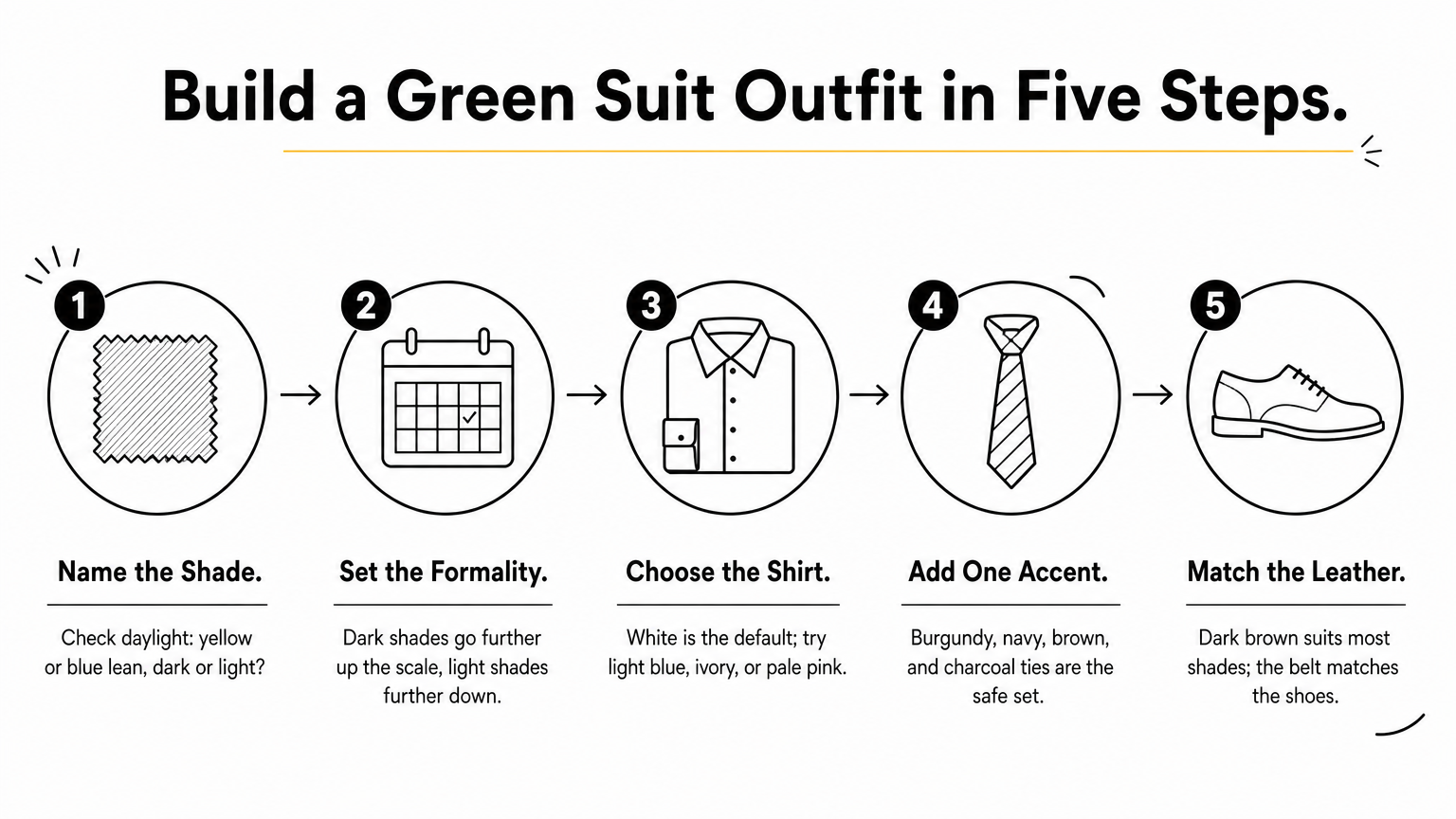
The five steps
Name the shade. Look at the suit in daylight. Does it lean yellow (olive, sage) or blue (emerald, hunter)? Is it dark or light?
Set the formality. Decide whether the event is an office day, a wedding, an evening dinner, or a relaxed daytime gathering. Dark shades go further up the scale, light shades further down.
Choose the shirt. White is the default. Move to light blue, ivory, or pale pink once you know your shade.
Add one accent with the tie. Burgundy, navy, brown, and charcoal are the safe set. Skip the tie only at relaxed events.
Match the leather. Dark brown suits most shades. Black is for very dark greens at formal events. The belt matches the shoes.
Finish with a mirror check. You should see three colors at most, enough contrast between shirt and suit that the two do not blur, and no accessory fighting for attention.
A worked example
Take a forest green two-piece for an autumn evening wedding. Wear a white shirt, a burgundy tie, a white pocket square, and dark brown cap-toe oxfords with a matching belt. The color count is green, white, and burgundy, so it passes. White gives contrast against the dark cloth, burgundy is deep enough to sit beside dark green, and the brown leather adds warmth.
Now move the same plan to a spring garden wedding with a sage suit. Swap in an ivory shirt, a brown or navy tie, and medium brown shoes. The structure is identical. Only the depth of each color changes to match the lighter suit.
Does the same method work for a woman's green suit?
Yes. The logic of undertone, shade, and three colors does not depend on the wearer. Replace the dress shirt with a silk blouse, a fine knit, or a shell in white, ivory, blush, or camel. Choose shoes in brown, black, or a neutral tone that matches the formality of the event.
Jewelry works like a tie. Gold tends to flatter emerald and olive, and silver tones sit well with cooler, darker greens. Keep to one metal and one accent so the suit stays the focus.
Work in order, shade first and leather last, and every choice gets easier than the one before.
Green suit color combinations by shade
The pairings below cover the shades people search for most. Use the table for a fast answer, then read the notes for the shade you own.
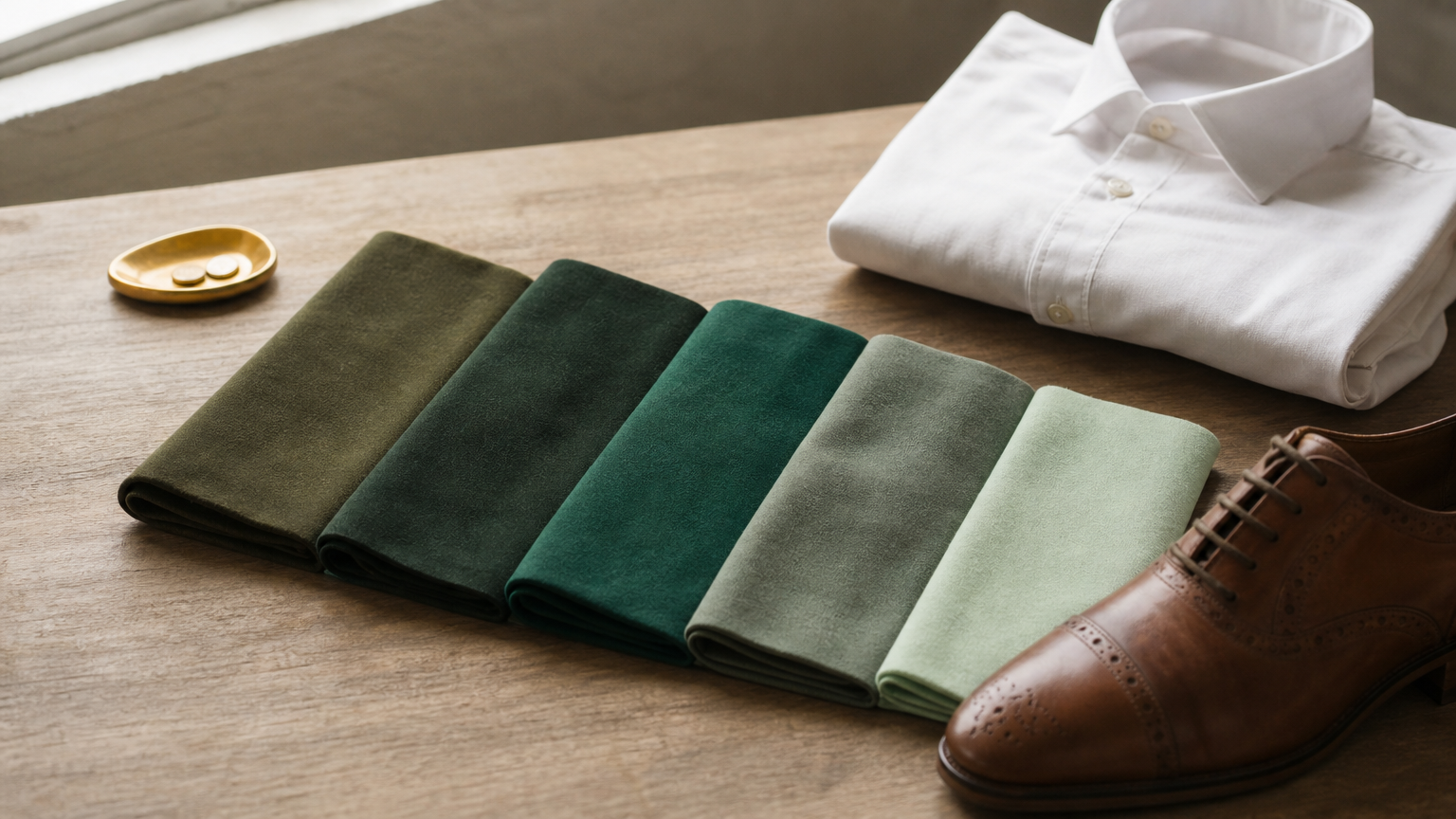
Quick reference table
Suit shade | Shirt | Tie | Shoes | Best for |
|---|---|---|---|---|
Forest or hunter green | White, ivory, light blue | Burgundy, navy, charcoal | Dark brown, black for formal | Weddings, dinners, office |
Olive green | White, light blue, cream, pale pink | Navy, brown, burgundy | Medium to dark brown | Work, smart casual, daytime |
Emerald green | White, ivory | Navy, burgundy, black | Dark brown or black | Evening events, weddings |
Sage green | Ivory, white, pale pink | Navy or brown | Medium brown, tan | Spring and summer weddings |
Mint or light green | White, cream | Navy or brown | Medium brown | Warm-weather daytime events |
The most reliable combination across every row is a white shirt with brown shoes. Treat the other columns as ways to adjust formality, not as strict rules.
Dark green and forest green suits
A dark green suit is the easiest shade to dress up because its depth lets it borrow what works with navy and charcoal. A white shirt with a burgundy or navy tie is the classic answer. Light blue softens the look for daytime business settings, and a charcoal tie gives a quiet, modern finish.
For shoes, dark brown gives a warmer result and black gives a sharper one. Pick black when the dress code is strict, such as a black-tie-optional dinner. Pick brown for everything else.
Olive green suits
Olive has a warm, relaxed character, so it pairs best with earthy neutrals. White sharpens it, light blue adds gentle contrast, and cream or beige keeps the palette tonal. Pale pink can work for a spring look if the pink is muted and the suit is not too dark.
Because olive and earth tones sit close together, give the shirt and suit enough contrast to avoid a flat outfit. Medium to dark brown shoes work well, and a brown or navy tie keeps the palette grounded. Olive is also the shade that dresses down most easily, since it looks natural with an open collar.
Emerald green suits
Emerald is rich and bright, so the rest of the outfit should stay simple. A crisp white or ivory shirt gives it the clean contrast it needs. A navy, burgundy, or black tie keeps the suit as the star.
This shade shines at evening events and weddings, and gold details such as cufflinks or a tie bar suit it well. Avoid stacking other bold colors with it. One strong color per outfit is enough, and emerald already supplies it.
Sage and light green suits
Sage, mint, and pistachio feel soft and seasonal. Ivory, cream, and white are the easiest shirts. A muted pale pink adds gentle contrast, particularly for a spring wedding.
Keep the tie navy or brown and the shoes medium brown or tan. These suits look best in lightweight fabrics such as linen or a cotton blend, which suit the warm weather where lighter greens belong.
Match the formality and depth of every item to the suit's shade, and darker greens will carry more contrast than lighter ones.
Best shirt colors for a green suit
White is the best all-round shirt for a green suit, and light blue, ivory, cream, and pale pink are the next most useful options. The shirt sits between the suit and your face, so it decides how much contrast and warmth the outfit has.
White and ivory
White is the safest choice for every green shade. It creates the strongest clean contrast without competing with the suit, which is why it works for business, weddings, and formal evenings alike.
Ivory and cream are warmer alternatives. They suit forest, emerald, olive, and sage, and they give a softer look for weddings and seasonal events. If your suit leans warm, ivory often looks more natural than stark white.
Light blue, gray, and pale pink
Light blue works especially well with olive and muted dark greens. It feels softer than white and suits daytime business settings. Light gray gives a modern, understated look with olive.
Pale pink needs restraint. It works when both shirt and suit are muted, such as sage or olive, and it suits spring weddings. Keep the tie and pocket square simple so the outfit does not turn sugary.
Black, brown, and bold shirts
A black shirt is the most debated option. It can look sharp with a very dark green suit at an evening event, but the result is heavy and fashion-forward, so keep accessories minimal and skip it at the office. With lighter greens, a black shirt feels harsh and disconnected.
Brown, tan, and beige shirts suit olive and muted greens, provided the shirt is clearly lighter or darker than the suit. Bold shirts such as maroon or yellow can work, but only with a plain tie and a suit that is solid and not too bright.
Striped and patterned shirts
If the shirt has a pattern, keep the suit solid, and the reverse. Never pair a striped shirt with a striped suit. Fine vertical stripes in light blue or white are the safest patterned option. Checks work with olive and darker greens when the scale is small.
With a patterned shirt, choose a plain tie in a shade pulled from the stripe or check. With a plain shirt, you have room for a textured or lightly patterned tie. One pattern at a time is a good habit.
Choose the shirt by contrast first and by color second, and white or light blue will almost never let you down.
Ties, shoes, and accessories for a green suit
For a green suit, burgundy, navy, brown, and charcoal ties and brown shoes cover most situations, and accessories should support the suit and not compete with it. This section gives specific choices for each item.
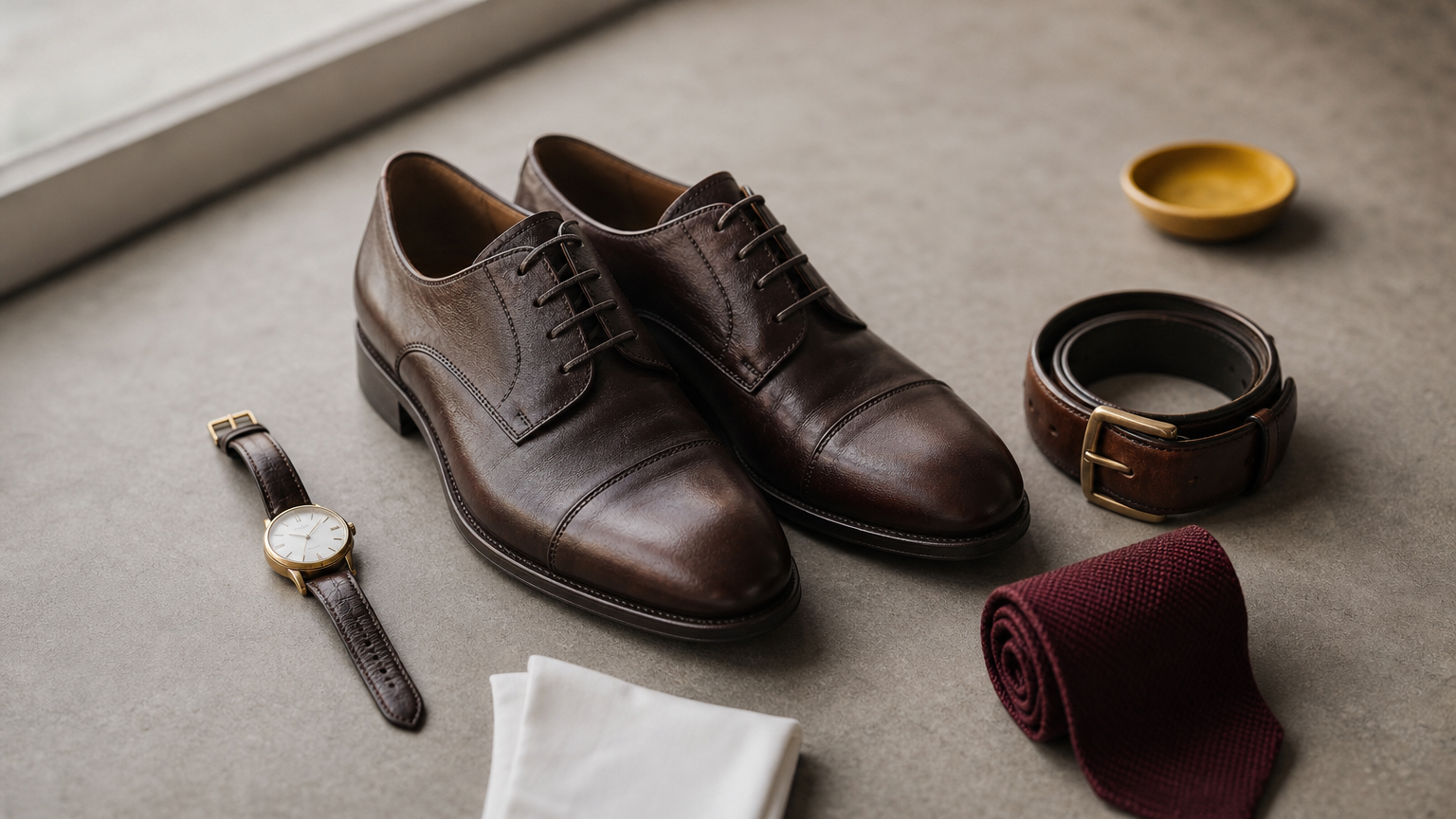
Tie colors that work
The tie is your one accent, so it carries the most personality. Use this list as a menu:
Burgundy: rich contrast against forest, hunter, and olive. The most popular wedding choice.
Navy: understated and nearly foolproof with every shade.
Brown: suits the earthy character of olive and forest. Use a deeper brown on darker suits.
Charcoal: a quiet, modern option for formal settings.
Black: works with emerald and very dark green at evening events.
Purple: a bolder choice that creates strong contrast, best in deep tones.
Tonal green: works when it is clearly lighter or darker than the suit. Do not try to match the exact shade.
Skip red unless it is a deep burgundy. A bright red tie on a green suit reads as a holiday outfit, which is rarely the intent.
Shoes and belts
Brown is the default shoe color for green. Dark brown goes with forest, hunter, and olive. Medium brown suits olive, sage, and lighter greens. Black belongs with very dark green or emerald at formal events. Tan can work with sage and lighter greens in warm weather, but it creates too much contrast with deep forest or emerald.
Suit shade | Best shoe color | Avoid |
|---|---|---|
Forest or hunter | Dark brown, black for formal | Light tan |
Olive | Medium to dark brown | Black in casual settings |
Emerald | Dark brown or black | Tan |
Sage or light green | Medium brown or tan | Heavy black |
Match the belt to the shoes in color and finish. For casual events, suede in neutral shades or clean white leather sneakers can work with olive and lighter greens, as long as the rest of the outfit is relaxed too.
Pocket squares, socks, and watches
A white pocket square is the easiest option for any formal green outfit. For weddings, cream, burgundy, or navy can work, as long as it coordinates with the tie and does not match it exactly. A pocket square that is an identical set with the tie looks like it came out of a box.
Socks should be quiet. Dark green, navy, charcoal, or brown all work. Leather watch straps should follow the shoes, while a metal watch is a neutral alternative that avoids another leather color.
Let the tie be the single accent, and make everything else, from socks to straps, follow the shoes and suit.
Matching a green suit to the occasion and season
A dark green suit suits weddings, evenings, and the office, while light greens suit warm-weather, outdoor, and daytime events. Occasion and season together narrow the choice quickly.
Weddings and formal events
Green is now a common wedding color for grooms, groomsmen, and guests. For a formal or evening wedding, wear forest, hunter, or emerald with a white or ivory shirt and a burgundy or navy tie. Add dark brown or black shoes, depending on how formal the dress code is. A matching waistcoat gives a three-piece look for the groom.
For a garden, beach, or daytime wedding, choose olive, sage, or a lighter green with ivory or white and medium brown shoes. Keep accessories minimal so the suit looks fresh and not costume-like.
Work and professional settings
Dark, muted greens are easiest at work. A forest, hunter, or olive suit with a white or light blue shirt, a restrained tie, and dark leather shoes looks professional. Keep patterns subtle. In very conservative workplaces, a navy or charcoal suit may still be the safer choice.
Bright or very light greens are harder to justify in an office. If you want to wear one, keep everything else plain and conservative so the suit alone carries the personality.
Smart casual and everyday wear
Olive and muted greens dress down best. Wear an open-collar shirt, a fine-gauge knit, or a plain T-shirt under the jacket with suede or leather loafers. You can also separate the pieces. An olive jacket with neutral trousers gives a relaxed outfit that keeps some character of the full suit.
Season and fabric
Darker greens in wool suit fall and winter. They pair well with textured ties, richer browns, and a structured overcoat. Olive, sage, and lighter shades in linen or lightweight cotton suit spring and summer. Fabric weight decides seasonality as much as color does.
Choosing a shade for your coloring
If you are buying a suit, undertone gives a starting point. Cooler complexions often look good in emerald and hunter, and warmer ones in olive and sage. Treat this as a starting point, not a rule. Hold the fabric near your face in daylight and pick the one that makes you look rested.
Pick the shade for the occasion and season first, then use your coloring to choose between two good options.
Green suit mistakes and colors to avoid
The colors to avoid with a green suit are bright red, too many saturated accents, and anything that matches the suit too closely. Most failed green outfits make one of a handful of errors, and all of them are easy to fix.
Colors that clash with green
Bright red against green looks seasonal. Neon or very saturated accents compete with the suit. A shirt or tie in the same green as the suit looks like a mistake and not a design choice. Light tan shoes against a deep green suit create harsh contrast and cheapen the look.
Common styling errors
Using too many strong colors. Keep to the three-color rule.
Choosing the wrong contrast. Very dark shirts make deep greens heavy, and brown on olive can look flat.
Ignoring the occasion. A sage suit and a hunter green suit send different messages.
Matching every accessory. Coordinate the tie, pocket square, shoes, and belt without making an identical set.
Ignoring fit. A green suit shows poor fit just as much as a navy one. Shoulders, sleeve length, and trouser break matter more than the color.
Mixing patterns. If the suit has texture or a check, keep the shirt and tie plain.
Most of these errors come from adding, not subtracting. When an outfit feels off, remove one item and look again.
When a green outfit feels wrong, take something away before you add something new.
How to test green suit combinations before you commit
Designers and brands can test green suit combinations in a PSD mockup by swapping fabrics on a suit, shirt, and tie, then comparing the versions side by side. This is cheaper than sewing samples, and it shows you which pairings look good before you spend on production or photography.
Why testing on screen helps
Green is the color where small differences matter most. A sage that looks fine with ivory can look dull against white, and an olive can look flat against a cream tie. Seeing six combinations next to each other in minutes is more useful than imagining them. It also helps you pick the shirt and tie colors you offer alongside a green suit on a product page.
A simple workflow in a suit mockup
Our PSD Custom Suit Mockup Template comes with sample fabrics for the suit, trousers, shirt, and tie, so you can test complete outfits right away. It runs in Photoshop CC 2023 or later. The method works with any mockup built on Smart Objects:
Double-click the suit's Smart Object and drop in your green texture or repeatable pattern, then save.
Change the shirt fabric to white, ivory, light blue, or pale pink and save each version.
Swap the tie fabric to burgundy, navy, brown, or charcoal.
Keep the best three or four combinations and compare them at the same size.
Keep the same lighting and layout across versions so the only variable is color.
Know the limits of a digital preview
A mockup shows how colors relate to each other. It does not guarantee how a dye will look on real cloth. Screens differ, and wool, linen, and cotton absorb light differently. Once you choose a combination, order a physical swatch of the green and the shirt fabric and check them together in daylight before you finalize production.
Use a mockup to narrow down combinations quickly, then confirm the final choice with a real swatch.
Wearing green with confidence
A green suit works when you treat it as the main color and keep everything else simple. Identify the shade and its undertone, match the formality to the event, and pick a white or light blue shirt. Add one accent tie, match your leather, and stay within three colors. Dark greens go with burgundy, navy, and brown, while light greens suit ivory, cream, and medium brown shoes.
If you design or sell suits, test these pairings on screen before production. You can try complete outfits, from fabric to shirt to tie, with the PSD custom suit mockup template, and keep only the combinations that earn a place in your collection.
Comments
No comments yet. Start the conversation.