By Tojo20 min read
The best button-down shirt styles for most people are the oxford button-down for everyday wear, a poplin button-down for the office, and a chambray or flannel shirt for weekends and layering. Choose by collar and fabric weight first, then by fit. If you want a dressier shirt, pick poplin with a spread or hidden-button collar. If you want something relaxed for hot weather, pick a camp collar. If you wear your shirt like a light jacket, pick an overshirt or an oversized cut.
The problem is that "button-down" covers dozens of shirts that look and behave very differently. Two shirts can share the same buttons and still suit completely different occasions, and a great style in the wrong fit looks worse than a plain shirt that fits well. Most guides show outfits without explaining the shirt, or explain the shirt without showing you how to wear it.
This guide covers 10 types, and each one gets the same three answers: what it is, who it suits, and how to wear it. After that come the fits, the tuck and sleeve rules, and outfit formulas by occasion. ShirtsMockup builds PSD mockups of dress shirts, jackets and suits, so we look closely at how collars, cuffs and fabrics change a shirt's character.
What makes a shirt a button-down
A true button-down has small buttons that fasten the collar points to the shirt body. Any other shirt that closes down the front with buttons is a button-up, though shoppers use the two terms almost interchangeably.
Button-down vs button-up
The collar buttons started as a practical fix. Polo players in England wanted their collars to stay put during a match, and Brooks Brothers later made the style a staple of American menswear. Today the buttons keep the collar tidy and give it a soft, rolled shape that a loose collar does not have.
A button-down has buttons on the collar points; a button-up is any shirt that buttons down the front.
In stores the labels blur. Retailers sell band collars, camp collars and flannels as "button-downs," and people search for button-down shirt styles to find all of them. This guide uses the word the same loose way and tells you where a style has a true button-down collar.
Button-down vs dress shirt
The more useful split is between a casual button-down and a dress shirt. Dress shirts are built to be tucked under a jacket. Casual shirts are built to be worn in more than one way. Use this table to tell them apart on the rack.
| Feature | Casual button-down | Dress shirt |
|---|---|---|
| Sizing | Usually S to XL | Usually neck and sleeve, such as 15.5 34/35 |
| Collar and cuffs | Softer interfacing | Stiffer, crisper |
| Hem | Shorter, made to be worn untucked | Longer tail, made to be tucked |
| Pockets | Often one or two on the chest | Usually none |
| Typical partners | Jeans, chinos, sneakers | Suit trousers, tie, oxfords |
Plenty of shirts sit between the two columns. That is why a poplin button-down passes in a business-casual office while a flannel does not. Styles 1 to 4 below can be dressed up, and styles 5 to 10 are casual.
1. Oxford button-down shirt
What it is
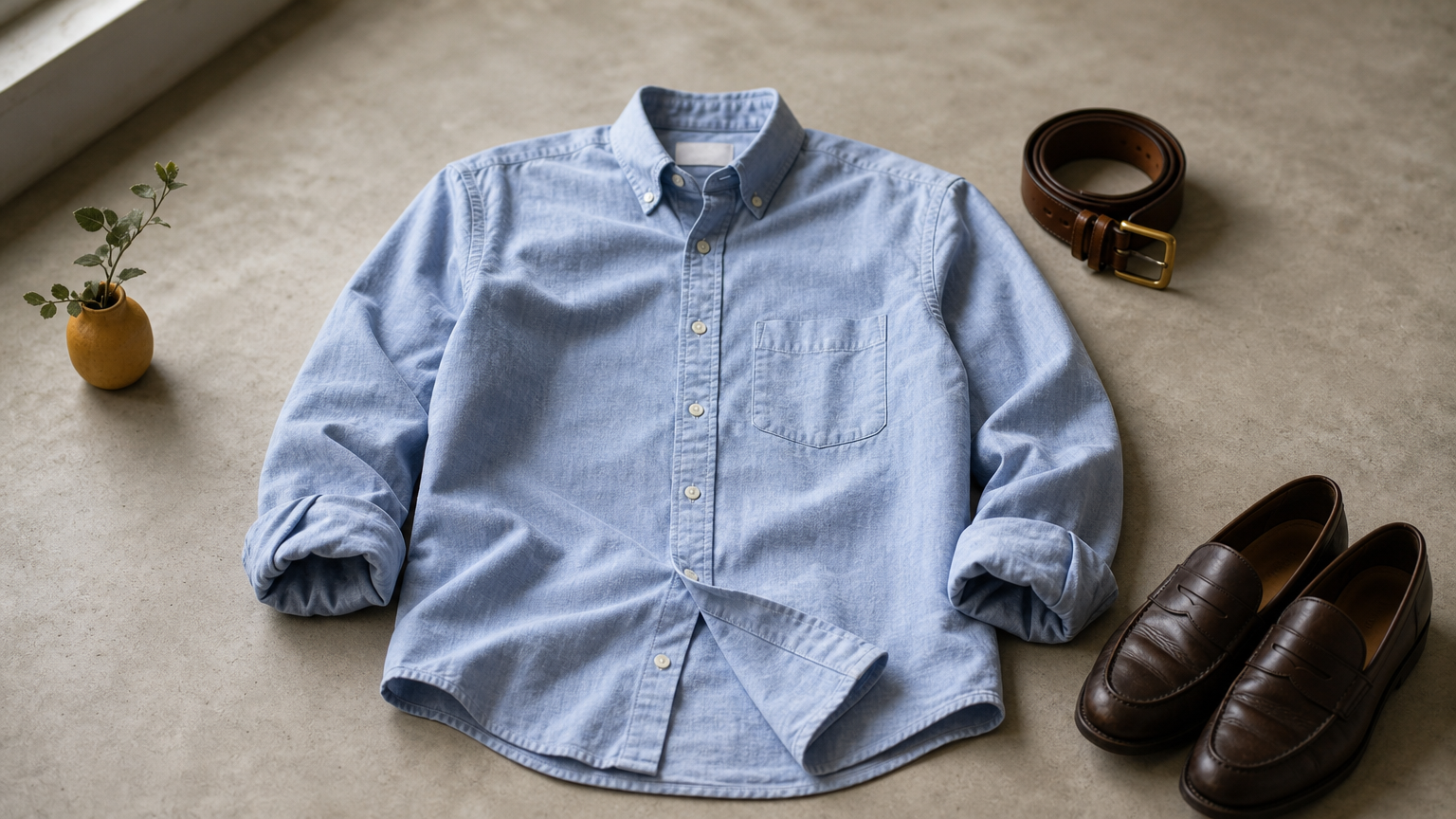
The oxford button-down, often shortened to OCBD, is the classic American casual shirt. It is cut from oxford cloth, a thick cotton basket weave with a visible texture, and it has a button-down collar that curls in a soft roll.
The details are usually simple: a barrel cuff with soft interfacing, a shirttail hem and sometimes one chest pocket. The cloth is sturdy and softens with every wash. Pinpoint oxford, a finer weave, looks a little dressier than standard oxford, so choose it if the shirt has to share a blazer with a tie.
The oxford button-down is the one shirt that works tucked or untucked, with jeans or with chinos.
Who it suits
Choose it if you want one shirt that covers most situations, from a business-casual office to Saturday lunch. It is also the safest first purchase if your closet has no button-downs yet.
- Best for: everyday wear, layering under sweaters and jackets, anyone who likes a classic look.
- Watch out for: a plain pale blue version can read collegiate with nothing to dress it up, and the heavy cloth runs warm in peak summer.
How to wear it
Start with the light blue or white version and keep the rest of the outfit simple. The collar looks best with the top button undone and no tie, though it also holds a tie knot well.
- Tucked: navy chinos, a brown leather belt and loafers.
- Untucked: dark jeans, white leather sneakers and sleeves rolled to mid-forearm.
- Layered: under a crewneck sweater, with the collar points showing and the hem tucked in.
2. Poplin button-down shirt
What it is
Poplin is a tightly woven, lightweight cotton with a smooth, crisp surface. Put it on a button-down collar and you get the dressier cousin of the oxford. It looks sharper, drapes cleaner and sits closer to a true dress shirt.
Poplin takes color and fine stripes well, which makes it the base for most white, light blue and pinstriped office shirts. The trade-off is that the smooth cloth shows creases faster than a textured weave, so it needs a quick press or steam.
Poplin is the button-down to buy when the shirt has to look pressed and professional.
Who it suits
It suits anyone who dresses for work and wants a shirt that looks neat without a stiff collar. It also works in warm weather because the cloth is light.
- Best for: business-casual offices, interviews, dinners, wearing with a blazer.
- Watch out for: it looks too plain with jeans unless you add texture elsewhere, and cheap versions can feel thin.
How to wear it
Poplin rewards tailored pieces and clean lines. Tuck it in, keep the belt slim and let the collar do the work.
- Wool trousers, a slim leather belt and derby shoes for the office.
- A navy blazer with the top button open and no tie for dinner.
- A solid knit tie, top button done, if the dress code needs one.
3. Spread collar button-down shirt
What it is
On a spread collar the points angle away from the placket, leaving room for a tie knot. Most spread collars have no collar buttons, so strictly they are button-ups. A hidden-button version fixes that, with buttons under the points that look like a spread collar but keep the points from flying away.
Collar spread changes how the shirt frames your face. A wider spread tends to balance a long, narrow face, and a narrower one suits a rounder face better. Because the points sit flat only when pressed, many men slip in collar stays.
A spread collar is the most flexible dressy collar because it works with a tie or without one.
Who it suits
It suits you if you wear ties some days and not others, or if you want a casual shirt that can dress up quickly. It is the most common shirt in most closets for that reason.
- Best for: business casual, date nights, wearing under a blazer.
- Watch out for: the points curl and need ironing after washing, and a weak collar benefits from stays.
How to wear it
Treat it as the shirt that bridges casual and dressy. Change the shoes and the bottoms, and the same shirt changes its register.
- Untucked with the top button open, dark jeans and clean sneakers.
- Tucked with chinos, a sport coat and loafers.
- Fully buttoned with a tie, a suit and oxfords for the dressiest version.
4. Band collar shirt
What it is
A band collar shirt has a narrow strip of fabric around the neck instead of a folded collar. It is also called a collarless or grandad shirt. The band is about an inch wide or less, soft and flat, and it lies against the neck instead of standing up.
Do not confuse it with Nehru or mandarin collars, which do stand up. The missing collar makes the shirt feel light and cool in summer, and it looks modern whether you button it all the way or leave the top buttons open.
A band collar shirt is the easiest way to look dressed up without wearing a collar.
Who it suits
It suits warm-weather wardrobes and anyone who likes a cleaner neckline. It works well on a vacation and for creative workplaces.
- Best for: summer, travel, wearing alone or under an unstructured blazer.
- Watch out for: it is hard to layer under a crew neck or another collar because the necklines fight, and the band feels tight if the neck size is wrong.
How to wear it
Buttoned to the top it looks deliberate and modern. With the top two buttons undone it turns relaxed and casual.
- Fully buttoned with tailored trousers and leather sneakers.
- Top buttons open with linen trousers and loafers.
- Under a soft navy blazer, as a tie-free dressy option.
5. Chambray and denim shirts
What it is
Chambray is a lightweight plain weave that looks like denim but is thinner and softer. A denim shirt is made from heavier twill and feels more like a jacket. Both have a blue cast that goes with almost everything, and both fade attractively with wear.
Most come with a button-down collar or a point collar, chest pockets and a shirttail hem. Chambray is the one to choose for spring and summer. Denim is better for cooler days and layering.
Chambray is the neutral you can wear like a solid blue shirt, and denim is the one you can wear like a jacket.
Who it suits
It suits anyone building a casual wardrobe, because the blue works with chinos, jeans and most jackets.
- Best for: weekend wear, travel, layering over a white tee.
- Watch out for: head-to-toe denim looks flat unless the washes clearly contrast, and a heavy denim shirt feels bulky tucked in.
How to wear it
Let the shirt be the casual anchor and use smart pieces to sharpen it.
- Chambray with chinos and white sneakers for a clean weekend outfit.
- Chambray tucked under a blazer with dark jeans and boots.
- Denim shirt open over a white tee, with straight jeans in a darker wash.
6. Flannel button-down shirt
What it is
Flannel is cotton or wool that has been brushed to raise a soft, fuzzy nap. It is warm, heavy and usually printed in plaid. It is the cold-weather casual shirt, and because the fabric is thick the collar and cuffs are soft with little structure.
Weight matters more than any other detail. A mid-weight cotton flannel works as a shirt on its own. A thick, shaggy one works more like a light jacket and is awkward under a coat.
Pick a flannel by its weight first, because a heavy one behaves like an overshirt and a light one like a shirt.
Who it suits
It suits anyone who wants warmth and texture without wearing a sweater. It also pairs well with a relaxed, outdoorsy wardrobe.
- Best for: fall and winter, camping, casual weekends, layering.
- Watch out for: it is too casual for a tie, and very large plaids can make smaller frames look smaller.
How to wear it
Flannel is happiest untucked and relaxed, though a mid-weight version can be tucked.
- Open over a plain tee with jeans and boots.
- Buttoned with chinos and desert boots, sleeves pushed up.
- Under a field jacket or a waxed coat on cold days.
7. Camp collar short-sleeve shirt
What it is
The camp collar, sometimes called a Cuban collar, is a flat, open collar that lies down with no stand and no buttons. Paired with short sleeves and a straight hem, it is the classic hot-weather button-front shirt. It is not a true button-down, but short-sleeve button-down shirt styles almost always include it.
Fabric decides how it behaves. Linen breathes best and wrinkles on purpose. Cotton is neater, and viscose or rayon drapes most.
A camp collar shirt is built to be worn untucked, so it should look right with the hem hanging free.
Who it suits
It suits warm climates, vacations and anyone who finds a regular collar too hot. Short-sleeve shirts also work for weekends when you do not want a tee.
- Best for: summer, travel, evenings out in warm weather.
- Watch out for: baggy sleeves look wing-like, so choose a sleeve that follows your upper arm, and avoid rolling a short sleeve more than once or twice.
How to wear it
Keep the hem at mid-fly and the sleeves close to the arm. Do not wear it with shorts and boots or dress shoes.
- Linen camp collar with tailored shorts and loafers without socks.
- Printed rayon camp collar with plain cream trousers.
- Cotton version buttoned to the top over plain trousers for a smarter look.
8. Utility shirt
What it is
The utility shirt, also sold as a work shirt or chore shirt, is built from workwear and military uniforms. Look for two chest pockets, sturdy cotton twill or canvas, and sometimes epaulettes and metal buttons. The collar is usually button-down or a simple point.
The pockets were designed to carry pens and tools, and the long sleeves protected arms. The result is a durable, masculine shirt that is meant to be worn untucked and gets better with age.
A utility shirt trades polish for toughness, so wear it where texture and pockets are a plus.
Who it suits
It suits anyone who wants a transitional piece that works from spring to fall and holds up to wear.
- Best for: casual days, travel, layering over a tee.
- Watch out for: pockets add bulk under a jacket, it does not tuck well, and it is wrong for formal events.
How to wear it
Wear it buttoned or open and let the fabric carry the look.
- Buttoned over a white tee with straight jeans and work boots.
- Chinos, a belt and suede desert boots for a smart-casual version.
- As a spring jacket over a thin knit with the sleeves pushed up.
9. Overshirt or shirt jacket
What it is
An overshirt, or shirt jacket, is half shirt and half jacket. It has a boxier cut, heavier fabric and larger buttons or snaps, and it is designed to sit on top of a tee or thin shirt. Typical fabrics are wool, corduroy, canvas and heavy flannel.
It fills the gap between a shirt and a coat. In cool weather it works as a sweater alternative, and because of the boxy shape it is worn open or buttoned but not tucked.
An overshirt is a jacket first, so size it to wear over a tee rather than under a sweater.
Who it suits
It suits anyone whose weekend uniform is a t-shirt and jeans and who wants one more layer.
- Best for: fall, early spring, travel, casual offices.
- Watch out for: the boxy fit does not layer under a sweater, and it looks too casual for formal business settings.
How to wear it
Keep the layers underneath thin and plain so the shirt jacket can be the star.
- Open over a white tee, with dark jeans and boots.
- Buttoned over a thin shirt with chinos and sneakers.
- Under a wool coat in cold weather, as a warm mid-layer.
10. Oversized button-down shirt
What it is
An oversized button-down has a wider body, a dropped shoulder seam and longer sleeves and hem. The size is deliberate. It works for any gender and suits anyone who prefers a relaxed shape to a tailored one.
Because the fit does the talking, the details around it matter. Rolled sleeves and a partial tuck keep the shirt from swallowing you, and crisp poplin keeps the shape from looking sloppy.
An oversized shirt looks intentional when one thing is sharp, such as the fabric, the sleeves or the tuck.
Who it suits
It suits you if you like layers, want a light jacket alternative, or borrow the comfort of a boyfriend shirt. It is also a flexible piece for building outfits.
- Best for: casual styling, layering, beach days, creative offices.
- Watch out for: very short frames can be overwhelmed, and a baggy top plus baggy bottoms loses shape.
How to wear it
Pair it with something fitted or structured on the other half of the outfit.
- Open and unbuttoned over a tank top and wide-leg trousers.
- Front tucked into straight jeans, with sleeves rolled to the forearm.
- Over a thin turtleneck and under a blazer for a layered look.
Button-down shirt fits and how to check yours
Button-down shirts come in five common fits: classic, regular, slim, extra slim and oversized. Brands cut to different fit models, so a "slim" at one brand can feel like a regular at another. Always judge by the shirt on your body, not the label.
The five common fits
This table sets the fits side by side so you can see where to start.
| Fit | Chest and arms | Waist | Good starting point for |
|---|---|---|---|
| Classic | Plenty of room | Straight | Comfort, broader builds |
| Regular or tailored | A little extra room | Less tapered | Most people |
| Slim or modern | Fitted | Slightly tapered | Leaner builds |
| Extra slim or trim | Slim, higher armholes | Tapered | Very slim builds |
| Oversized or relaxed | Generous, dropped shoulder | Boxy | A deliberate relaxed look |
Start with a regular fit, then move slimmer or looser only if the shoulders and chest still sit correctly.
Five checks for a good fit
Run these checks in the fitting room, because shoulders and chest are the parts a tailor cannot fix easily.
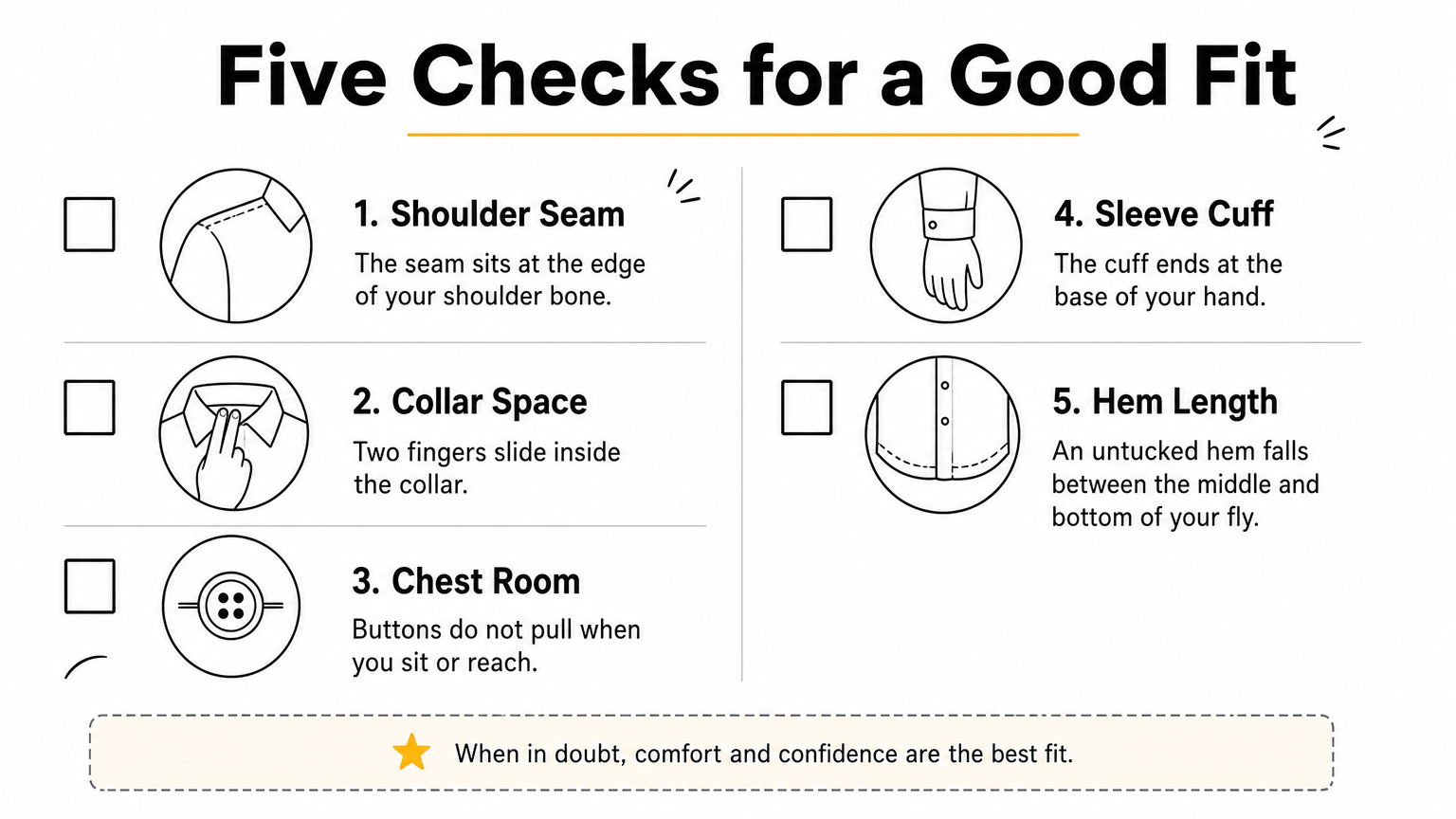
- Shoulders: the seam should sit at the edge of your shoulder bone.
- Collar: you should be able to slide two fingers inside it.
- Chest: buttons should not pull when you sit or reach.
- Sleeves: the cuff should end at the base of your hand, and you should be able to pinch only an inch or two of fabric under the arm.
- Length: an untucked hem should fall between the middle and the bottom of your fly, and a tucked shirt should stay in when you raise your arms.
What a tailor can fix
A tailor can take fabric away but cannot add it. That means a shirt that is too big is rescued easily, and a shirt that is too small is not. Buy for the shoulders, then alter the rest.
Common fixes include taking in the sides, darting the back, shortening the sleeves and shortening the hem. Prices often run around $20 to $30 per alteration, and more in big cities. Say you buy a $45 shirt that fits at the shoulders but billows at the waist, then pay $30 to take in the sides. You spend $75 and get a shirt that fits better than a $75 one that is wrong everywhere.
How to wear a button-down shirt
The three choices that change a button-down the most are whether you tuck it, how you roll the sleeves and how many buttons you undo. Get those right and the style matters less than you think.
Tucked or untucked
Tuck the shirt anywhere that needs to look sharp, such as a job interview, a nice restaurant or a day in a blazer. Leave it untucked for bars, errands and casual days. Check the length before you decide: an untucked hem that ends between the middle and bottom of your fly is right, and one that covers the whole fly is too long.
Tuck when you want to look dressed, and untuck only if the hem is the right length.
For in-between looks, try a half tuck, where you tuck only the front. It works with oversized shirts and longer hems. If you plan to wear a sweater or jacket over the shirt, tuck it for a neater line.
Sleeves and buttons
Rolling the sleeves makes a shirt look relaxed. Use the casual roll, which is the simplest.
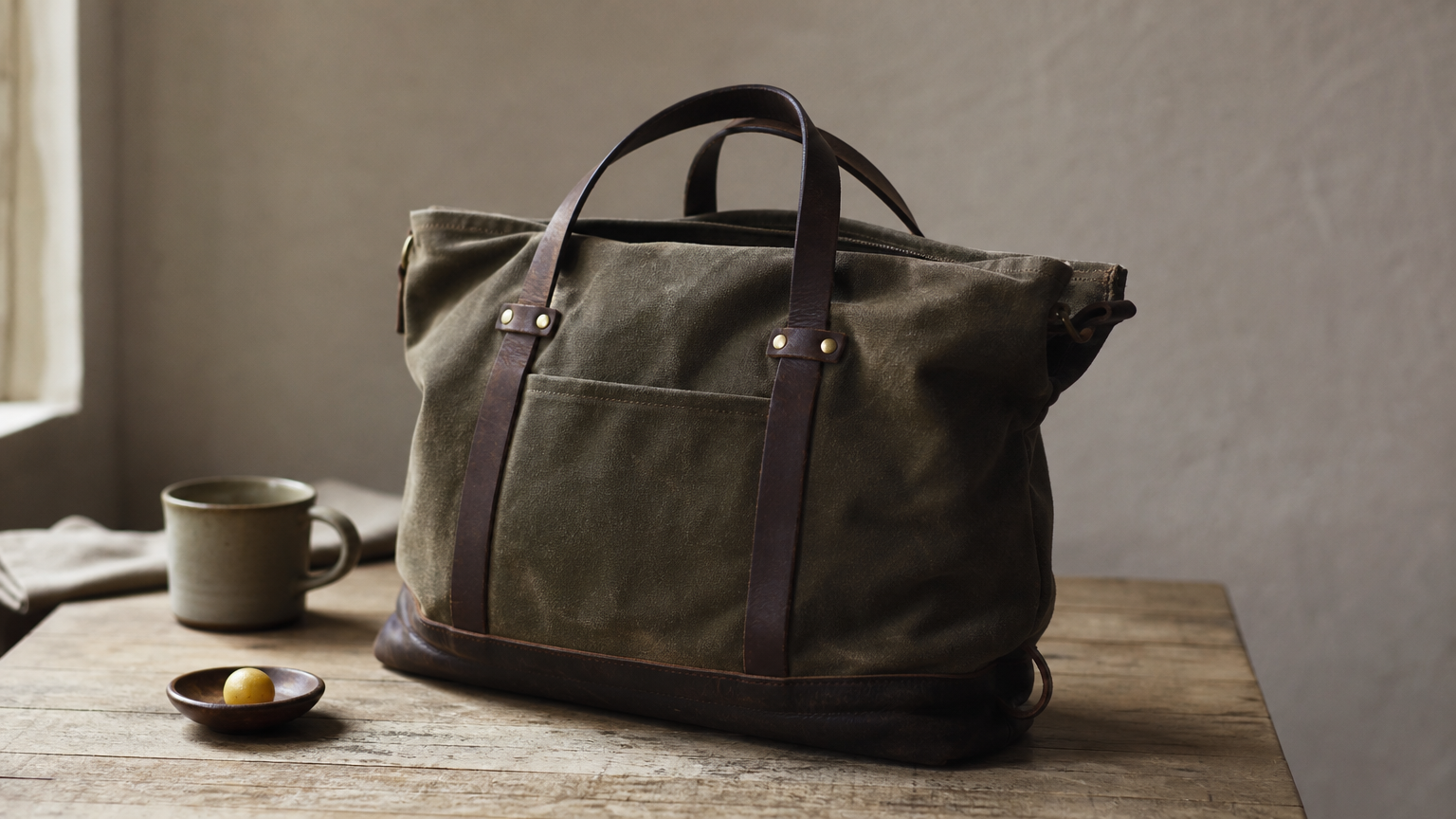
- Unbutton both cuff buttons.
- Fold the cuff back over itself once.
- Keep folding in even turns until the sleeve reaches mid-forearm.
Two or three turns is enough. The Italian roll pushes the sleeve higher so the cuff shows below the roll, but it is bulkier. Do not go above the elbow, because the fabric bunches and looks awkward. For buttons, leave the top one open for a relaxed look, and open two only if you skip the undershirt or wear a deep V.
Ties and blazers
A button-down can take a tie or a blazer, but only if the shirt is clean enough. Follow these rules.
- Choose a solid or fine-pattern shirt for a tie, and keep the tie simple if the shirt has a pattern.
- Tuck the shirt and button the top button when you wear a tie.
- Skip ties with thick flannel, double chest pockets or loud prints.
- Never wear a tie with an untucked shirt.
- Under a blazer, make sure little or none of an untucked shirt hangs out behind.
Button-down outfit ideas for any occasion
The easiest way to dress a button-down is to pick the occasion first, then change one piece at a time. A casual outfit becomes smart when you change the shoes, and a smart outfit becomes casual when you roll the sleeves.
Occasion cheat sheet
This table gives a working formula for each situation.
| Occasion | Shirt | Bottoms | Shoes | Extra layer |
|---|---|---|---|---|
| Weekend errands | Oxford or chambray, untucked | Jeans | White leather sneakers | None |
| Warm-weather day | Camp collar or short-sleeve oxford | Tailored shorts | Loafers or clean sneakers | None |
| Business casual | Poplin button-down, tucked | Chinos or wool trousers | Derbies or loafers | Navy blazer or cardigan |
| Date night | Dark spread or band collar | Dark jeans | Suede or Chelsea boots | Leather or suede jacket |
| Cold-weather casual | Flannel or utility shirt | Straight jeans | Boots | Overshirt or peacoat |
| Dressier event | White or light blue poplin | Tailored trousers | Oxfords | Blazer, tie optional |
Change one piece at a time, and keep dressy shoes with dressy trousers and casual shoes with casual ones.
Avoid mixing casual shoes into a dressy outfit, and do not pair shorts with boots or dress shoes. Jeans with dress shoes work if the rest of the outfit is smart.
Colors and patterns
Color and pattern change how the shirt looks on you, so use them on purpose.
- Light shirts add visual weight on top, and dark shirts look slimmer.
- Vertical stripes lengthen and slim the body.
- Horizontal stripes widen it.
- Small, low-contrast prints are quiet and flattering.
- Large, high-contrast prints add visual size, so keep them smaller if you are shorter.
If you are new to patterns, start with a small gingham or a fine stripe and add bolder prints later.
Building a small shirt wardrobe
One common version of the 3-3-3 rule is three tops, three bottoms and three pairs of shoes that all mix with each other. Apply the idea to shirts: buy three base shirts first, then add specialists.
- A light blue oxford button-down.
- A white poplin button-down.
- A chambray shirt.
Add a flannel for winter and a camp collar shirt for summer. Those five cover nearly every outfit in the table above.
Choose the shirt, then get the fit right
The right button-down depends on the occasion and the season, not on a single best style. Oxford and poplin handle most days, spread and band collars dress up easily, chambray and flannel carry weekends, and camp collars, utility shirts, overshirts and oversized cuts handle heat, layers and relaxed looks. Then fit the shoulders first, and let a tailor handle the rest.
If you design or sell shirts yourself, you can preview a collar, cuff and fabric before you cut a single yard. The dress shirt mockup for Photoshop lets you apply different fabrics to the shirt, collar and cuffs, so you can compare styles on screen first.
Comments
No comments yet. Start the conversation.