By RajIn Fashion9 min read
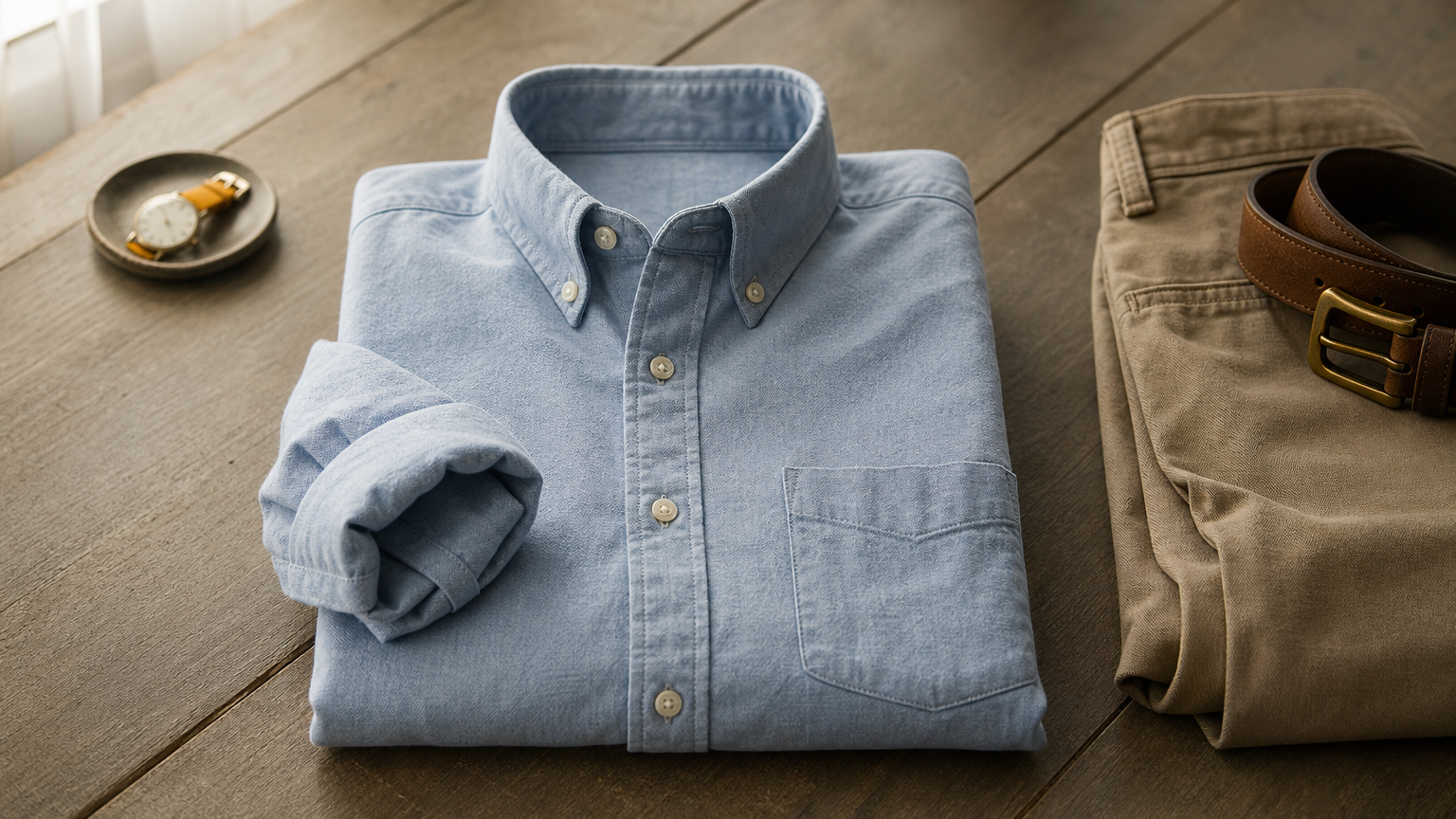
The best button-up shirt styles men can own come down to six: the Oxford button-down, the spread-collar dress shirt, the camp collar, the utility shirt, the band collar, and the overshirt. Buy the Oxford if you want one shirt for jeans and chinos. Choose the spread collar if you wear ties or suits, and the camp collar for hot weather. The utility shirt suits rugged weekends, the band collar gives a clean modern look, and the overshirt takes over when it gets cold.
Most guys shop by color and size, then wonder why one shirt looks sharp and another looks sloppy. The difference is the style. Collar shape, fabric weight, hem, and sleeve length decide how formal a shirt reads and what you can pair it with. Each style below gets the same two-part breakdown: what defines it, and how to wear it.
One quick note on vocabulary. Every button-down is a button-up, but only shirts with buttons on the collar points count as button-downs. At ShirtsMockup we build PSD dress shirt mockups for designers and shirt brands, so we spend our days studying collars, cuffs, and plackets. That is why this guide focuses on the details that change how a shirt actually looks.
1. Oxford button-down shirt
The Oxford button-down is the shirt to buy first. Its collar points fasten with small buttons, and the thick, textured cloth makes it the easiest of all button-up shirt styles to wear casually.
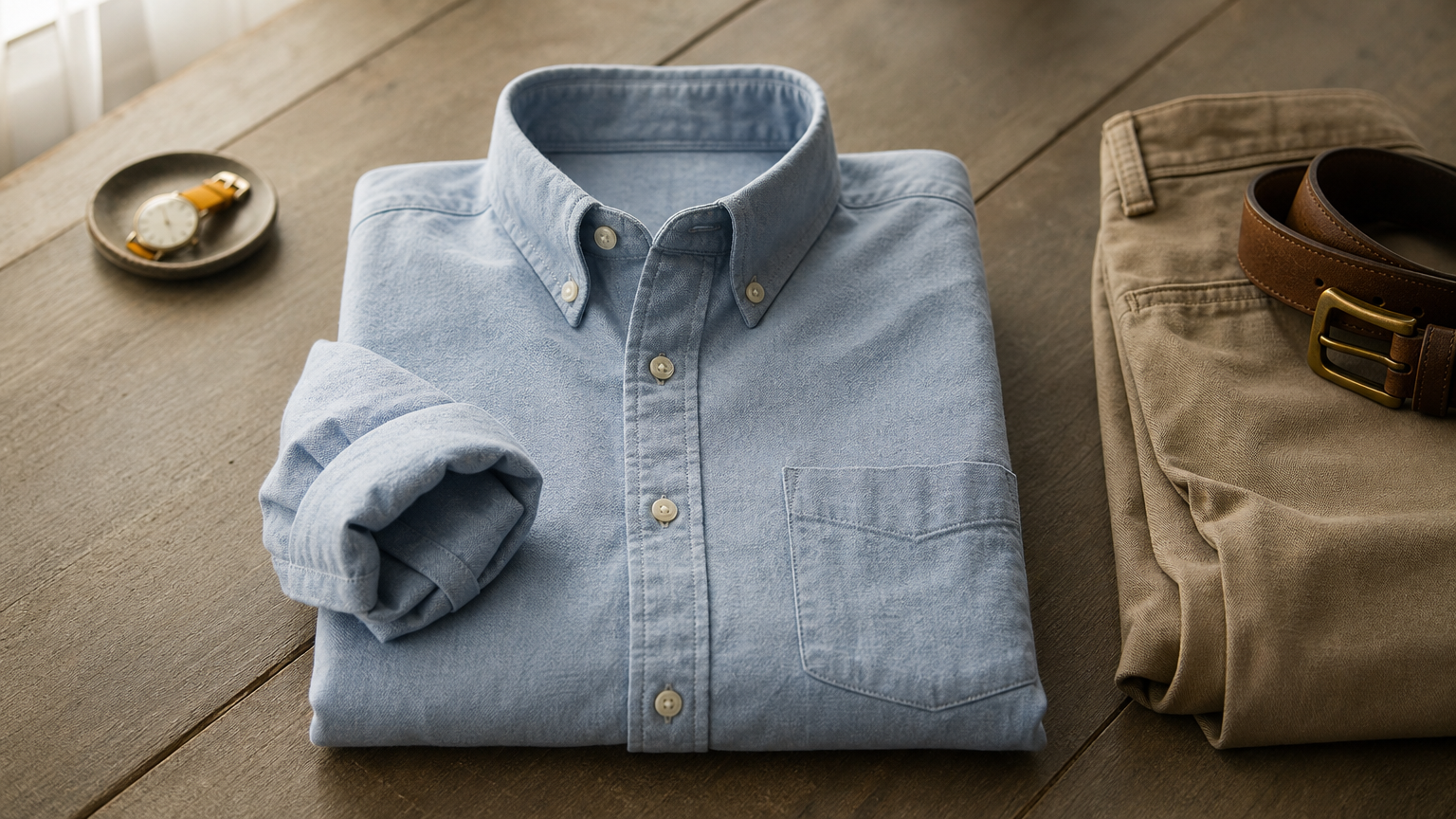
If you only own one casual button-up, make it an Oxford.
What defines it
The defining feature is the button-down collar, a soft, unlined collar with a button under each point. The design traces back to English polo players, who wanted their collars to stay put during a match. The classic fabric is Oxford cloth, a basket weave that feels heavier and more textured than smooth poplin. Most Oxfords have one chest pocket and a box pleat at the back.
Formality: casual to smart casual
Typical fabrics: Oxford cloth, pinpoint, washed poplin
Sleeve and hem: long sleeves, curved shirttail hem
How to wear it
Pair it with jeans, chinos, or shorts, or layer it under a sweater or an unstructured blazer. Keep the collar buttons fastened, because the soft roll of the collar is the whole point. Roll the sleeves twice to just below the elbow for a relaxed look.
Tucking depends on the hem. A shirt with longer tails can go into chinos, while one that ends at the hip should stay out. Skip it with a suit and tie, where it reads collegiate. A plain white Oxford can also look dated, so blue, striped, or washed colors are safer starting points.
2. Spread-collar dress shirt
The spread-collar shirt is the formal pick and the one every man who wears ties or suits needs. Its collar points angle away from the placket, leaving room for a tie knot.
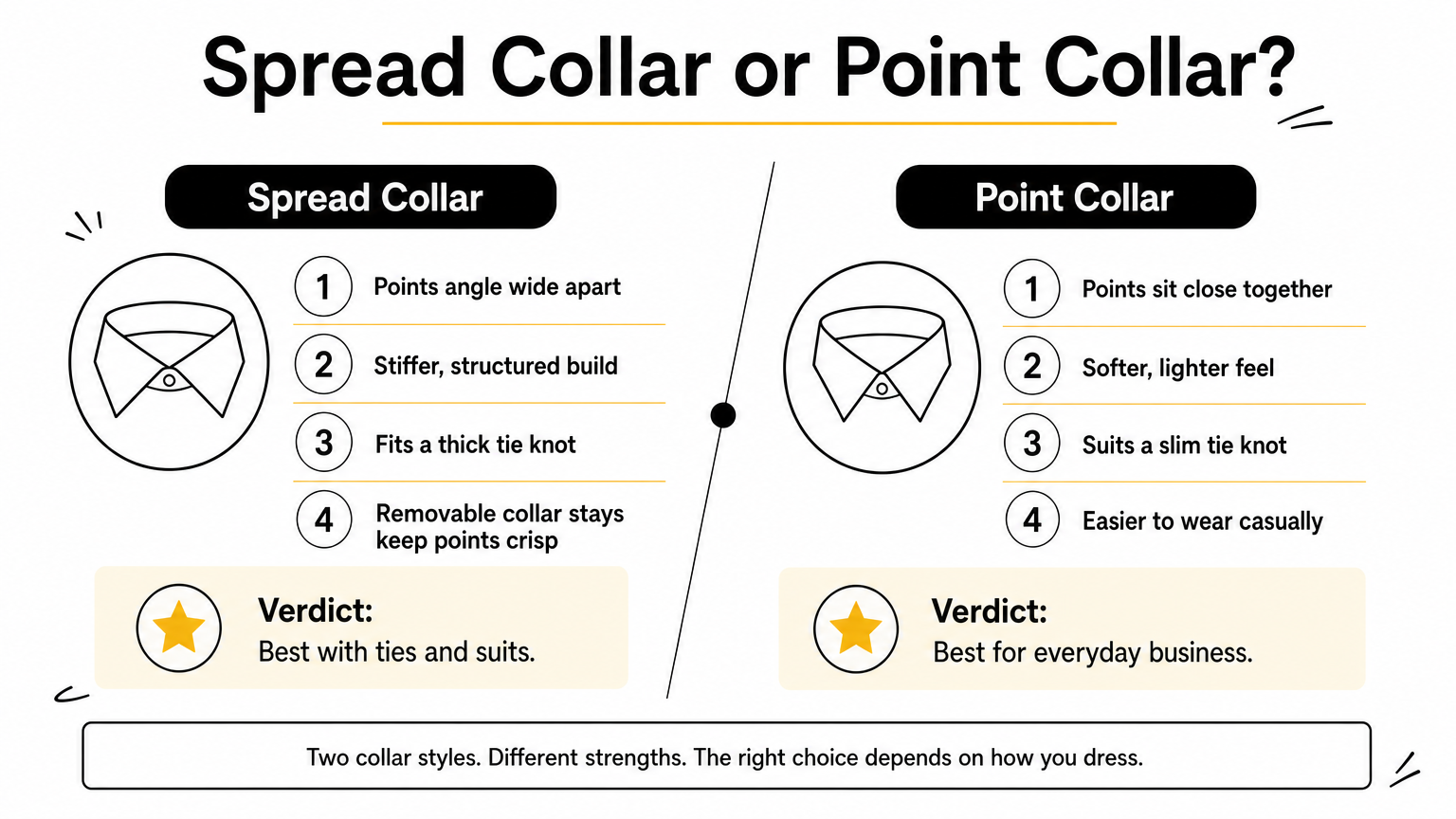
The spread collar is the shirt that makes a suit work.
What defines it
A spread collar sits wider than a standard point collar. It is usually stiffer and more structured, often with removable collar stays that keep the points crisp. Fabrics are typically fine poplin or twill. Cuffs are either buttoned or made for cufflinks. Dress shirts also tend to have no chest pocket and a cleaner, thinner build than casual shirts.
Formality: business to formal
Typical fabrics: poplin, twill, fine broadcloth
Sleeve and hem: long sleeves, buttoned or French cuffs, curved hem for tucking
How to wear it
Always tuck it in when worn with a jacket. With a tie, use a thicker knot such as a half-Windsor or full-Windsor, which fills the gap between the points better than a thin knot. Button the top button whenever the tie is on.
For a casual version, choose a soft-collar spread shirt without stiff interfacing, open the top button, and wear it with dark jeans. Check the fit before you buy. The shoulder seam should sit at the edge of your shoulder, and the cuff should end at the base of your thumb. Remove the collar stays before washing, and iron the shirt unless it is labeled non-iron.
3. Camp collar shirt
The camp collar is the best short-sleeve button-up for men. It has a flat, open collar with no stand and a boxy cut, built for heat and for wearing untucked.
A camp collar replaces a tee when you want to look dressed in summer.
What defines it
The collar lies flat against the chest in one piece and is often called a Cuban or revere collar. Because there is no collar stand, the neckline stays open and airy. Most camp shirts are short-sleeved with a straight hem and a loose, boxy body. Fabrics lean light: linen, rayon, lightweight cotton, and bold prints.
Formality: casual
Typical fabrics: linen, viscose, cotton poplin, seersucker
Sleeve and hem: short sleeves ending mid-bicep, straight hem worn untucked
How to wear it
Wear it untucked with tailored shorts, relaxed trousers, and loafers or clean sneakers. A solid color in linen is the safest choice, while a print makes the shirt the focus of the outfit. Leave the top button open for the classic look, or fasten it for something a touch sharper.
Length matters with a straight hem. It should end around your belt line, not past your hips. Here is a simple fit test: raise your arms, and if your stomach shows, the shirt is too short. Sleeves should end around mid-bicep and not hang loose like a tee.
4. Utility shirt
The utility shirt is the rugged workhorse of button-up shirt styles. It has heavy fabric, two chest pockets, and a soft collar, and it works as a shirt in mild weather or open over a tee.
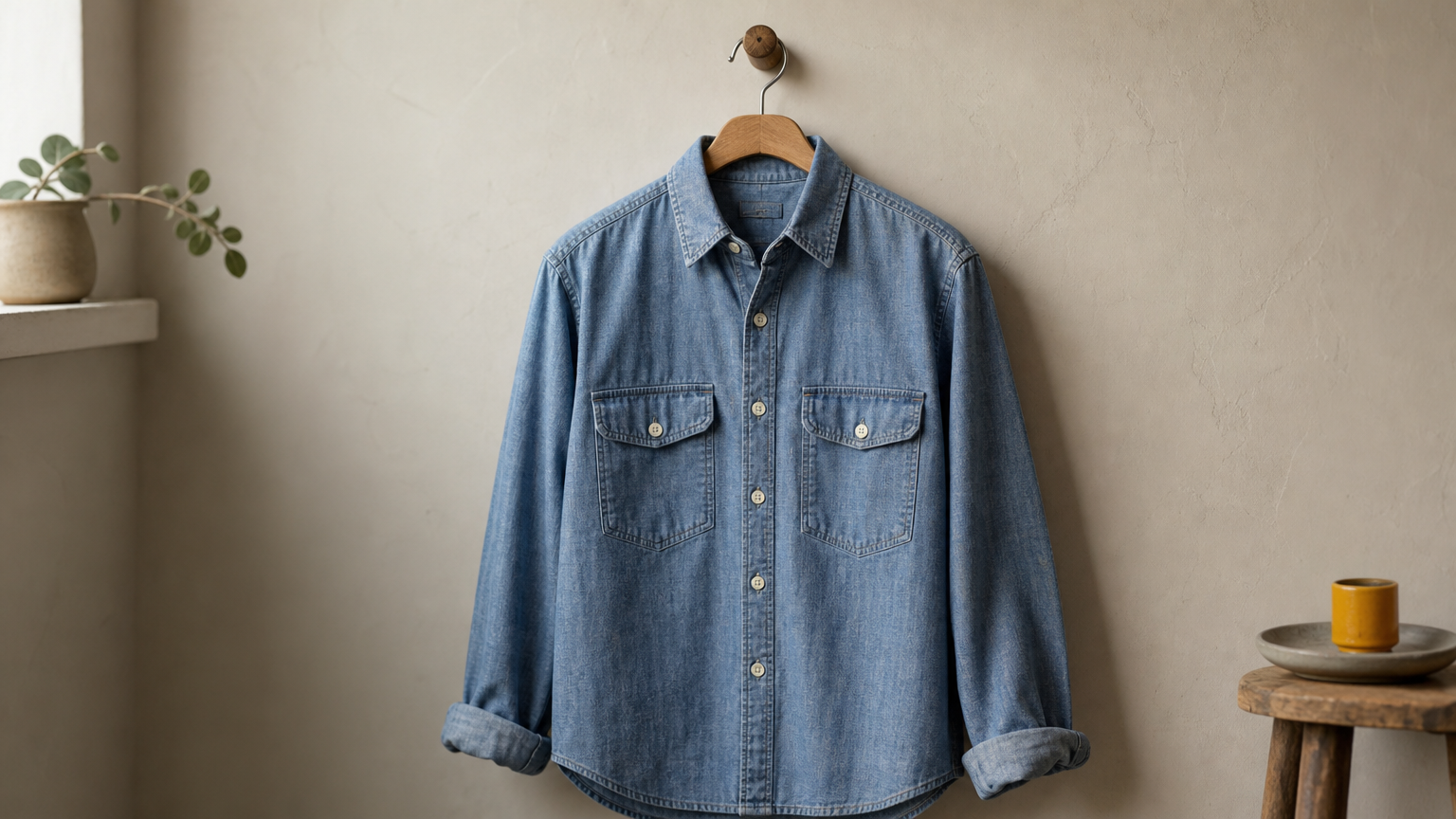
The utility shirt trades polish for durability and character.
What defines it
Its roots are in workwear and military uniforms. Look for button or flap chest pockets, sometimes shoulder epaulettes, and sturdy fabrics like chambray, twill, denim, or flannel. Flannel is brushed cotton, which makes it soft and warm, the best choice for cold weather. Collars are soft and often button down.
Formality: casual only
Typical fabrics: chambray, twill, denim, flannel
Sleeve and hem: long sleeves, straight or slightly curved hem
How to wear it
Chambray is the most versatile version. Wear it with jeans, cords, or chinos and boots. Flannel works the same way but suits fall and winter, with a bomber or field jacket on top. Keep it untucked, since the pockets and thick cloth bunch up at the waist.
The pockets add bulk, so a slim jacket layered over a utility shirt can feel tight. Wearing denim on denim works when the washes clearly match or clearly contrast. Leave it at home for formal events and most offices.
5. Band collar shirt
The band collar shirt is the cleanest modern option. It has no fold-over collar, only a narrow band that lies flat at the neck, so it looks sharp without a tie.
With no collar to fight, the band collar is the easiest shirt to dress up or down.
What defines it
Also called a collarless or grandad shirt, it has a band about an inch wide or less. The band lies flat against the neck. A Mandarin collar, by contrast, stands up higher. Band collar shirts come in linen, cotton, and lightweight blends, in long or short sleeves, and often with a hidden or simple placket.
Formality: casual to smart casual
Typical fabrics: linen, cotton, lightweight twill
Sleeve and hem: long or short sleeves, straight or slightly curved hem
How to wear it
Button it all the way for a deliberate, minimal look, or open one or two buttons for a relaxed one. It pairs well with an unstructured blazer, tailored trousers, and dark jeans. Short-sleeve versions in linen are excellent for vacations.
Layering is its weak spot. A crew-neck sweater over a band collar creates two competing necklines, so wear it under an open jacket or alone. Fit at the neck matters more here than anywhere else. You should be able to slide two fingers between the band and your neck, or it will feel restrictive by midday.
6. Overshirt (shirt jacket)
The overshirt is the button-up built to be a jacket. It uses heavier fabric, a boxier cut, and larger buttons so you can wear it over a tee or a thin knit instead of a sweater.
An overshirt does the job of a light jacket and keeps the ease of a shirt.
What defines it
Overshirts are cut roomier than regular shirts, with bigger chest pockets and sometimes hip pockets. Fabrics include heavy cotton twill, wool blends, corduroy, and thick flannel. Some close with snaps or a zipper, which pushes them even closer to jacket territory.
Formality: casual only
Typical fabrics: twill, corduroy, wool blends, brushed cotton
Sleeve and hem: long sleeves, straight hem worn untucked
How to wear it
Wear it open over a plain tee with jeans and boots, or buttoned over a thin knit when the weather turns. It is a strong spring and fall layer, and a good office alternative to a sweater in casual workplaces.
Size it so it fits over a mid-layer without pulling across the back. Do not tuck it in, and do not try to wear it under a blazer, because the boxy cut and thick fabric make both layers look bulky. If you live somewhere with real winters, treat it as a middle layer under a coat.
Which style to buy first
Start with an Oxford button-down, since it covers more outfits than any other style on this list. Add a spread-collar shirt if you need a tie, then add a camp collar or band collar for warm weather and a utility shirt or overshirt for cold. That sequence gives you six distinct looks without any overlap.
Whatever you choose, check the same basics every time: shoulder seam at the edge of your shoulder, cuffs at the base of the thumb, and a hem that stays down when you lift your arms. If you design or sell shirts, you can preview collars, cuffs, and fabrics before production with our professional dress shirt mockup PSD files.
Comments
No comments yet. Start the conversation.