By Tojo17 min read
Pick the wrong collar on a mockup and the whole design falls apart, even if the fabric and stitching look perfect. Buyers scroll past listings where the shirt looks generic, and clients notice when a spread collar shows up on a design meant for a button-down. If you're trying to sort out shirt collar types before your next render or sketch, you're not alone; it's one of the most-searched details in menswear design and one of the most misunderstood.
This guide breaks down the different types of collar shirts used today, from classic point and spread to cutaway, club, and button-down, so you can name them correctly and know exactly when to use each one, the same way our guide to the different types of dress shirts covers cuffs, fabrics, and fits. No vague descriptions, just clear visual differences and the context each style fits best, whether you're designing a dress shirt for a boardroom or a casual piece for weekend wear.
We built this list with apparel designers in mind, the same people who use a shirt mockup PSD to show suits, dress shirts, and tuxedos without booking a photo shoot. Knowing your collars cold makes your mockup selections faster and your final presentations sharper. Let's go through all 11 styles.
1. Point collar
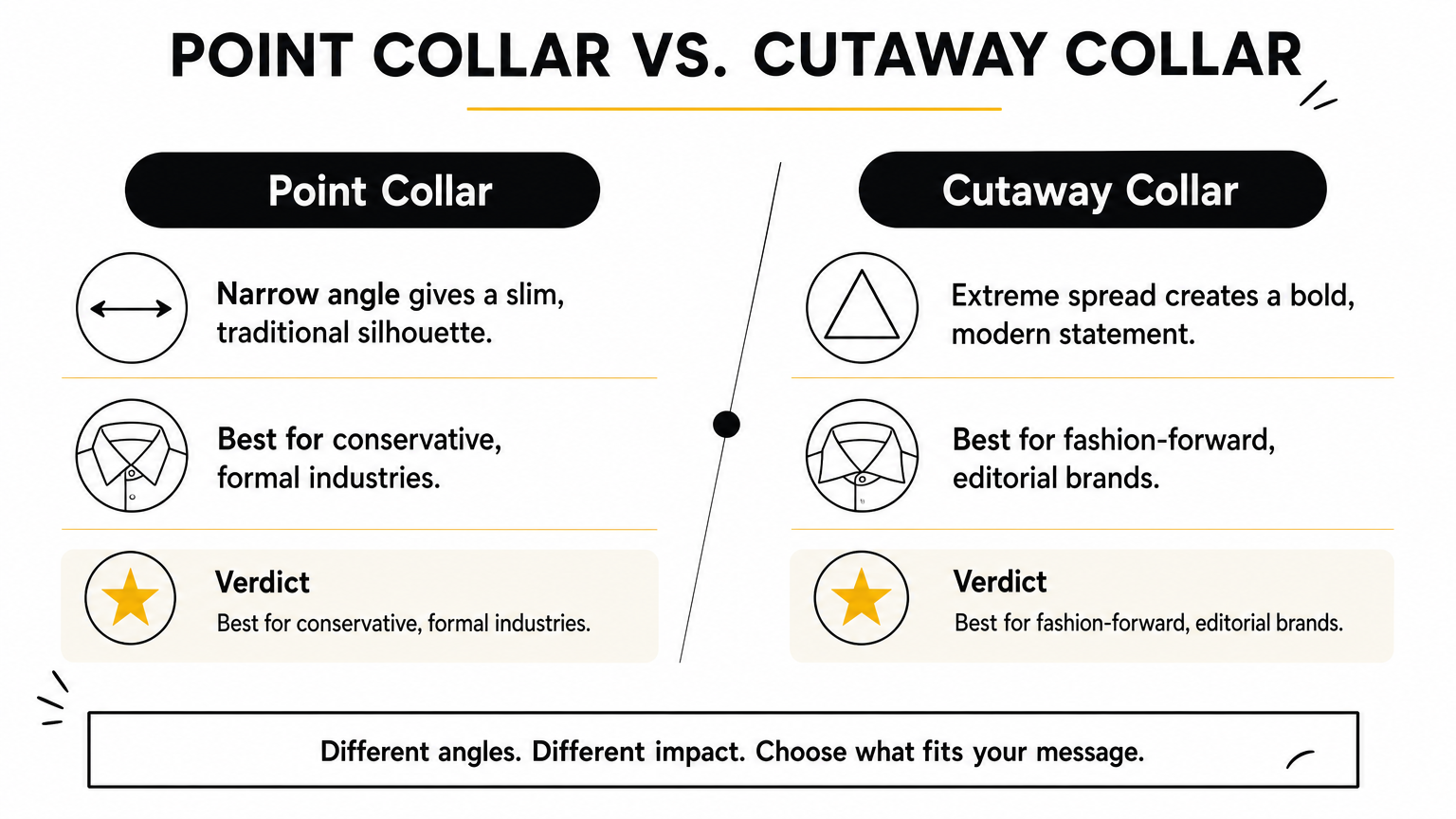
The point collar is the collar most people picture when they think of a classic dress shirt. Its collar points sit close together, typically 2.5 to 3.5 inches apart, and angle down at a narrower spread than almost any other style on this list. That tight, downward angle is what gives it a slim, traditional silhouette that has barely changed since the early 1900s. If you're trying to memorize shirt collar types by silhouette alone, the point collar is your baseline: everything else on this list is a variation on how wide or narrow that angle gets.
What it looks like
Look for the narrow gap between the collar tips and for the points lying flat against the chest rather than flaring outward. The collar band, one of the essential parts of the shirt, is usually shorter than that of a spread collar, and the points themselves are longer and sharper, almost like a small arrow pointing down toward the buttons. When you're building or picking a mockup, this is the collar that reads as understated and slightly old-school, in a good way. It photographs (or renders) cleanly under a suit jacket lapel, which is part of why it's stayed popular through so many menswear cycles.
A narrow, close-set collar point is the fastest visual shortcut for "classic dress shirt."
Best for
The point collar suits narrower faces and slimmer neck-to-shoulder ratios because the tight angle doesn't add width where you don't want it. It's also the safest choice for conservative industries like law, finance, and traditional retail brands that want their shirt collar type to say "reliable" rather than "fashion-forward." Designers working on formalwear mockups, especially suit mockups and tuxedo shirts, reach for this style constantly because it sits so well under a notch lapel.
How to style it
Pair a point collar with a smaller, four-in-hand knot rather than a bulky Windsor; the narrow spread doesn't leave enough room for a large knot to sit comfortably. It also works well open-collar, without a tie, for a slightly retro business-casual look. When you're rendering this collar on one of our dress shirt mockups, keep the fabric texture subtle since the point collar already carries a formal, no-frills tone on its own.
2. Spread collar
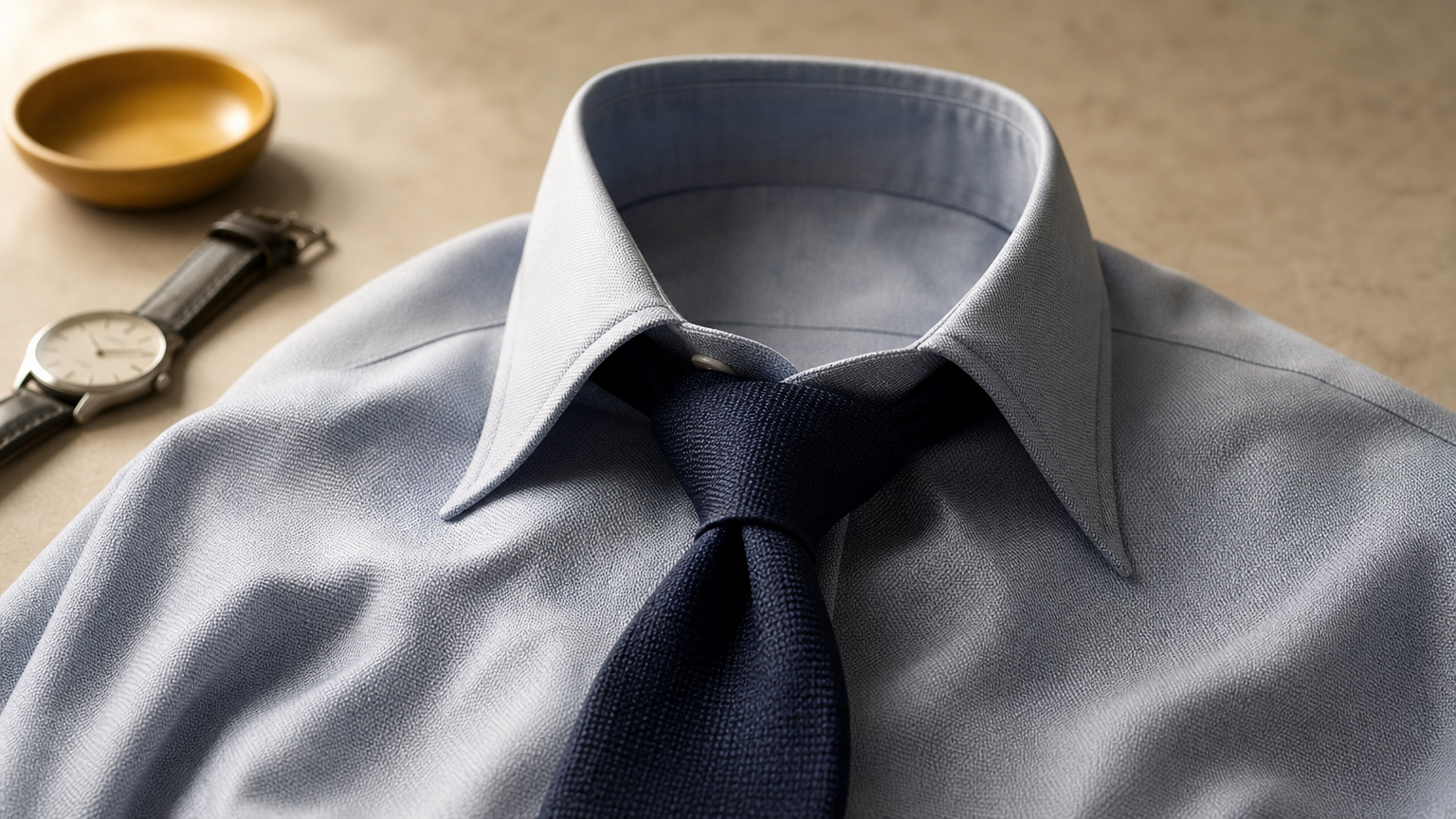
Spread collars widen the angle between the points, sometimes to 90 degrees or more, so more of the tie and knot show between the collar leaves. This is one of the most common types of collars for shirts in modern business wardrobes because it reads as confident and current without tipping into anything flashy. Where the point collar hides the tie knot, the spread collar frames it, changing the overall balance of a shirt design.
What it looks like
Examine the distance between the collar tips first; a true spread collar leaves a wide gap, often four inches or more, with the points angled outward rather than down. The collar band tends to run a bit taller than a point collar's, giving the neck more visual structure. On a mockup, this is the collar that makes a shirt look tailored even before you add a jacket, since the open spread draws the eye horizontally across the chest.
A wide, open spread collar signals modern tailoring the second a viewer sees it.
Best for
This collar flatters narrower or longer faces because the horizontal spread adds visual width. It's the default choice for contemporary business shirts, wedding party looks, and any brand positioning itself as polished but not stuffy.
How to style it
A spread collar needs a fuller knot, a Windsor or half-Windsor, to fill the open space without looking sparse. When rendering this on our shirt mockups, give the fabric a slight sheen; the wider collar shows more surface area, so the texture reads more clearly here than on tighter styles.
3. Cutaway collar
The cutaway collar pushes the spread even further than a standard spread collar, sometimes past 120 degrees, so the points sit almost horizontal to the shoulders. It's the boldest of the common collar types on shirts, built for shirts that need to make a statement even before you add a jacket or tie. Designers reach for cutaway collar dress shirts when the brief calls for something sharp and unmistakably modern.
What it looks like
Check the angle at the collar tips first; a cutaway leaves an almost flat line running from point to point, with very little downward slope. The collar band usually sits a touch shorter than a spread collar's, and the overall footprint is wider, which opens up a large triangle of tie or chest visible beneath the chin. On a rendered mockup, this collar reads as confident and slightly editorial, closer to what you'd see in a menswear magazine spread than a standard office shirt.
The flatter the collar line, the closer you are to a cutaway.
Best for
The cutaway flatters rounder or shorter faces because the extreme horizontal line balances softer jawlines. It suits fashion-forward brands, wedding shirts, and any design meant to photograph well without a jacket, since the collar itself becomes a focal point.
How to style it
Use a substantial knot; a full Windsor works best, since anything smaller gets lost in the wide gap. When building this on our dress shirt mockups, keep the collar edges crisp in your render; a soft or rumpled cutaway loses the sharp geometry that makes the style work in the first place.
4. Button-down collar
The button-down collar earns its name from the small buttons anchoring each point to the shirt front, keeping the collar flat and controlled no matter how much you move. It started as a polo player's fix for flapping collars and grew into one of the most recognizable shirt collar types in casual and business-casual wardrobes alike, which is why the casual button-down vs. dress shirt distinction so often comes down to this detail. Unlike the point or spread, this collar has a functional detail built right into the design, which changes how you should render and style it.
What it looks like
Spot the two small buttons near each collar tip, usually matching the shirt's main buttons in color and shape. The collar itself sits soft and slightly rolled rather than stiff, with a shorter point than a classic point collar and almost no gap between the tips when buttoned. On a mockup, this softness is the giveaway; a button-down should never look as crisp and structured as a point or spread collar.
The buttons at the tips are the one detail that instantly separates this style from every other collar type on shirts.
Best for
This collar suits casual Fridays, Oxford cloth shirts, and brands building a preppy or Ivy League aesthetic. It works especially well for types of shirt collar designs meant to be worn without a tie.
How to style it
Skip the tie entirely or keep it slim if you use one; the soft roll doesn't hold a heavy knot well. Render this collar on our dress shirt mockups with a matte cotton texture, since the relaxed drape depends on fabric weight reading correctly.
5. Wing collar
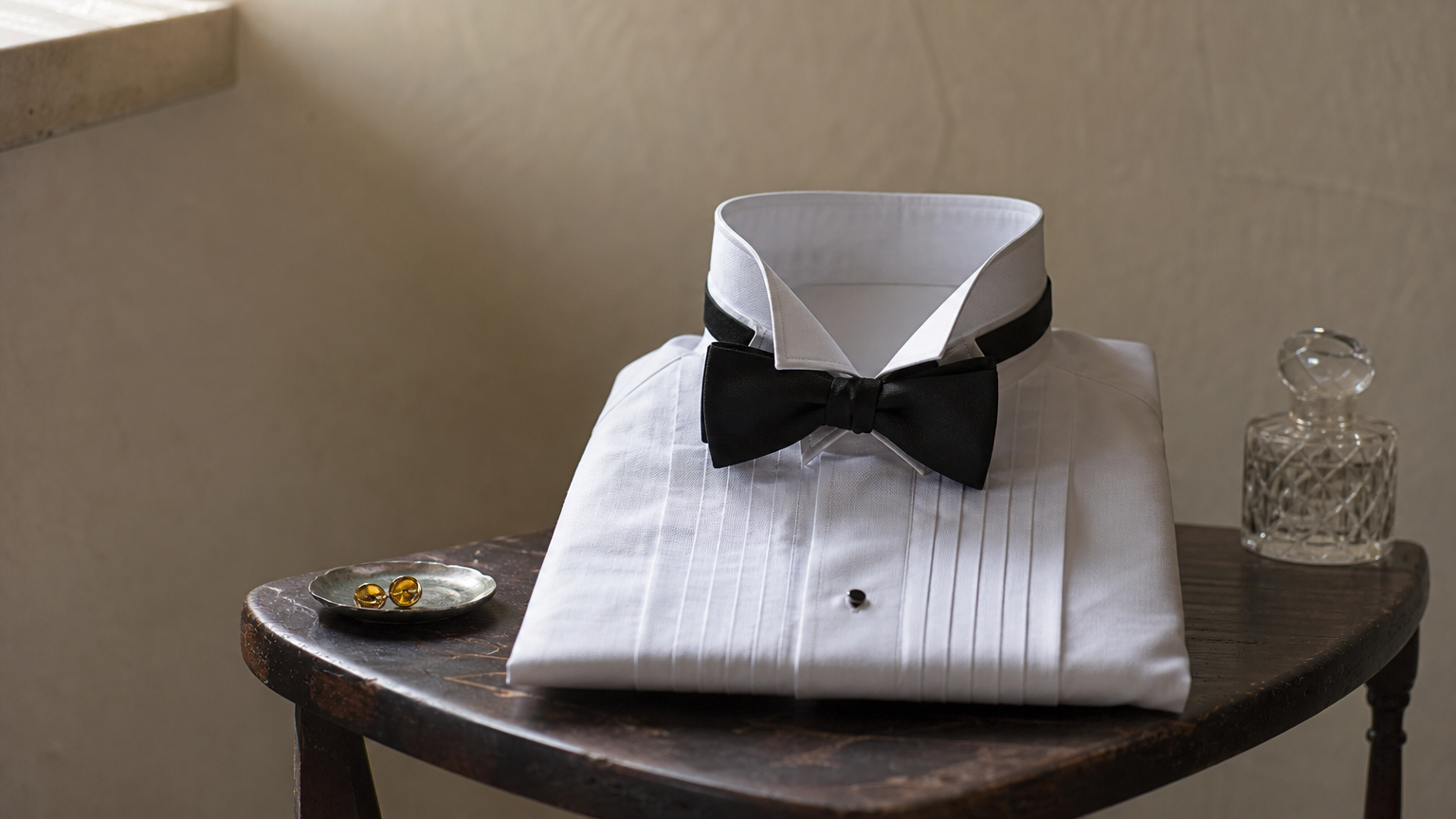
The wing collar is the most formal entry on this list, designed for white-tie and black-tie occasions rather than everyday business wear. Small, stiff points fold down and outward from a stand-up band, leaving a narrow gap at the front that's designed to frame a bow tie, not a necktie. Among all the shirt collar types covered here, this one has the narrowest use case, but it's also the hardest to get wrong once you know the shape.
What it looks like
Notice the stiff, upright band first; unlike every collar above it, the wing collar doesn't fold down across the chest. Only the small triangular tips, or "wings," fold outward near the throat, leaving most of the band standing straight. On a tuxedo shirt mockup, this rigid structure is the detail to nail, since a floppy wing collar instantly reads as a costume rather than formal wear.
A stiff standing band with two small folded tips is the wing collar's signature, and nothing else on this list looks quite like it.
Best for
This collar belongs on tuxedo dress shirts, formal wedding attire, and any design intended for black-tie or white-tie events. Designers working on our tuxedo shirt mockups reach for this style specifically because it has no casual equivalent.
How to style it
Pair it exclusively with a bow tie, never a long necktie, since the narrow gap wasn't built for a four-in-hand knot. Keep the fabric rendering crisp and bright white or ivory; texture and sheen matter far more here than pattern.
6. Club collar
The club collar, sometimes called a round collar, swaps sharp points for softly curved edges, giving the whole shirt front a rounder, gentler look. It's one of the oldest shirt collar types still in circulation, tracing back to English schoolboy uniforms in the late 1800s, and it's had a steady revival among designers who want something distinct from the usual pointed lineup. If you're cataloging collar shirt types for a vintage or retro-leaning collection, this is the one that signals "throwback" without needing any other design cues.
What it looks like
Focus on the tips first; instead of coming to a point, they curve into a rounded edge, almost like a small half-moon. The collar band sits short, similar to a button-down's, and the overall shape looks compact and tidy rather than sharp. On a rendered mockup, this roundness is unmistakable next to a point or spread collar.
Rounded tips instead of sharp points are the single detail that makes a club collar impossible to confuse with anything else.
Best for
This collar suits vintage-inspired brands, academic or preppy lines, and any shirt design built around a playful, old-world feel. Round faces benefit less here, since the curve echoes the jawline rather than balancing it.
How to style it
Keep the tie slim and the knot small; either a four-in-hand or a bow tie works. Render this collar on our dress shirt mockups with a slightly stiffer fabric texture, since the rounded shape holds its form better than a soft drape allows.
7. Band collar
The band collar strips the shirt down to just the standing strip of fabric around the neck, with no fold-over collar at all. Also called a mandarin collar, it's one of the simplest shirt collar types on this list, and that simplicity is exactly why it keeps showing up in both minimalist fashion lines and traditional Nehru-style jackets. If you're sorting through types of collar options for a streamlined design, this is the one with the least visual weight.
What it looks like
Check for the absence of a fold first; a band collar stands upright around the neck without ever bending outward. It usually closes with a single button or hook at the front, sitting an inch or so tall, and leaves the throat mostly exposed. In a mockup, this collar reads as clean and architectural, closer to a Nehru jacket or a chef's coat than to a standard dress shirt.
No fold, no points, just a short standing band, that's what makes this collar instantly recognizable.
Best for
This collar suits minimalist and streetwear brands, as well as designs referencing traditional Asian or Indian tailoring. Shorter necks can look boxier here, so it favors longer necklines and taller frames.
How to style it
Skip ties entirely; the band collar wasn't built to hold one. Render this on our shirt mockups with a clean, matte texture, since the collar's minimal shape depends on sharp edges to look intentional rather than unfinished.
8. Tab collar
The tab collar hides a small strip of fabric or a snap beneath the tie space, much like dress shirts with hidden collar buttons, which pull the two collar points together and force the tie knot forward. It's a quieter entry among shirt-collar types, since the tabs stay out of sight once the shirt is worn with a tie. Designers cataloging collar types in shirts often skip this one by accident because it looks like a plain point collar in a flat mockup, until you notice the subtle pinch at the throat.
What it looks like
Look for the slight forward push of the tie knot; that lift is the tab doing its job under the collar. The points themselves sit short and narrow, closer to a point collar's angle, but the fabric between them looks pinched rather than flat. On a rendered mockup, this pinch is the detail to get right, since a tab collar photographed loose or open just looks like a shirt with a wrinkled collar.
A forward-pushed tie knot with no visible hardware is the quiet signature of a tab collar.
Best for
This collar suits shirts designed to be worn with a tie, since the tab only works when a knot holds the points together. Formalwear brands and dress shirt lines aimed at buttoned-up, traditional dressers often reach for this style.
How to style it
Always pair it with a tie; a tab collar worn open looks unfinished and slightly odd. Render this detail in our dress shirt mockups by showing the knot slightly pushed forward, since that lift is the only visual proof that the tab exists.
9. Pin collar
The pin collar looks like a point collar at first glance, but a small pinhole sits hidden behind each collar tip, ready for a metal collar pin or bar to run straight through. That hardware pulls the points together underneath the tie knot, pushing it slightly upward and outward, similar to what a tab collar does without any pin at all. Among the more overlooked shirt collar types, this one rewards a closer look, since the visible difference from a plain point collar is small until you spot the pin itself.
What it looks like
Spot the metal bar or pin running horizontally beneath the tie knot, visible just above where the collar points meet. The points sit short and narrow, almost identical to a point collar's angle, but the pin lifts the knot forward, giving the whole neckline a tighter, more deliberate finish. In a rendered mockup, that small piece of hardware is the entire story, so it needs to be clearly visible rather than get lost in shadow.
A visible metal bar beneath the knot is the only thing separating a pin collar from a plain point collar.
Best for
This style suits formal and semi-formal shirts aimed at buyers who like an extra layer of polish, particularly grooms, groomsmen, and dressier business wardrobes. It's a strong pick when a brand wants a type of collar for a shirt lineup that includes something slightly more elevated than the standard point.
How to style it
Always pair it with a tie and the pin visibly in place; without one, the collar just reads as loose fabric. Render this detail sharply on our dress shirt mockups, since the pin's shine and placement need to catch light convincingly.
10. Spearpoint collar
The spearpoint collar takes the standard point collar and stretches the points longer and sharper, sometimes past three inches, so the tips look almost like the blade of a spear tucked under the chin. It's a rarer sight among modern shirt collar types, popular in the 1930s and 40s and now mostly worn by menswear enthusiasts chasing a vintage silhouette. Designers cataloging collar shirt types for period pieces or heritage-inspired lines will find that this one does a lot of visual work on its own.
What it looks like
Measure the points against a standard point collar, and the difference jumps out immediately; spearpoint tips run noticeably longer and taper to a sharper edge. The collar band stays close to a regular point collar's height, but that extra length changes the whole proportion of the shirt front, drawing the eye downward in a way shorter collars don't. In a rendered mockup, the exaggerated length is the detail that sets this apart from a plain point collar, so keep the tips crisp and fully extended rather than softened.
Longer, sharper tips than a standard point collar are what turn this into a spearpoint.
Best for
This collar suits vintage, heritage, and old-Hollywood-inspired brands looking for something distinct from mainstream shirt-collar options. Taller frames and longer necks carry the extended points more naturally than shorter builds.
How to style it
Pair it with a slim four-in-hand knot, since the narrow spread mirrors the tie needs of a standard point collar. Render this on our long sleeve shirt mockup templates with a slightly starched finish, letting the long points hold their shape cleanly.
11. Camp collar
The camp collar sits flat and open without a stand and never closes at the top button because there isn't one. It's built for warm weather, resort shirts, and anything meant to be worn loose and untucked. Among the shirt collar types covered here, this is the only one designed to work without a tie or jacket, and that openness is exactly what makes it so easy to spot on a rack of dress shirts.
What it looks like
Notice the flat, wide points that lie directly on the shoulders instead of standing up around the neck. There's no collar band underneath, so the whole piece looks like it's resting on top of the shirt rather than rising from it, and the top two buttons usually stay open by design. On a rendered mockup, this relaxed lay is the tell; a camp collar that looks stiff or upright has lost the shape that defines it.
No stand, no top button, just a flat, open collar resting on the shoulders, that's a camp collar.
Best for
This style suits resortwear, Cuban-inspired shirts, and any brand building a warm-climate or vacation line. It's also a strong fit for shirt collar types aimed at buyers who never plan to wear a tie.
How to style it
Leave it unbuttoned at the top and worn untucked for the most authentic look. Show this on our shirt mockups with lightweight linen or rayon textures, since choosing the right fabric and its drape matters more here than crispness.
Finding the right collar for every design
Eleven styles, one goal: matching the collar to the message your design needs to send. A point collar says traditional, a cutaway says confident, a camp collar says relaxed weekend wear. Once you can name these shirt collar types on sight, you stop guessing during client reviews and start making deliberate choices about fit, formality, and mood before you ever open a file.
Getting the collar right matters just as much in your presentation as it does in the pattern room. A photo-realistic mockup with the correct collar shape sells the design faster than a vague sketch ever will, and it saves you from reshoots or awkward client corrections down the line. Now that you know your point from your spearpoint, put that knowledge to work. Grab the long sleeve PSD dress shirt mockup and start rendering each collar style with the accuracy your designs deserve.
Comments
No comments yet. Start the conversation.