By AvikIn Fashion14 min read
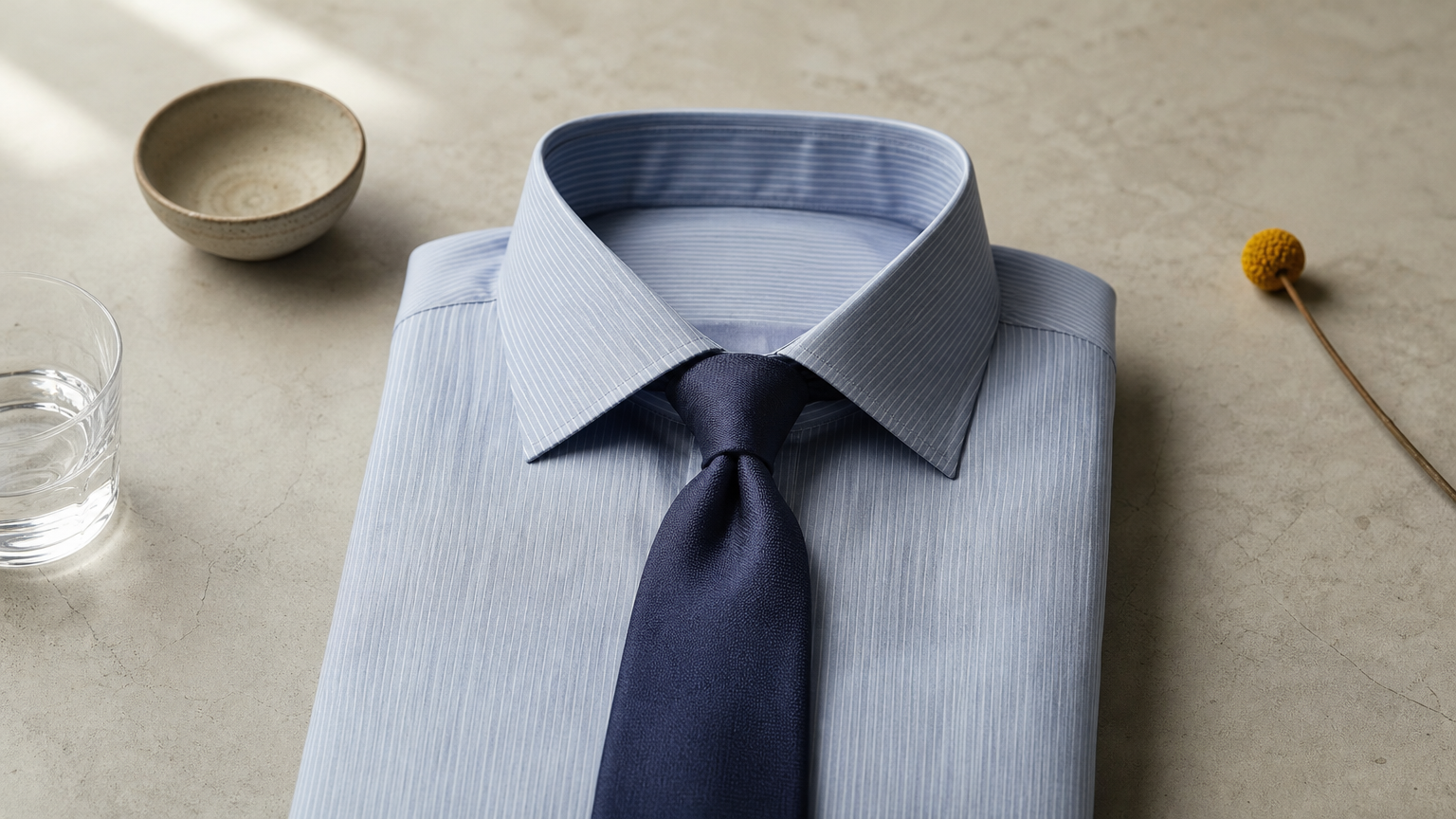
Dress shirt styles come down to four choices: collar, cuff, fit, and fabric. The safest all-round shirt is a white or light blue shirt with a point or spread collar, barrel cuffs, a modern fit, and a poplin or twill fabric. From there, pick a point collar for everyday office wear, a spread collar if you wear fuller tie knots, and a button-down collar for casual days. Choose French cuffs for formal events, a slim fit if you are lean, and a classic fit if comfort comes first.
The hard part is that shirt makers do not use one naming system. A "slim" shirt from one brand fits like a "modern" shirt from another, and collar shapes vary from brand to brand. Add hundreds of collar and cuff combinations, and it is easy to buy a shirt that looks fine on the hanger and wrong on you.
This guide sorts the options into 12 styles in four groups: four collars, two cuffs, three fits, and three fabrics. Each one tells you what it looks like, who it suits, and when to wear it. A short guide at the end matches the styles to occasions and covers plackets, hems, and sizing. ShirtsMockup makes PSD dress shirt mockups for designers and shirt brands, so these are the details we work with every day.
1. Point collar: the everyday default
What defines it
The point collar is the standard dress shirt collar. It has two moderately long points that angle down toward the chest, with a narrow to medium gap between them. Brands also call it a straight or classic collar. Of all men's dress shirt styles, it is the one you will see most often.
The narrow gap suits a small to medium tie knot, such as a four-in-hand. The pointed shape adds a vertical line that frames the face, which is why it tends to flatter fuller faces. Exact point length and spread vary by maker, so check the collar on the shirt in front of you.
A point collar is the shirt you reach for when you are not sure what the day will bring.
Who it suits and when to wear it
It works for almost everyone, and it is the best first purchase if you own no dress shirts yet. It moves easily between a suit, a sport coat, and jeans.
Best for: office days, interviews, suits with or without a tie
Pairs with: slim to medium tie knots, sport coats, chinos
Watch for: a big knot crowds the narrow gap, and the points curl without collar stays
2. Spread collar: for fuller tie knots
What defines it
A spread collar has points that angle outward, leaving a wide gap at the throat. A semi-spread sits halfway between the point and the full spread. Many brands now sell the spread as their main collar.
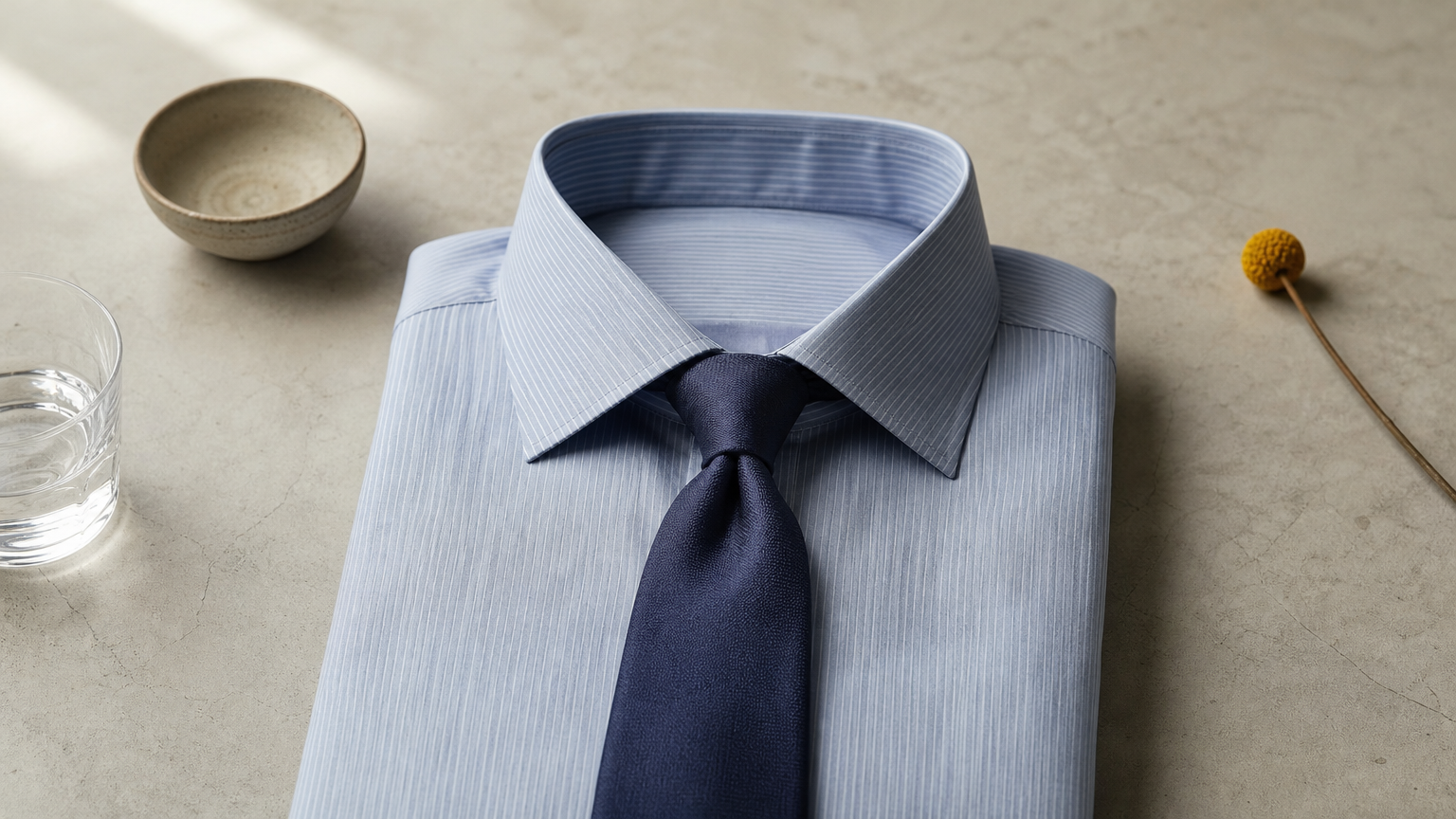
The wide opening gives a larger knot like a half-Windsor room to sit without pushing the collar up. It also looks neat with no tie at all, which is why the spread works for both business and relaxed settings. The wider the spread, the more it favors a trim, narrow face.
If your tie knot looks lost inside the collar, the shirt needs a wider spread.
Who it suits and when to wear it
The spread is the most flexible collar for men who sometimes wear a tie and sometimes do not. It keeps its shape open-necked, provided the collar has a bit of structure.
Best for: business suits, weddings, cocktail events, open-collar smart casual
Pairs with: medium to large knots, wider ties
Watch for: a very skinny tie leaves a visible gap, so match tie width to collar width
3. Button-down collar: the casual classic
What defines it
The button-down collar has small buttons that fasten each point to the shirt body. It started in England in the 1800s so polo players could keep their collars from flapping. It is the least dressy of the common collars and is closely tied to American style.
You will most often find it on Oxford cloth shirts. A good button-down has a soft, rolling collar that arches between the buttons instead of lying flat. A flat, stiff version loses the whole point of the style.
The roll of the collar is what makes a button-down look relaxed instead of sloppy.
Who it suits and when to wear it
It suits men who want a polished look without a stiff one. It sits well under a sweater or a sport coat because the points stay put.
Best for: casual Friday, weekend shirt-and-chinos outfits, layering
Pairs with: knit ties, sport coats, denim
Watch for: it reads casual with a formal worsted suit, and unbuttoned points look careless
4. Cutaway collar: wide and modern
What defines it
The cutaway is an extreme spread collar. The points are cut back sharply, so the gap is very wide and the collar sits close to horizontal. It is a modern take on the spread and is more fashion-driven than the first three.
The shape shows more neck and tie, so it looks best open or with a full knot that fills the gap. A small knot disappears in it. Because the points are short, collar stays and a well-made collar band matter a lot.
A cutaway collar needs a confident knot or no tie at all.
Who it suits and when to wear it
It suits men who want a sharper, more current look, and it flatters a narrow face. It pairs well with softly tailored suits and cocktail dress codes.
Best for: cocktail attire, European-cut suits, dressed-up open-collar looks
Pairs with: wide ties and full knots, or no tie
Watch for: slim ties look lost, and the shirt can feel too fashion-forward for conservative offices
5. Barrel cuff: the standard button cuff
What defines it
The barrel cuff closes with one or two buttons and is the cuff on most dress shirts you will ever buy. Variants include the angled (mitered) cuff, which has a 45-degree cut on the corner, and the rounded cuff with a softer edge. The corner shape changes the look more than the function.
Cuff height varies. Older shirts often have a cuff of about 3 inches. Contemporary cuffs run closer to 2.4 inches, and anything shorter reads as fashion-driven. A two-button cuff lets you adjust how snug it sits at the wrist.
The cuff should be snug enough to stay put but loose enough for a watch to slide under.
Who it suits and when to wear it
Barrel cuffs suit every situation from office to weekend, and you can roll the sleeves up easily. For a jacket, the sleeve should let about a quarter to half inch of cuff show.
Best for: daily office wear, business suits, rolled-sleeve casual looks
Choose angled: for a slightly more tailored finish
Watch for: very tall cuffs look dated, and a loose cuff slips over the hand
6. French cuff: for cufflinks and formal wear
What defines it
A French cuff is a double-length cuff folded back on itself and closed with cufflinks through holes on both layers. It is dressier than any button cuff and is the cuff of choice for formal shirts. A convertible cuff accepts both buttons and cufflinks, so one shirt covers both uses.
The cufflinks are the point. They are one of the few places a man can add personal style to a business outfit. Some shirts offer extra buttonholes so you can adjust sleeve length under different jackets.
French cuffs turn a plain white shirt into a formal one, and the cufflinks do the talking.
Who it suits and when to wear it
It suits any man who wears suits regularly or attends formal events. Keep the shirt itself simple, because the cuff already makes a statement.
Best for: black tie, weddings, formal business, dressy evenings
Pairs with: spread collar, solid white or light blue poplin
Watch for: the thick folded cuff needs a jacket sleeve with some room
7. Classic fit: comfort first
What defines it
The classic fit is the traditional cut. It is boxy, with generous fabric in the body and sleeves, and it usually has pleats at the back for arm movement. It was designed for a time when men wore jackets all day and comfort mattered more than silhouette.
If you have a rounder midsection or a larger frame, this is the most comfortable and flattering cut. It also suits a heavy jacket well, because the extra room means no pulling across the back.
Classic fit gives you room to move, and it costs you a sharp silhouette.
Who it suits and when to wear it
Choose it if you wear shirts under a jacket most of the day or if slimmer cuts feel restrictive. On a thin frame it can look like excess fabric, especially untucked or without a jacket.
Best for: long office days, travel, heavier builds
Pairs with: suits, sport coats, relaxed trousers
Watch for: bunching at the waistband if you are lean
8. Modern fit: the balanced middle
What defines it
The modern fit sits between classic and slim. It has a slightly tapered waist, sometimes with small back darts, high armholes, and sleeves with some room but no excess. The yoke reaches the shoulder bone, so the shoulders sit cleanly.
The result looks trim without feeling tight, and it holds up without a jacket. It flatters most builds except the largest ones, which is why many brands now treat it as their standard cut.
If you buy only one fit, make it the modern one.
Who it suits and when to wear it
It suits men with average and athletic builds and anyone who wears shirts both with and without a jacket. It is the easiest place to start if you are unsure.
Best for: office wear, dinners, shirt-and-trousers outfits
Pairs with: tailored suits, chinos, dark denim
Watch for: names differ by brand, so check the measurements, not the label
9. Slim fit: trim and shaped
What defines it
A slim fit removes excess fabric. It usually has darts at the back and a high armhole, giving a shape that follows the body without being skin tight. It looks sharpest when tucked in and worn on a lean frame.
The tradeoff is movement. Slim shirts feel more restrictive, and fabric pulls at the buttons when you sit or reach. An off-the-rack slim fit on a heavier build tends to look strained, so a made-to-measure shirt is a better route.
A slim fit rewards a lean frame and punishes a wrong size.
Who it suits and when to wear it
Choose it if you are lean or athletic and wear shirts without a jacket often. Avoid the ultra-skinny cuts, which wrinkle heavily and limit your arm movement.
Best for: fitted suits, dressy casual, shirt-and-trousers looks
Pairs with: narrow lapels, slim ties, tailored trousers
Watch for: gaping buttons and sleeves tight at the biceps
10. Oxford cloth: textured and tough
What defines it
Oxford fabric is a thicker, slightly textured cotton with a basket-weave look. It feels softer and more casual than a smooth dress fabric, and it wears well over years. Washing makes it softer, not worse.
It is the traditional partner of the button-down collar. Oxford wrinkles less than poplin and keeps its shape through a long day, though it feels warmer on hot days because the cloth is heavier.
Oxford cloth is the dress shirt fabric that gets better with washing.
Who it suits and when to wear it
Oxford suits men who want a durable everyday shirt with a relaxed polish. It sits at the edge of formal, so it is better with a sport coat than with a sharp business suit.
Best for: business casual, weekends, travel
Pairs with: button-down collar, chinos, sport coats
Watch for: the texture looks informal with a formal worsted suit
11. Poplin: smooth and crisp
What defines it
Poplin, often sold as broadcloth, is a tightly woven, smooth, lightweight cotton. It has a clean, flat surface and a slight crispness, which is why it looks sharp the moment you put it on. It is the fabric behind most formal and business dress shirts.
The tradeoff is that wrinkles show faster than on heavier cloth. After a full day, a poplin shirt will not look as fresh as it did in the morning, so ironing matters.
Poplin looks the sharpest in the morning and asks for an iron before every wear.
Who it suits and when to wear it
Poplin suits formal and business settings, and it works well in warm weather because it is light. For a long travel day, choose a heavier fabric.
Best for: suits, interviews, weddings, summer office wear
Pairs with: spread collar, French cuffs, solid white or blue
Watch for: thin white poplin can be see-through, so check the weight
12. Twill: soft drape and wrinkle resistance
What defines it
Twill is woven with a diagonal rib that you can see on close inspection. It has a slight sheen, a softer hand, and a fuller drape than poplin. Herringbone is a common variant of the same weave.
Because of the diagonal structure, twill holds its shape and resists wrinkles better than poplin, which makes it a strong choice for long workdays. It is slightly heavier, so it suits cooler weather well.
Twill is the fabric to choose when the shirt has to look good at 5 p.m.
Who it suits and when to wear it
Choose twill for daily office wear, especially in fall and winter. For travel, a non-iron finish saves effort, but the chemical treatment can make a shirt less breathable, so keep it to a few shirts.
Best for: everyday business wear, cooler months, long days
Pairs with: point or spread collars, barrel cuffs, suits
Watch for: heavier twills run warm in summer
How to match dress shirt styles to the occasion
Match the formality of the shirt to the dress code. Collar, cuff, and fabric each add or remove formality, and the shirt reads as formal when most of them lean the same way. The table below pairs the styles above with five common occasions.
Quick pairing guide by occasion
Occasion | Collar | Cuff | Fit | Fabric |
|---|---|---|---|---|
Everyday office | Point or spread | Barrel | Modern | Twill or poplin |
Interview or formal business | Spread | Barrel or French | Modern or slim | Poplin |
Casual Friday or weekend | Button-down | Barrel | Classic or modern | Oxford |
Wedding or cocktail | Spread or cutaway | French | Modern or slim | Poplin |
Black tie | Wing or soft turndown | French | Slim or modern | Fine cotton with a pleated or piqué bib |
The wing collar belongs only to formal evening wear with a bow tie. If a dress code says black tie, a regular business shirt is the wrong choice.
When in doubt, a white poplin shirt with a spread collar covers most dress codes.
Details that change the look
Beyond the big four, a few smaller shirt details shape how a shirt reads. A placket is the strip along the buttons. A traditional placket is stitched on, a French placket is folded for a clean front without stitching, and a fly front hides the buttons.
Hem: a curved tail is cut longer so the shirt stays tucked, and a straight hem is meant to be worn untucked
Pockets: traditional dress shirts have none or one on the chest
Yoke: the panel across the shoulders, and a split yoke fits uneven shoulders better
If you design or sell shirts, a PSD mockup is the fastest way to test these choices. The folded dress shirt mockup with collar, cuff, pocket, placket, and yoke options lets you try them in your own fabrics before anything is cut.
Sizing and what counts as new
Most dress shirts are sized by neck and sleeve length, written like 16 & 32. A man with a 16-inch neck and a 33-inch sleeve buys a 16 & 33. Measure both arms and use the longer one, because a slightly long sleeve is less noticeable than a short one. Sleeve length is right when the cuff edge reaches the base of your thumb.
Lists labeled 2017 or 2021 show nearly the same styles as today, because the core elements do not change. What shifts is emphasis: softer collars, trimmer but not skinny fits, shirts worn without a tie, and easy-care fabrics. Alterations on a shirt cost a lot relative to its price, so buy the right dress shirt fit from the start.
Choosing your first few shirts
The 12 styles above all answer the same question: how formal should this shirt look, and how should it fit? Start with a modern fit in white and light blue, with a point or spread collar and barrel cuffs. Add a button-down in Oxford for weekends and a French cuff shirt for formal events. Once those work, the rest is refinement.
If you design or sell dress shirts and want to show these collar and cuff options on screen, try the professional dress shirt mockup for collars and cuffs. It comes as five layered PSD files with an option to add different fabrics on the collar and cuffs, so you can preview each style without a photo shoot.
Comments
No comments yet. Start the conversation.