By Tojo18 min read
The best men's dress shirt styles for work and formal occasions come from four choices: fit, collar, cuffs, and pattern. If you want one safe answer, buy a modern fit in solid white or light blue with a point or spread collar and barrel cuffs. Go classic if you want room, slim if you are lean, button-down if your office is relaxed, and French cuffs when you wear cufflinks.
Shopping for these details is harder than it should be. Brands name fits differently, so one label's slim is another's modern. Product pages throw terms like cutaway, tattersall, and double cuff at you without explaining them. The result is a shirt whose collar fights your tie or whose sleeves pull when you reach for the keyboard.
Below you will find 12 styles: three fits, four collars, two cuffs, and three patterns. Each one gets the same three checks: what defines it, who it suits, and how to wear it. A final section turns that into a buying plan, with a table by occasion, sizing steps, and a quality checklist. ShirtsMockup makes dress shirt mockup templates, so if you design or sell shirts rather than just wear them, the same vocabulary applies to your spec sheets and product images.
1. Classic fit
What defines it
The classic fit is the fullest dress shirt cut, built for comfort rather than shape. It has a roomy chest and straight sides, generous sleeves, and often two pleats at the back yoke that give your arms room to move. Men wore this cut under jackets and waistcoats for decades, which is why mobility came first.
- Straight body with little taper from chest to hem
- Wider armholes and fuller sleeves
- Back pleats common
Who it suits
Choose it if you have a broad chest or a rounder midsection, if you move around a lot at work, or if you simply dislike fabric hugging your body. Of all the men's dress shirt styles, it is also the easiest to fit off the rack, because it forgives small measurement errors.
On a lean frame the same cut looks boxy, with extra fabric bunching at the waist. If that sounds like you, step down to a modern fit.
A classic fit trades sharpness for comfort, and for many working men that is a fair trade.
How to wear it
Wear it tucked in under a jacket, where the extra room does its job. Check that the shoulder seam sits on the edge of your shoulder bone. If the seam hangs past it, the shirt is too big in the frame, and no amount of tucking will fix that.
- Best with: wool trousers, a notch-lapel jacket, a standard-width tie
- Avoid: wearing it untucked, where the long tail looks sloppy
2. Slim fit
What defines it
A slim fit tapers from chest to waist and removes the excess fabric of a classic cut. It usually has back darts, higher armholes, and narrower sleeves, so it sits close to the body without being skin tight.
- Visible taper through the torso
- Darts or a shaped back panel
- Less fabric, so less room to move
No industry standard defines the word. One brand's slim can fit like another's modern, so read the brand's chest and waist measurements instead of trusting the label alone.
Who it suits
Lean and average builds look best in a slim fit, and so do men who wear shirts without a jacket, since the shirt itself is on show. Heavier or very broad men should be cautious with off-the-rack slim cuts. Buttons that pull between the chest and stomach are the clearest sign the size is wrong.
If the buttons pull, the style is wrong for your build, whatever the label says.
How to wear it
Run the reach test in the fitting room. Lift both arms forward as if typing. If the back pulls tight across your shoulder blades, go up a size or choose a modern fit. Tuck it in with flat-front trousers, and make sure the tail is long enough to stay tucked when you sit.
Because slim shirts hug the body, wrinkles and sweat marks show sooner. Pick a breathable cotton and rotate your shirts instead of wearing one two days in a row.
3. Modern fit
What defines it
A modern fit sits between classic and slim. It has a slight taper at the waist, sometimes small back darts, and sleeves with some room but no excess. Armholes are fairly high, and the yoke ends at or just past the shoulder bone. The table shows how the three fits compare.
| Fit | Body shape | Sleeves | Best for |
|---|---|---|---|
| Classic | Straight and roomy | Full | Comfort, broader builds |
| Slim | Tapered, often darted | Narrow | Lean builds, no jacket |
| Modern | Light taper | Moderate | Most builds, office wear |
Who it suits
Most men fit here, which makes it the best default if you are unsure. It also works well for athletic builds, where a slight taper removes the billowing at the waist without squeezing the shoulders. Only the largest frames may find a classic cut more comfortable.
When in doubt, buy the modern fit, because it forgives more mistakes than classic or slim.
How to wear it
This is the fit to own for work. It looks tidy tucked in under a blazer and still looks sharp when you take the jacket off at your desk. If you buy only one fit, buy this one in white and light blue.
Check the sleeve before you commit. With your arm relaxed, the cuff edge should reach the base of your thumb, and the sleeve should not bunch at the wrist.
4. Point collar
What defines it
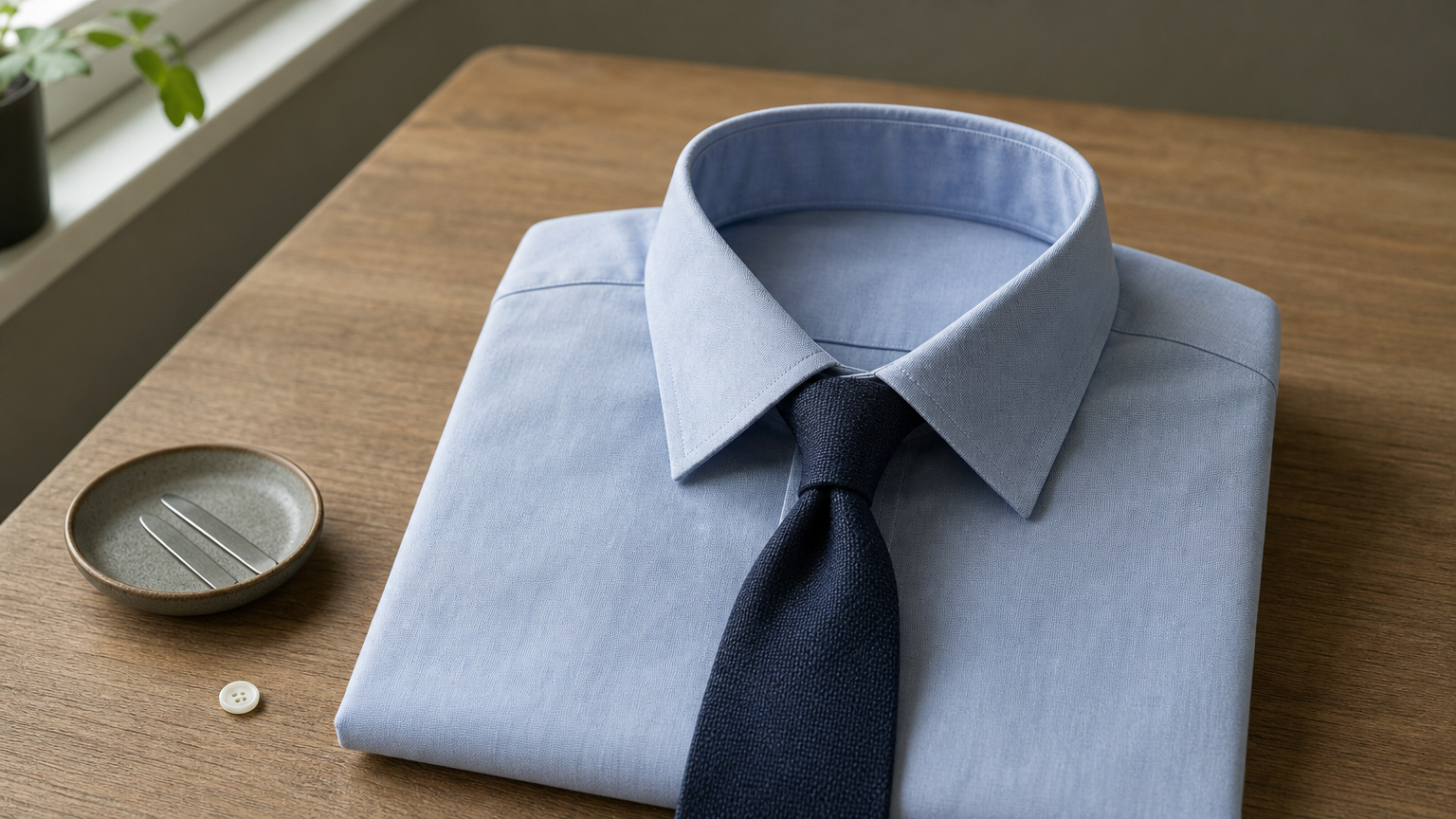
The point collar is the traditional dress shirt collar, with tips that angle downward and sit fairly close together. That narrow gap is the defining trait, and a tie knot fills the space between the points neatly. Collar sizes vary by brand, so one maker's point collar can look wider than another's.
- Narrow gap between the collar tips
- Best with small to medium tie knots
- Reads as conservative in any office
Who it suits
It is the safest choice for interviews, banks, law firms, and any workplace with a conservative dress code. The downward points also tend to flatter rounder faces, because they draw the eye down and lengthen the look of the face.
Men with a long, narrow face may find it exaggerates length. If that is you, a spread collar balances better.
A point collar never looks wrong in a business setting, which is why it belongs in a starter rack.
How to wear it
Pair it with a four-in-hand knot, which is small and slightly asymmetrical, and keep the tie width in proportion to your lapels. Always leave the collar stays in. Missing stays make the tips curl up and the collar loses its shape under a jacket.
Without a tie, a point collar looks narrow and can sag open at the neck. Save it for days when you dress up.
5. Spread collar
What defines it
A spread collar angles its points apart, leaving a wider gap for the tie. It is the most popular contemporary collar among men's dress shirt styles, and it works with or without a tie as long as it has enough interlining to stand up by itself.
- Wide gap between the tips
- Suits medium to large tie knots
- Holds its shape open-necked when well made
Who it suits
Choose it if you wear a tie some days and not others, since it looks finished either way. It balances narrower or longer faces, and it is a common pick for weddings, interviews, and evening events. In a traditional office, stick to a moderate spread, because extreme angles lean fashion-forward.
If you could own only one collar, a moderate spread would handle the widest range of occasions.
How to wear it
Match the knot to the gap. A half-Windsor fills a spread collar neatly, while a thin four-in-hand looks lost inside it. For open-neck days, look for firm interlining so the collar stands instead of flopping. The table pairs each collar with its knot.
| Collar | Gap between tips | Knot that fits |
|---|---|---|
| Point | Narrow | Four-in-hand |
| Spread | Wide | Half-Windsor |
| Cutaway | Very wide | Full Windsor, or no tie |
6. Button-down collar
What defines it
A button-down collar fastens each point to the shirt front with a small button. The style is American and usually made in oxford cloth, a thick basket weave. The story goes that it began with polo players who buttoned their collars so the points would not flap during play, and it still carries a relaxed, collegiate feel.
- Small buttons secure each collar tip
- Soft collar with a natural roll
- Often made in oxford cloth
Who it suits
It fits relaxed offices, creative fields, and smart-casual dinners. It is the most casual of the common dress collars, so skip it with a formal suit or an evening dress code. Within dress shirt styles for work, it is the pick when you want to look neat without looking stiff.
The button-down collar is the dress shirt that still looks right when the dress code says business casual.
How to wear it
Wear it with a blazer and chinos, or with a knit tie and a soft-shouldered jacket. Look for a soft collar roll, a gentle arch behind the buttons, rather than a collar that lies flat. If you wear a tie, keep the knot small to medium.
Oxford cloth is durable and softens with washing, so these shirts often look better after a year of wear than on day one. That makes them a sound buy for the shirts you wear most.
7. Cutaway collar
What defines it
The cutaway collar is a very wide spread, with points cut back toward the shoulders and a large opening at the throat. It is a modern take on the spread, and the gap shows off a full tie knot or a clean open neck. Quality varies, so check that the interlining is firm enough to keep the collar from collapsing open.
- Extremely wide gap between the tips
- Points sit nearly horizontal
- Makes the knot the focal point
Who it suits
Men with long, narrow faces get the most from the width, which balances the face. It also suits anyone who likes a fashion-forward look and wears a tie with a larger knot. For conservative workplaces it is a riskier choice than a point or moderate spread.
A cutaway collar works when you commit to it, with a full knot or a deliberately open neck.
How to wear it
A small knot disappears in the gap, so use a full Windsor or leave the neck open. Open-necked, it pairs well with a blazer and a textured or gingham shirt. Skip the thin tie, which looks lost in all that space.
Keep the rest of the outfit simple. With such a distinctive collar, a plain jacket and a solid tie let the shirt do the talking without turning the whole look into a statement.
8. Barrel cuff
What defines it
The barrel cuff closes with one or two buttons and is the everyday cuff on most dress shirts. Corners may be square, rounded, or mitered, which means cut at an angle. A second button lets you tighten the fit at the wrist, and two-button cuffs read slightly dressier.
- One or two buttons
- Square, rounded, or mitered corners
- No accessories required
Who it suits
Everyone. If you own five dress shirts, at least four should have barrel cuffs, because they fit under any jacket sleeve and need nothing extra. They are also quicker to put on and easier to launder than French cuffs, which makes them the practical choice for the working week.
Barrel cuffs are correct for every business meeting, so French cuffs are a choice, never a requirement.
How to wear it
Button the cuff so you can slide a watch under it but the cuff does not slide over your hand. The cuff edge should reach the base of your thumb. Under a jacket, about half an inch of cuff should show past the jacket sleeve.
If more or less shows, check the shirt sleeve length first. A tailor can usually adjust a jacket sleeve more simply than a shirt sleeve, so fix the shirt choice before the jacket.
9. French cuff
What defines it
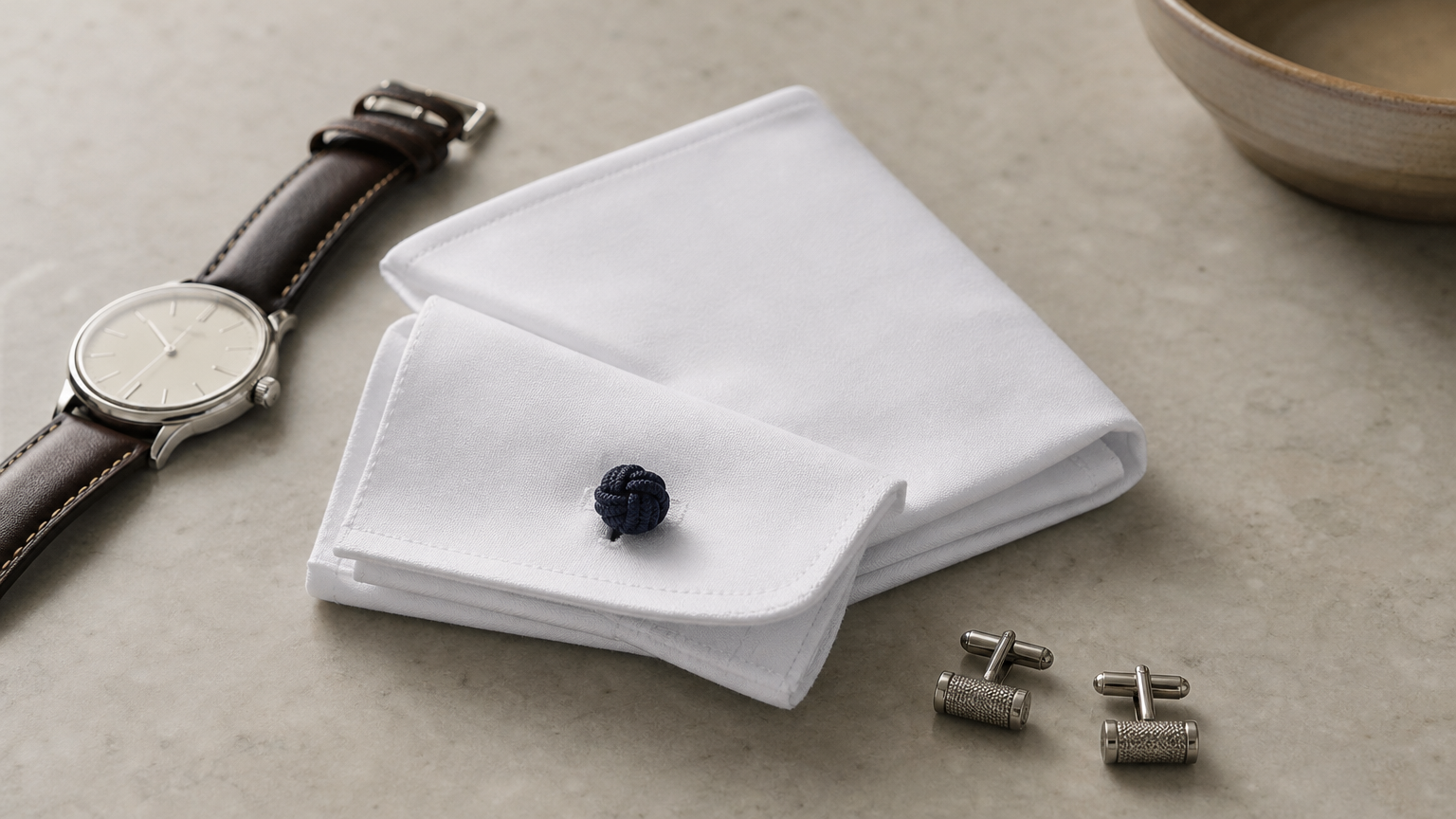
French cuffs are double-length cuffs folded back on themselves and fastened with cufflinks instead of buttons. The fold creates a crisper edge and a more formal look than a barrel cuff. Formal evening shirts use them, and they are the one cuff style that lets your accessories show.
- Folded double cuff
- Four holes that line up for the link
- Needs cufflinks to close
Who it suits
French cuffs suit weddings, evening events, client dinners, and men who like a little personal style in their accessories. They are not required with a suit, and a barrel cuff is fine for any daytime meeting. Choose French cuffs when you want the extra polish, not because the dress code demands them.
French cuffs turn a plain white shirt into a dressed-up one, with nothing but a pair of cufflinks.
How to wear it
Start with simple cufflinks in silver or a silk-knot pair, and match the metal to your watch and belt buckle. Pass the link through all four holes so the cuff folds back smoothly, with the decorative face showing on the outside.
Check that your jacket sleeve leaves room for the thicker cuff. A snug sleeve drags the cuff upward and hides the links you wore the shirt to show.
10. Solid white and light blue
What defines it
A solid shirt is the most formal and most flexible pattern, and white is the most formal solid, followed by light blue. Off-white or ecru adds warmth. The weave changes how the same color looks and feels, so it matters as much as the shade.
- Poplin: smooth, light, and crisp, but it wrinkles easily
- Twill: diagonal texture, softer drape, and better wrinkle resistance
- Pinpoint: a finer oxford weave that is smooth enough to wear with a tie
Who it suits
Solid white and light blue are the first two shirts anyone should buy, and they are essential for interviews and conservative offices. A solid shirt also gives you the freedom to wear any tie, because there is no pattern to clash with. If you only need a few men's dress shirt styles, these are the base.
Two white shirts and two light blue shirts will carry you through a working week.
How to wear it
White works under a dark suit and with almost any tie, and light blue pairs well with navy and gray. A simple starter rack is two white, two light blue, and one stripe. Wash the white shirts after each wear, since collars and cuffs pick up skin oils first.
Keep a lighter poplin for summer and a twill for cooler months. The color stays the same, and the shirt stays comfortable in each season.
11. Striped shirts
What defines it
A striped shirt adds visual interest while staying inside business dress, and the finer the stripe, the more formal it reads. Three types cover most of what you will find.
- Pinstripe: very thin lines, the most formal stripe
- Bengal stripe: wider, evenly spaced bands on a white or light ground
- Wide candy stripe: bold bands, clearly more casual
Who it suits
Stripes suit men who wear plain suits and jackets and want variety in the shirt. They are one of the easiest men's dress shirt styles to wear in an office, because a stripe in white and blue looks sharp but not showy. Vertical stripes also add a touch of visual length, which helps shorter men.
Choose a stripe for its scale: fine for formal, bold for casual.
How to wear it
Pair a striped shirt with a solid tie, or one with a small-scale pattern. If your suit has stripes, change the scale: a fine shirt stripe under a wide suit stripe, or the other way around. Matching scales fight each other, and the eye does not know where to rest.
Start with a blue and white Bengal or a fine pinstripe. Both are conservative enough for most offices and easy to match with the ties you already own.
12. Checks and plaids
What defines it
Checks are the most casual of the common dress shirt patterns. They range from nearly invisible to boldly graphic, and the scale of the check sets the formality. Three types are worth knowing.
- Gingham: small, even squares in white and one color
- Tattersall: thin, widely spaced lines forming a grid on a light ground
- Windowpane: larger boxes made from single thin lines
Who it suits
Checks suit business casual offices and casual Fridays, and they pair well with a sport jacket. They are less suited to formal suits or conservative workplaces. Tattersall is the most office-friendly of the three, because its lines are thin and its colors are muted.
A check shirt belongs under a blazer or sport jacket, not under a formal suit.
How to wear it
Pair a check shirt with a solid jacket, and keep the tie solid or knit, or skip it altogether. Avoid a check shirt under a checked jacket of similar size. If you want to mix patterns, make one pattern clearly larger than the other, so each reads on its own.
A gingham shirt in blue or green is a good first check. It reads as a neutral from a distance and works with navy, gray, and tan jackets.
How to choose and buy the right dress shirt style
Match the style to the occasion
Choose by occasion first, then fill in the details. The table gives a starting combination for each setting, and you can adjust it for your build and your office.
| Occasion | Fit | Collar | Cuff | Pattern |
|---|---|---|---|---|
| Interview or conservative office | Modern | Point or spread | Barrel | Solid white or light blue |
| Everyday office | Modern or classic | Spread or button-down | Barrel | Stripes or subtle checks |
| Business casual Friday | Classic or modern | Button-down | Barrel | Checks or bold stripes |
| Wedding or evening event with a suit | Modern or slim | Spread | French | Solid white or pale blue |
| Open neck under a blazer | Modern | Cutaway or button-down | Barrel | Solid or gingham |
Long sleeves are the standard for work and formal wear. Short-sleeve dress shirts exist, but they read as casual in most offices, so keep them for warm weather.
Pick the occasion first, and the fit, collar, cuff, and pattern mostly choose themselves.
Measure for size
Most dress shirts are sized by neck and sleeve length, written as 16/32. Do not trust small, medium, and large labels for dress shirts, because they hide the two measurements that matter most.
- Measure your neck at the base with a soft tape, leaving room for one finger.
- Measure the sleeve from the center of your back neck, across the shoulder, down to your wrist bone. Measure both arms and use the longer one.
- Check the chest and waist against the brand's size chart, especially for slim fits.
- When you fall between sizes, go up to the next half size at the neck.
For example, a neck of 15.25 inches and a longer arm of 33.5 inches points to a 15.5 neck with a 34 sleeve, written 15.5/34. Cotton can shrink slightly after the first wash, so a snug neck at purchase will only get tighter.
Check quality before you buy
A $30 shirt and a $100 shirt can look the same on a hanger, so inspect the details. A better shirt costs more per purchase, but it usually costs less per wear.
- Fabric: look for tightly woven cotton that feels smooth, not thin or scratchy.
- Buttons: mother-of-pearl feels cooler and sounds sharper when tapped than plastic.
- Collar: the collar should have firm interlining and removable stays.
- Stitching: small, even stitches hold longer than loose, long ones.
- Finish: keep a couple of non-iron shirts for travel, but make most of your rack untreated cotton, since non-iron finishes can be less breathable.
If you design or sell shirts
The same four choices drive your product images. Before you cut cloth, test combinations on screen: a contrast collar on a striped body, a French cuff in a different weave, a pattern at three different scales. The Professional Dress Shirt Mockup ($17) comes as five layered PSD files and lets you apply a different fabric to the collar and cuffs.
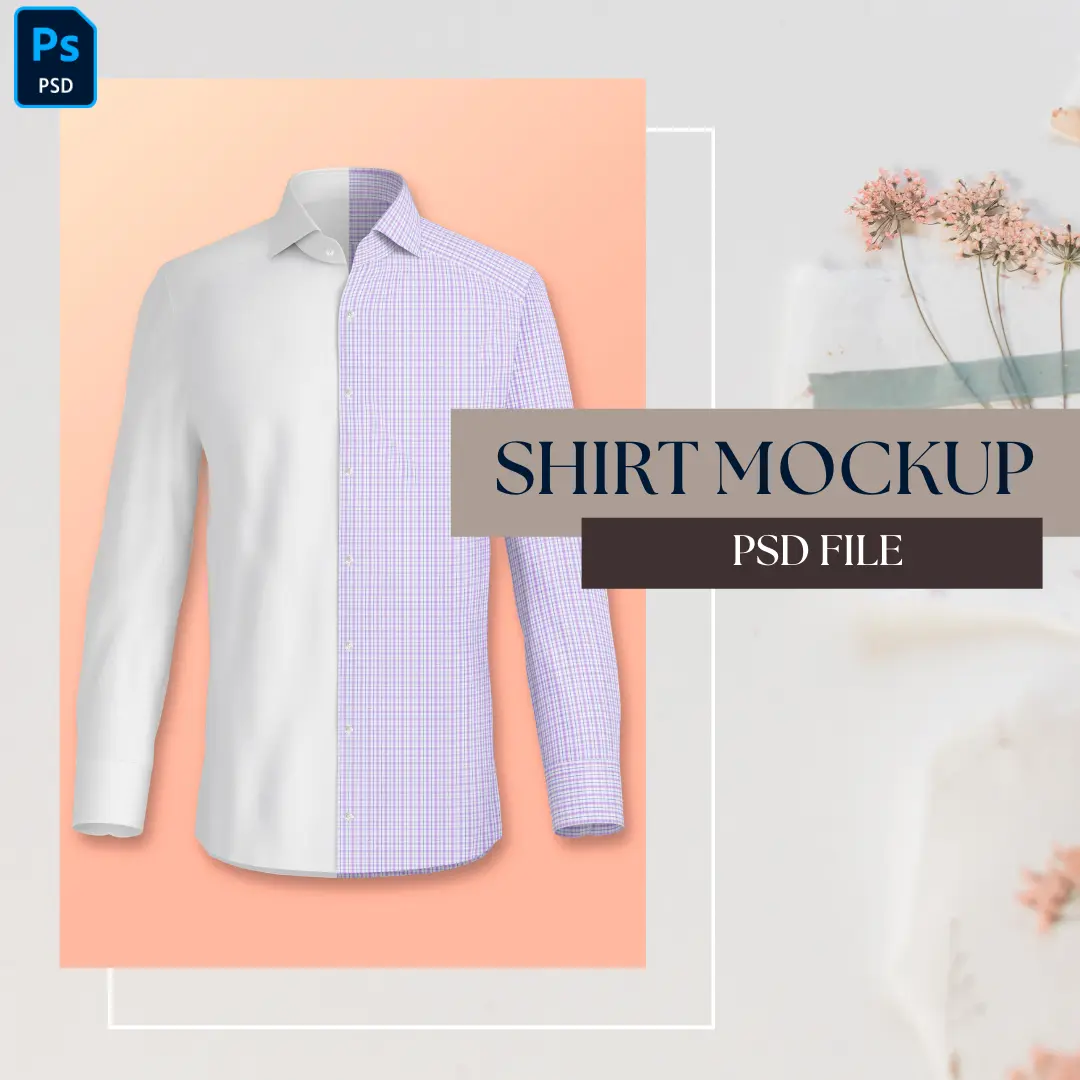
It works with Photoshop CC 2023 or later. Customers open the Smart Object, replace the fabric, and save, so you can show a full range of fabric options without a photo shoot.
Start with a few reliable styles
The right men's dress shirt styles come down to fit, collar, cuffs, and pattern, chosen for the occasion. Own a modern fit in white and light blue with a point or spread collar and barrel cuffs, then add a French cuff shirt, a button-down, and a stripe or check as your wardrobe and dress code grow.
Measure your neck and sleeve before you shop, and treat the label on the fit as a rough guide, not a promise. If you design shirts and want to test these combinations before production, try a dress shirt mockup with separate collar and cuff fabrics.
Comments
No comments yet. Start the conversation.