By RajIn Fashion8 min read
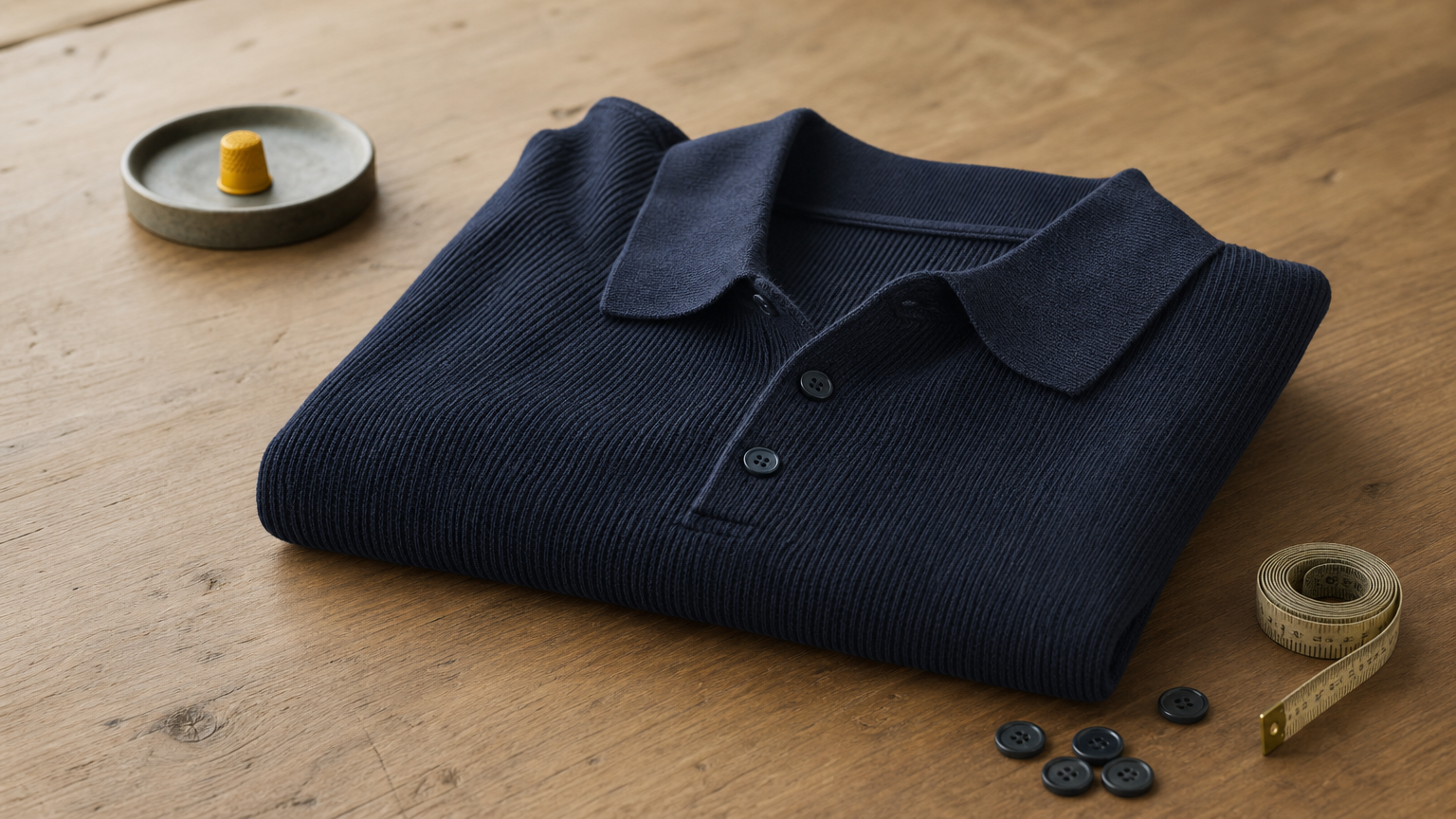
The collar decides whether a polo looks sharp or sloppy. Two shirts with the same fabric and fit can feel completely different because of how the neck is built. If you are comparing polo collar types, you want to see the differences fast and pick one without guessing.
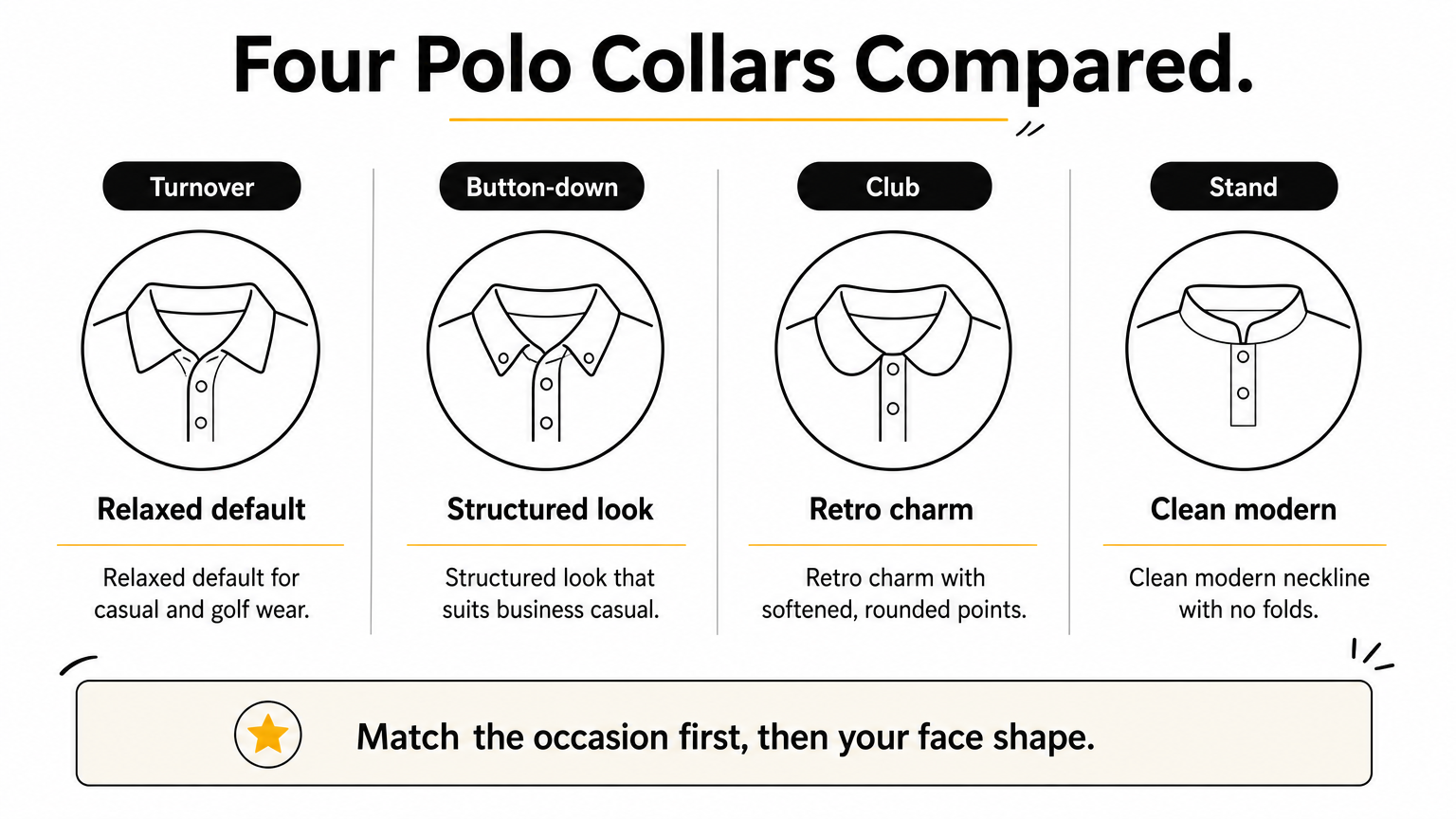
There are four main polo shirt collar styles: the traditional turnover, the button-down, the club collar, and the stand collar. The turnover is the classic choice for casual and golf wear. The button-down adds structure and works well with a blazer. The club collar is rounded and softer. The stand collar sits upright and gives a clean, modern neckline. Your choice depends on the occasion and your face and neck shape.
Below, you get each style explained with what makes it distinct, where it works best, and who it suits. If you design apparel, this also helps you present the right collar to clients. At ShirtsMockup, we build layered PSD templates for realistic apparel mockups, so you can test a collar and color before you produce a single sample.
1. Traditional turnover collar
What it looks like
The traditional turnover collar is the shape most people picture when they hear the word polo. It is cut from soft ribbed knit that folds over and lies flat against the neck, with two or three buttons on a short placket. Nothing inside the collar holds it stiff, so the points drape naturally.
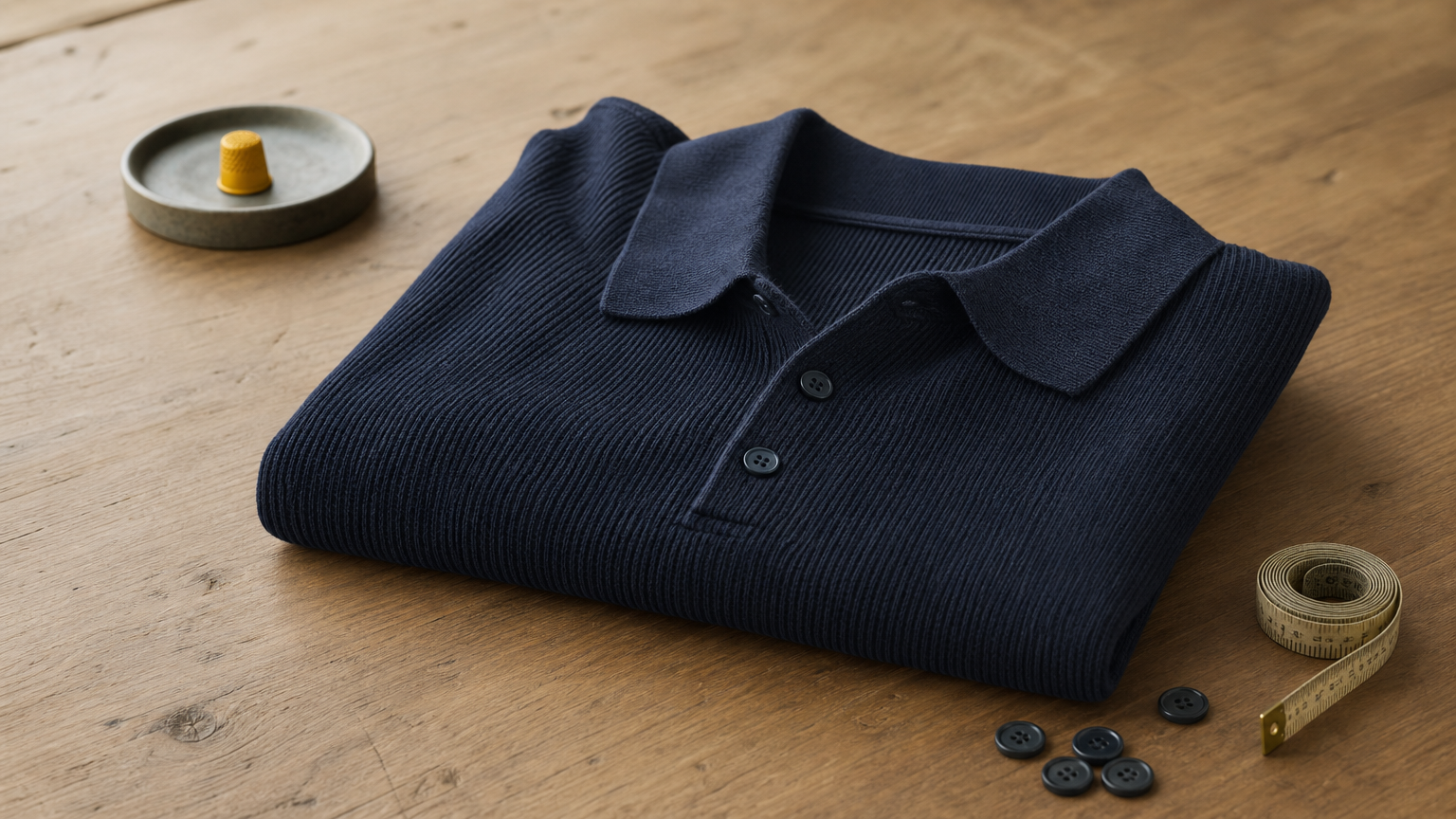
Compared with other polo shirt collar types, this one is the most relaxed. The knit stretches and recovers, which keeps it comfortable all day. The tradeoff is that cheap versions curl at the edges after repeated washing, so look for a collar with a bit of weight and a tight rib.
Best occasions and styling
Casual settings are where it shines. Wear it for golf, weekend errands, backyard events, and smart-casual office days. Keep the collar down and leave the top button open for a clean look. Skip the popped collar, because it reads as dated.
A few pairings work every time:
Chinos and loafers for a polished weekend outfit
Tailored shorts in summer, with the hem left untucked and straight
An unstructured blazer or knit cardigan when you need to dress it up slightly
The turnover collar is the default for a reason: it works almost everywhere and asks very little of you.
Who it suits
Almost everyone can wear it. Because the points are soft and short, it flatters most face and neck shapes, including round faces that benefit from a little definition and longer necks that benefit from coverage. It is also the easiest option if this is your first polo purchase.
If you design or sell apparel, this is the safest first collar to show clients. Its flat ribbing is simple to recolor in a mockup, so you can compare a navy body with a white contrast collar in minutes. Among all polo t-shirt collar styles, it is the baseline the other three are measured against.
2. Button-down collar
What it looks like
The button-down collar has pointed tips fastened to the shirt body with small buttons, usually one on each side. It is the same detail you know from an Oxford dress shirt. The collar is often cut from piqué or a firmer knit, so it holds its shape better than a turnover.
Of all the polo collar types, this one looks the most tailored. The buttons stop the points from curling or flapping, which keeps the neckline tidy in wind or under a jacket. The points also run slightly longer than a turnover's.
Best occasions and styling
Wear it when you want a polo that passes for business casual. It layers cleanly under a sport coat, a bomber, or a lightweight knit blazer, because the collar stays put instead of bunching. Here are three pairings that work:
Navy blazer and gray trousers for an office Friday
Dark denim and clean leather sneakers for dinner out
Tan chinos and suede loafers for a travel day
A button-down collar keeps a polo neat in situations where a softer collar would collapse.
Who it suits
This style suits people who want more structure than a standard polo gives. The longer points add a vertical line, so it works well on rounder faces and shorter necks. It also fits anyone who wears polos to work and wants a sharper outline.
If you design apparel, remember the buttons are tiny but noticeable. Keep them on their own layer in your PSD so you can match thread color to the fabric. Among polo t shirt collar styles, this one signals attention to detail the fastest.
3. Club collar
What it looks like
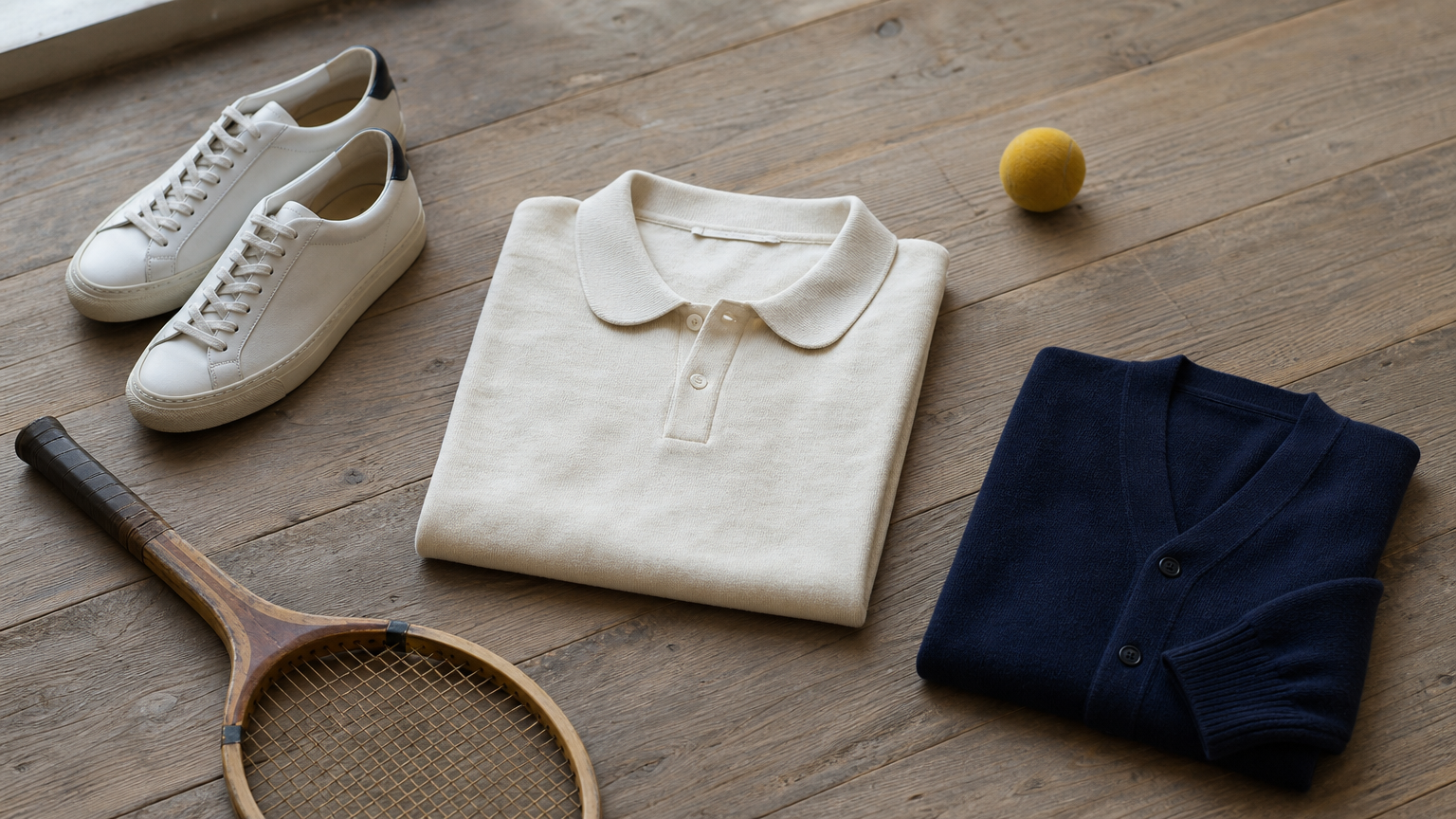
The club collar has rounded tips instead of sharp points. Picture the soft curve on a vintage tennis shirt or a prep school uniform. It sits flat and close to the neck, with a slightly tighter spread than a turnover.
Among all polo collar types, this one carries the most retro character. The curve removes the hard corner, so the neckline reads gentler and more traditional, and it pairs well with contrast trim or a two-tone placket.
Best occasions and styling
Wear it when you want a preppy, vintage look. It suits yacht club lunches, weekend brunches, and relaxed creative offices where a standard polo feels too plain. Keep the collar down and the top button open or fastened, depending on how neat you want to look. Here are three pairings that work:
Cream chinos and white leather sneakers for a retro tennis look
A navy cardigan and gray flannels for a cool-weather lunch
Pleated shorts and boat shoes for a summer afternoon
The club collar trades sharp edges for charm, so it works best when you want a polo with personality.
Who it suits
Choose it if you have an angular jaw or strong features. The rounded tips soften sharp lines and balance the face. It also suits anyone who loves vintage menswear and wants a polo that stands out without being loud.
If you design apparel, rounded corners are harder to mask cleanly than straight points. Put the collar on its own layer in your PSD and use a smart object for the fabric. That way you can test a contrasting trim on this one of the polo shirt collar styles without redrawing the curve.
4. Stand collar
What it looks like
The stand collar is a short band that rises straight up from the neckline and never folds over. There are no points to curl or flatten. It usually comes with a zip or a two-button placket and is cut from smooth jersey or fine piqué.
Of all the polo collar types, this one looks the most modern. The upright band frames the neck with a clean, minimal edge, closer to a knit sweater or track top than a classic polo.
Best occasions and styling
Travel days, city walks, and smart-casual dinners are where it works best. You get a polished shape without a tie or a traditional collar. It also layers well under a bomber, a Harrington jacket, or an unlined overcoat, because nothing bunches at the neck. Three pairings to try:
Black jeans and minimalist sneakers for an evening out
Slim trousers and Chelsea boots for a modern office
Wool overshirt and stone chinos for a cool-weather weekend
The stand collar is the polo for people who want a sharp neckline with zero fuss.
Who it suits
This style suits you if you have a longer neck or narrow shoulders. The band adds coverage and a little visual width. It is also a strong pick if you prefer a minimalist wardrobe. Skip it if you have a very short neck, since the upright band can feel crowded against the jaw.
Designers should build the band on its own layer in the PSD. Because it has no fold, shading and fabric texture carry the whole look. Test a matte jersey against a glossier knit, and compare how each polo shirt collar style reads on screen before you commit to a sample.
Picking the collar that fits your look
Each of the four polo collar types does a different job. The turnover is the easy default for casual wear. The button-down adds structure for business casual. The club collar brings vintage charm, and the stand collar gives you a clean, modern neckline. Match the collar to your occasion first, then check it against your face and neck shape. Try a few and keep notes on what feels right.
If you design or sell shirts, test the collar before you order samples. The dress shirt mockup with separate collar and cuff fabrics lets you swap the collar fabric on its own in a few clicks. You can compare contrast options on screen and show clients the winner with confidence.
Comments
No comments yet. Start the conversation.