By RajIn Fashion11 min read
The best suit and tie color combinations follow one logic: the shirt is the lightest piece, the tie is darker than the shirt, and the suit anchors everything. Navy is the safest pick for most men, from first interviews to weddings. Charcoal suits the man who dresses for the office every day. Light and medium gray give you the widest range of tie colors. Black is for evenings and somber occasions. Brown and tan suit the man who wants a warmer, less corporate look.
The problem is that most advice reads as a long list of colors with no reasoning behind it. You stand in front of your closet with one suit, a few shirts, and a drawer of ties, and nothing looks quite right. This guide starts with the short set of rules that explains why combinations work. Then it walks through six suit colors, each with shirt and tie pairings, the occasions it fits, and the mistakes to skip.
We write this from the ShirtsMockup side of menswear. Designers, tailors, and brands use our Photoshop mockups to preview suit, shirt, and tie fabrics before anything is cut or photographed, and the same color rules decide whether those previews look right.
How to match a suit, shirt, and tie
Every good combination passes three checks: the shirt is the lightest element, the tie is darker than the shirt, and the colors share a clear relationship. Get those right and the specific shades matter far less than you think. Each suit and tie color combination below passes these tests, so learn them once and you can build your own pairings.
Keep the shirt light, the tie darker than the shirt, and let the suit be the quiet frame.
Should the tie be lighter or darker?
Your tie should always be darker than your shirt. Against the suit it has more freedom. On a dark suit, a dark tie or a slightly lighter one both work. On a light suit such as tan, a noticeably darker tie gives the outfit its depth.
Here is why the shirt rule is firm. A pastel tie on a darker shirt looks washed out and dated, because the eye expects the lightest piece near the face. When the tie and shirt share a color family, such as light blue and navy, the gap in darkness does the work that a color change would otherwise do.
Three color schemes that work
Most strong outfits fall into one of three schemes, so choose one on purpose. Monochrome is the most conservative, analogous adds quiet interest, and complementary is the boldest. Save complementary pairings for social events or creative workplaces, where a bold tie reads as confidence.
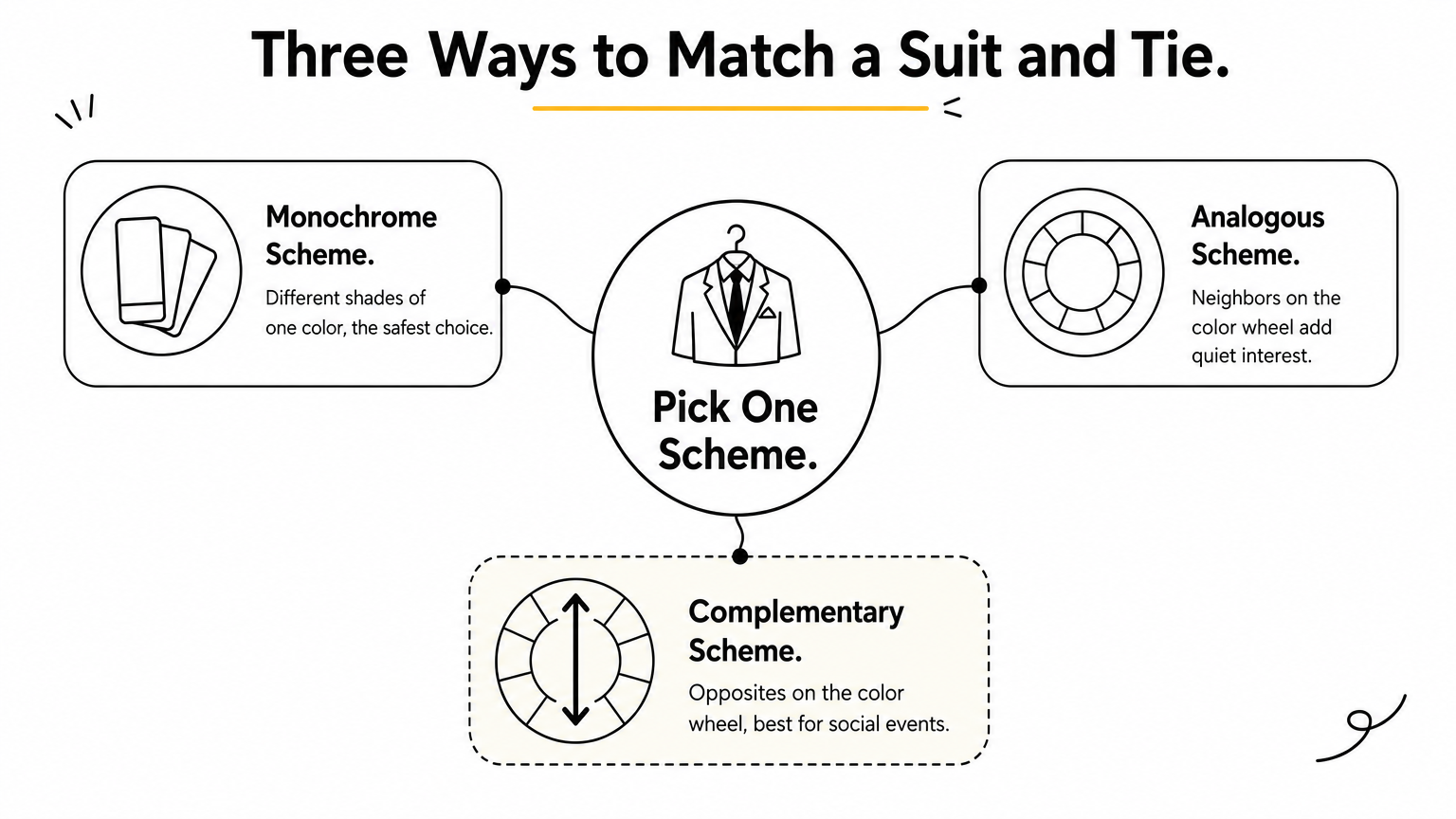
Scheme | How it works | Example |
|---|---|---|
Monochrome | Different shades of one color | Navy suit, light blue shirt, dark navy tie |
Analogous | Neighbors on the color wheel | Navy suit, lavender shirt, deep purple tie |
Complementary | Opposites on the color wheel | Navy suit, light blue shirt, rust tie |
Patterns, width, and length
Patterns follow one principle: vary the scale. A pinstripe shirt wants a paisley or dotted tie, not another stripe, and a patterned suit wants a solid tie. Fit details matter just as much as color, and they are easy to check:
Tie width: Match it to your lapel. Slim lapels take a tie around 2.5 inches wide, and standard lapels take 3 to 3.5 inches.
Tie length: The tip should land at your belt buckle, not above or below it.
Fabric by season: Silk works all year. Wool, knit, and cashmere suit fall and winter. Linen and cotton suit spring and summer.
Shared color: With a patterned tie, pick one of its colors and echo it in the shirt.
1. Navy suit
A navy suit pairs with white or light blue shirts and with burgundy, red, gold, green, silver, or darker blue ties. It is the most forgiving suit you can own, so navy suit and tie color combinations need little more than a clean shirt and a tie with some depth.
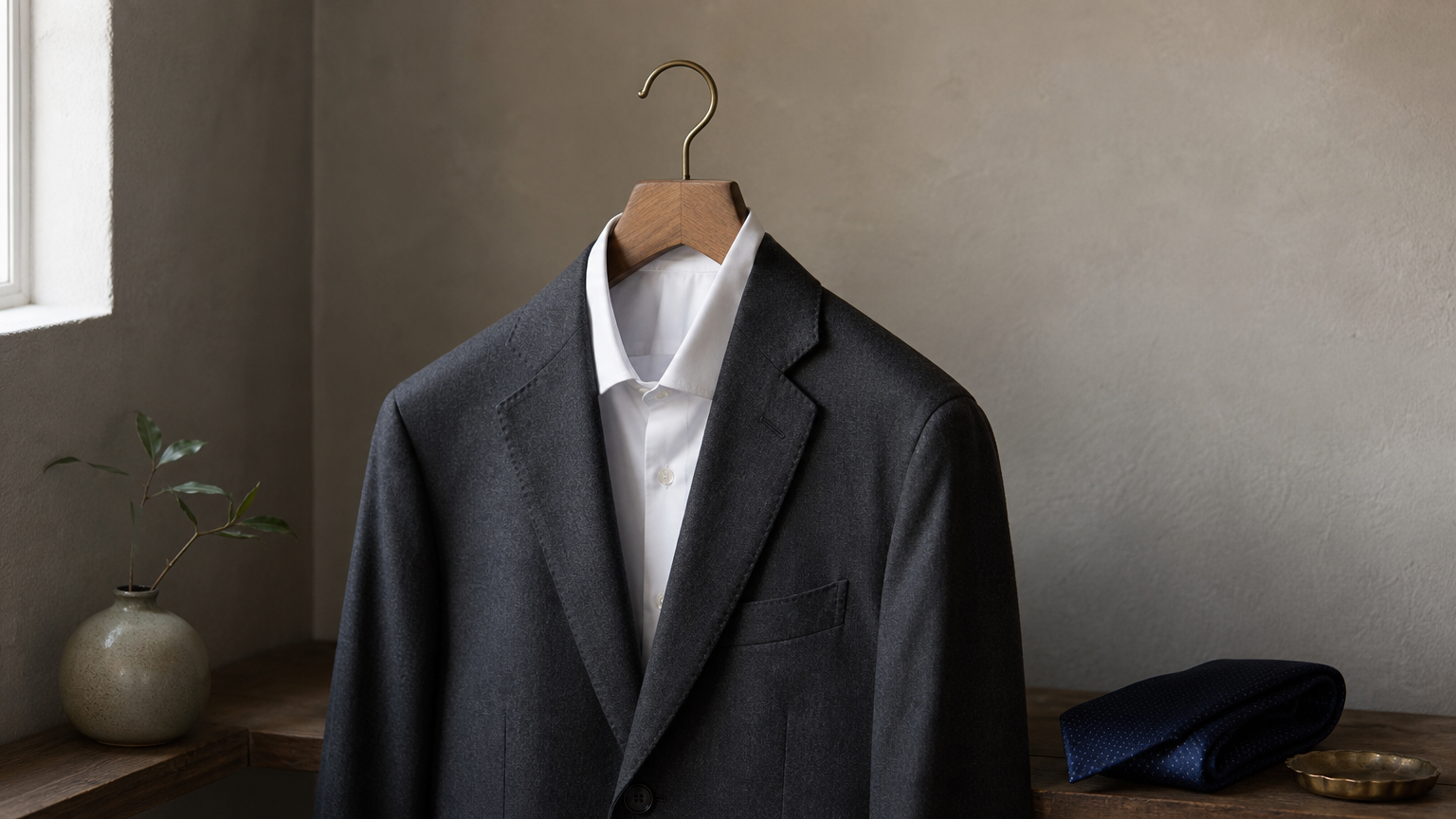
With a navy suit, a white shirt and a burgundy tie is the combination that never misses.
Best shirt and tie pairings
Start with white and burgundy if you want certainty, then branch out from the other rows once you feel confident.
Shirt | Tie | Effect |
|---|---|---|
White | Burgundy | Classic business |
White | Forest green | Distinctive, still safe |
Light blue | Dark navy micro-dot | Tonal and refined |
Light blue | Rust or orange | Bold complementary look |
Pale pink | Burgundy or deep navy | Soft and modern |
Where it works best
Navy is the default for interviews, client meetings, and weddings. Solid or small-pattern silk ties keep it formal, while a knit tie in navy or brown dresses it down for smart-casual days.
It also carries you from day into evening. Swap to a deeper tie after work and you are ready for dinner. Brown shoes give a warmer look, and black shoes give a more formal one.
What to avoid
Most navy mistakes come from too little contrast or a color clash. Watch for these two:
A navy tie with a navy suit and a chambray shirt. Everything sits in one shade and the tie vanishes.
A yellow tie over a pink shirt. The two compete for attention.
2. Charcoal suit
Charcoal takes white or light blue shirts with navy, burgundy, silver, or purple ties. It reads more serious than navy, so charcoal suit and tie color combinations suit the office, interviews, and any room where you want to look composed.
Charcoal rewards clean contrast: a crisp white or light blue shirt and one confident color at the tie.
Best shirt and tie pairings
Because charcoal is neutral, the tie sets the mood. Burgundy adds warmth and navy keeps things understated.
Shirt | Tie | Effect |
|---|---|---|
White | Burgundy | Authoritative and warm |
White | Navy | Understated and formal |
Light blue | Silver or light gray geometric | Cool and polished |
Lavender | Deep purple | Analogous, quietly distinctive |
Pale pink | Navy | Soft contrast |
Where it works best
Charcoal is a strong interview suit and a natural for conservative offices. A solid charcoal or one with a subtle stripe adapts to many occasions, from board meetings to funerals.
The neutral base accepts nearly any cool-toned tie in blue, gray, or pastel. A pastel mauve tie, for example, gives subtle contrast without breaking the serious tone of the suit.
What to avoid
Charcoal punishes sameness and very dark ties. Keep these two in mind:
A charcoal or gray tie over a gray shirt. The whole outfit sits in one tone and looks flat.
A black tie on an ordinary workday. It disappears into the suit, so save it for somber occasions.
3. Light and medium gray suit
Light and medium gray suits take the widest range of ties: black, dark green, plum, burgundy, or red over a white, pink, light blue, or ecru shirt. If you want the most flexibility from one set of suit and tie color combinations, gray is the color to buy.
Gray is a blank canvas, so the tie sets the mood: black for sharp, burgundy for warm, plum for bold.
Best shirt and tie pairings
Lighter suits need darker ties to hold their shape, and every row below follows that rule.
Shirt | Tie | Effect |
|---|---|---|
White | Black | Sharp minimalism |
White | Red | Presentation-ready energy |
Light blue | Navy | Clean and fresh |
Pale pink | Plum | Soft and tonal |
Ecru | Burgundy | Warm and relaxed |
Where it works best
Lighter grays suit spring and summer weddings, daytime events, and business-casual offices. In warm months, a linen or cotton tie in a deep shade keeps the outfit seasonal without losing contrast.
Medium gray is easy to dress up or down. Add a silk tie and a white shirt for a formal look, or a knit tie and an open-weave shirt for something looser. Black or dark brown shoes both work.
What to avoid
Gray suits go wrong when the tie copies the suit or when contrast disappears:
A light gray tie on a light gray suit. It looks washed out and accidental.
A pastel tie over a darker shirt. The tie ends up lighter than the shirt and breaks the core rule.
4. Black suit
A black suit works best with a white shirt and a black, silver, red, burgundy, or jewel-tone tie. Black is the most formal suit color, so black suit and tie color combinations belong to evenings, ceremonies, and somber occasions more than the daily office.
Over a black suit, keep the shirt white and choose the tie by occasion: black for mourning, silver for celebration, burgundy for dinner.
Best shirt and tie pairings
White is the shirt almost every time. A very light gray works too, but nothing darker than that.
Shirt | Tie | Best for |
|---|---|---|
White | Solid black | Funerals and somber occasions |
White | Silver | Weddings and anniversaries |
White | Burgundy or deep red | Dinners and evening events |
White | Emerald or sapphire silk | Cocktail parties and galas |
Very light gray | Dark red | A softer evening look |
Where it works best
Black suits shine at formal evening events, memorials, and celebrations where a dark, sharp silhouette is expected. A silk tie in a jewel tone livens the outfit without making it casual.
Wear black shoes and a black belt, since matching leather keeps the look consistent. One caution: if an invitation says black tie, wear a tuxedo, not a black business suit with a tie.
What to avoid
Black leaves little room for error, so blending and bold extras cause most problems:
A dark navy tie. It merges into the suit, and the contrast you wanted is gone.
A black shirt with a black tie. Unless that is the intended statement, it reads as heavy.
5. Brown suit
A brown suit calls for earthy colors: white, cream, or light blue shirts with green, mustard, rust, deep red, or darker brown ties. Brown suit and tie color combinations stay in a warm family, so cool shades such as silver tend to look off.
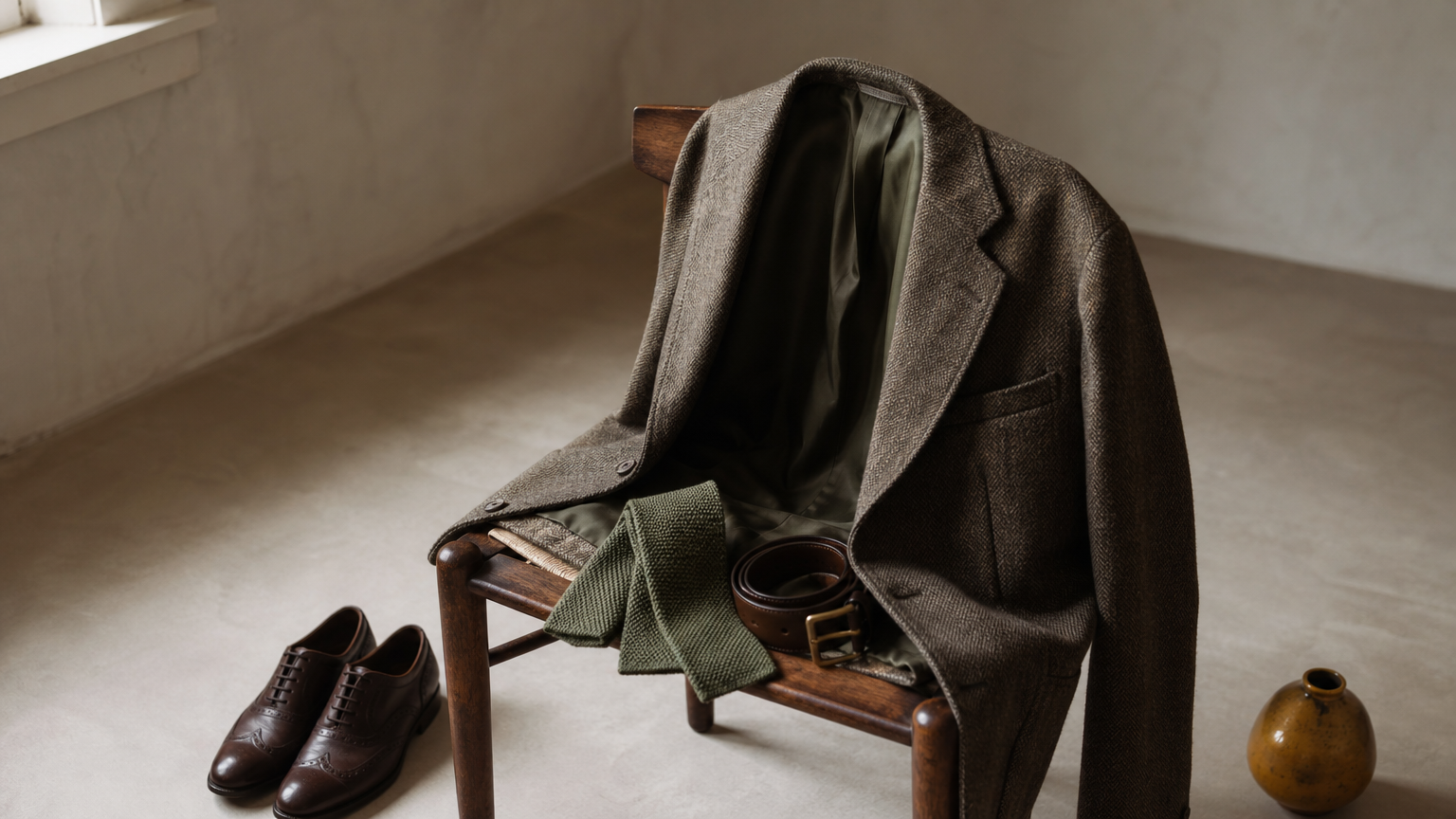
Keep a brown suit in a warm family: earthy ties, soft shirts, and dark brown shoes.
Best shirt and tie pairings
Think of olive, rust, and burgundy as your core tie colors. Each row below holds up from light oatmeal brown to deep chocolate.
Shirt | Tie | Effect |
|---|---|---|
White | Forest green | Rich and autumnal |
Cream | Olive floral | Soft and relaxed |
Light blue | Rust | Complementary and confident |
White | Deep red or burgundy | Warm and dressy |
Light blue | Chocolate knit | Tonal and textured |
Where it works best
Brown suits fit business-casual offices, creative workplaces, and fall weddings. Lighter browns in linen or cotton suit warm weather, and darker browns in wool suit colder months.
Match the tie fabric to the season: linen or cotton in summer, wool or knit in fall and winter. Finish with dark brown shoes and a matching belt so the outfit reads as one color story.
What to avoid
Brown needs depth and warmth, so avoid anything that flattens or cools it:
A tie in the exact brown of the suit. There is no separation, so pick a different shade or color family.
Black shoes and a black belt. They fight with the warm tones of the cloth.
6. Tan and beige suit
A tan or beige suit pairs with white, light blue, or ecru shirts and navy, burgundy, brown, or forest green ties. It is a light suit, so tan and beige suit and tie color combinations depend on a tie that is clearly darker than both the shirt and the cloth.
On a light suit, the tie does the heavy lifting, so choose one with real depth.
Best shirt and tie pairings
Navy is the safest anchor, and forest green adds personality without risk.
Shirt | Tie | Effect |
|---|---|---|
White | Navy | Crisp and classic |
Light blue | Burgundy | Warm contrast |
White | Forest green floral | Summer wedding style |
Ecru | Chocolate brown | Tonal and soft |
Light blue | Dark navy knit | Relaxed daytime look |
Where it works best
Tan and beige belong to daytime weddings, spring and summer events, and warm-weather travel. The light tone photographs well and keeps you cool, especially in linen.
Choose a linen, cotton, or knit tie in a deep shade to match the season. Brown shoes in a mid or dark tone ground the outfit and keep it from looking washed out.
What to avoid
On a light suit, pale colors and harsh black are the usual culprits:
A pastel tie. With a white shirt and a tan suit, everything blurs into one light mass.
A black tie or black shoes. They are too heavy against light cloth.
Build your outfit from the suit out
Strong suit and tie color combinations come down to contrast, not memorized charts. Keep the shirt lightest, make the tie darker than the shirt, and choose a color scheme on purpose. Navy gives you the most room, charcoal the most authority, gray the widest tie range, black the most formality, and brown and tan the warmest look.
If you design or sell suits, you can test these pairings before anything is sewn. The custom suit mockup template includes sample fabrics for the suit, trousers, shirt, and tie. You can try a navy suit with a burgundy tie or a brown suit with rust in a few clicks, then export images for your store or client presentation.
Comments
No comments yet. Start the conversation.