By Tojo8 min read
The simplest way to get suit shoe color combinations right is to start with the suit and choose shoes the same shade or darker. Black suits take black shoes. Navy takes dark brown or black. Charcoal takes black, dark brown or oxblood. Gray takes brown or black, and brown suits take darker brown. If you can only buy one pair, make it dark brown, unless your wardrobe is mostly black and charcoal.
Most advice on suit and shoe color combinations contradicts itself. One source says never wear brown with gray, another says brown is the best choice. An invitation says "cocktail attire" and you still don't know whether black or brown fits. The wrong pair makes an expensive suit look careless, and shoes are costly to replace.
This guide gives you four steps. You will learn the rules behind every pairing, match shoes to each suit color from a chart, adjust for work and weddings, and coordinate belt and socks. Then you test the full outfit. At ShirtsMockup we build PSD suit mockups for tailors and clothing brands, so suit color and styling are what we work with every day.
Why some suit and shoe pairings clash
A pairing clashes when the shoe is lighter, warmer or more casual than the suit calls for. Three checks catch almost every mistake, and once you know them, the chart in Step 1 makes sense instead of being a list to memorize.
Three rules behind every pairing
Start with the shade. Shoes should be as dark as your suit or darker. A pale tan shoe under dark charcoal trousers pulls the eye down to the feet and breaks the line of the outfit. Next, match the undertone. Cool suits lean toward black shoes and warm suits lean toward brown. Navy sits in the middle, which is why it works with both.
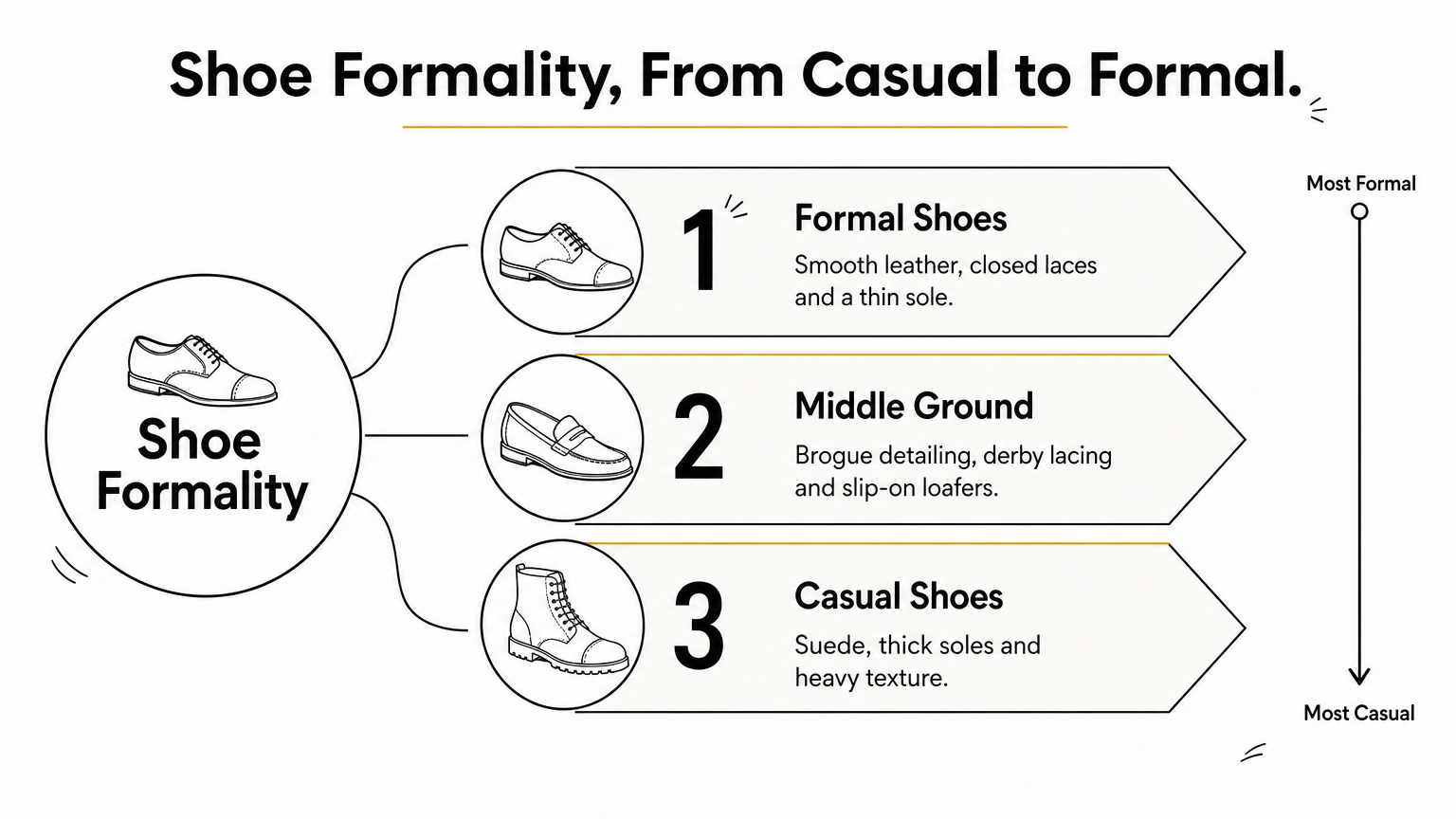
Then match the formality of the shoe to the event. Use these quick markers:
- Smooth, polished leather, closed laces and a thin sole read as formal.
- Brogue detailing, derby lacing and slip-on loafers sit in the middle.
- Suede, thick soles and heavy texture read as casual.
Dark enough, the right undertone and the right formality fix nearly every mismatch.
One exception to the shade rule: a light summer suit in stone, tan or light gray can take a mid-brown or tan shoe, because the whole outfit is light.
Which shoe color goes with almost everything
Dark brown is the most versatile choice. It works with navy, gray, olive and brown suits, and it looks sharp in most offices. Black is the safer choice for formal evening events and for black and charcoal suits.
Take a position when you shop. Buy dark brown cap-toe or plain-toe oxfords first, and add black oxfords second if you attend formal events. Those two pairs cover most of the chart below.
Step 1. Match the shoe to your suit color
Look up your suit color in the table of suit shoe color combinations and pick the "best shoe" column when you are unsure. The "also works" column gives you variety once you own more than one pair.
The suit-by-suit chart
| Suit color | Best shoe | Also works | Note |
|---|---|---|---|
| Black | Black | None | Brown clashes with black |
| Navy | Dark brown | Black, oxblood, tan | Tan suits daytime and casual events |
| Charcoal | Black | Dark brown, oxblood | Light tan looks off |
| Medium gray | Black or dark brown | Oxblood, medium brown | The most flexible suit |
| Light gray | Medium brown | Tan, black, burgundy | Go lighter in summer |
| Brown or tan | Dark brown, darker than the suit | Oxblood, cognac on tan | Black is too stark |
| Olive or green | Dark brown | Tan, oxblood | Black rarely works |
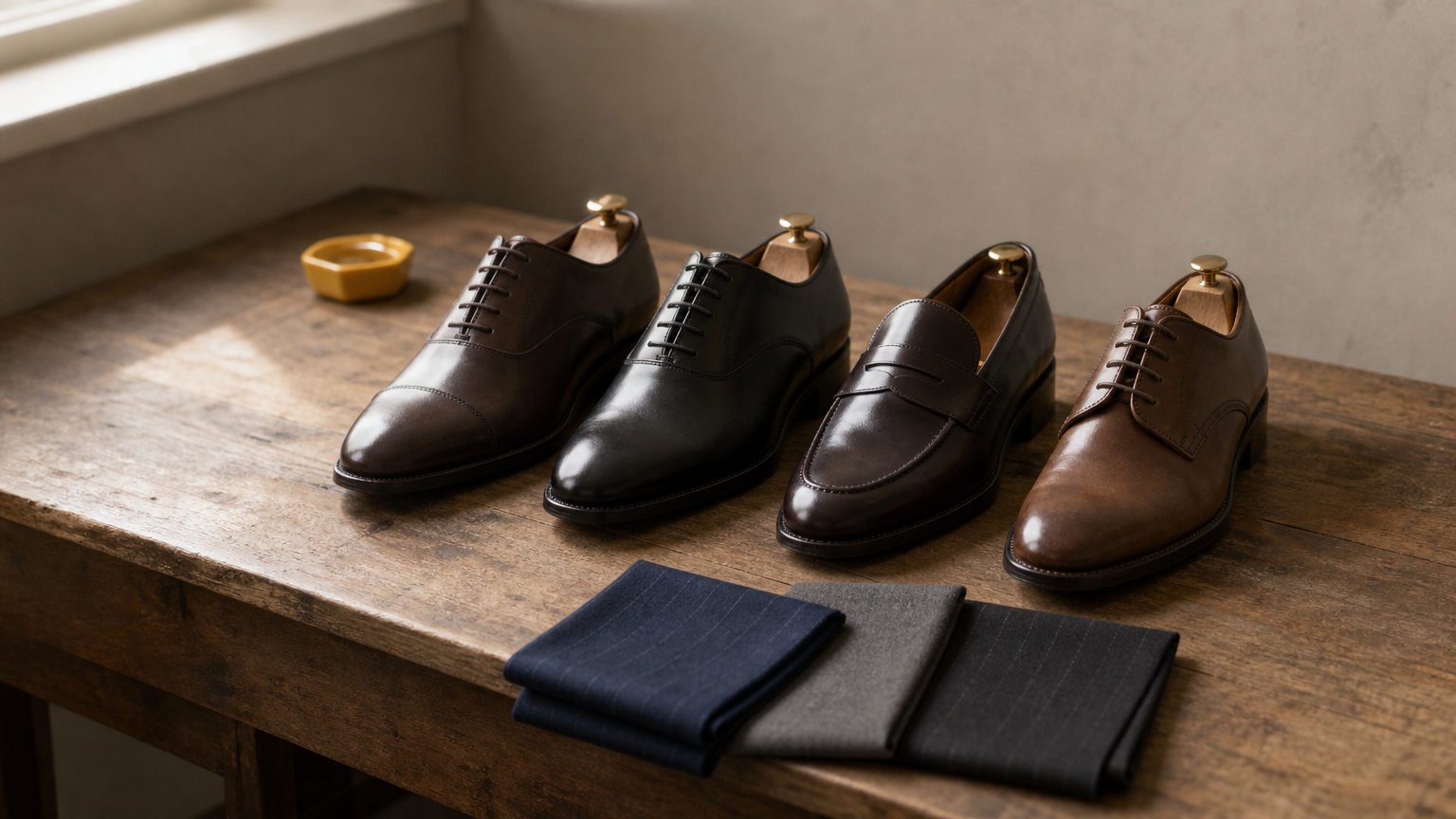
Oxblood, also called burgundy, is the underused option. It adds color while staying dark, and it flatters navy, gray and charcoal.
When your suit is not a basic color
For patterned suits, such as a glen check or pinstripe, pick the shoe by the dominant background color, not the stripe. For bold colors like a light blue or a deep green, stay in dark brown or oxblood and let the suit do the talking.
The same logic applies to women's suits. Choose pumps, loafers or ankle boots in the shade your chart row suggests, and keep the shoe as dark as the suit or darker.
Find your suit color first, and the shoe choice follows from the chart.
Step 2. Adjust the pairing for the occasion
The same suit needs a different shoe at an interview than at a garden wedding, so your suit shoe color combinations should change with the event. Move toward black and polished leather for formal and evening events, and toward brown and softer leathers for relaxed daytime ones.
Work and interviews
For conservative offices, law, finance and interviews, black oxfords with a black, charcoal or navy suit is the safest answer. For creative or business-casual offices, dark brown derbies or loafers with navy or gray look polished without being stiff. Avoid suede and chunky soles for interviews.
Weddings and formal events
For a black suit wedding, wear black polished oxfords and no brown. For a navy or gray suit at a daytime or outdoor wedding, dark brown or oxblood shoes look warmer and more fitting than black. Black tie is the strict case: a tuxedo takes black patent or highly polished black oxfords.
An old rule says brown before evening and black after. Treat it as a hint, not a law. What matters more is the invitation: the more formal it sounds, the darker and glossier the shoe should be.
The more formal the event, the blacker and glossier the shoe.
Step 3. Coordinate your belt, socks and watch strap
Accessories finish your suit shoe color combinations, and they should follow the shoe, not the suit. Match three things: belt, socks and watch strap.
Belt and watch strap
Match your belt to your shoes in color and finish. A black belt goes with black shoes, and a brown belt should sit in the same shade family as brown shoes. It does not need to be the exact same dye lot. A glossy shoe needs a smooth belt, and a suede shoe works with a matte belt. Do the same with a leather watch strap. If you wear a metal bracelet, no match is needed.
Socks
Socks bridge trousers and shoes. Match your socks to your trousers for a clean line, or choose a shade between trouser and shoe. If you want a pattern, pick one color from your tie or pocket square.
Choose socks long enough that no skin shows when you sit. Skip white athletic socks with any suit.
Let the shoe lead, and make the belt, strap and socks follow it.
Step 4. Test the full outfit before you commit
Check your suit shoe color combinations in daylight before buying shoes or finalizing a look. Color reads differently under store lighting, and a pair that looks right on a shelf can look too light against your trousers.
A quick final check
Run through this list:
- Are the shoes as dark as the trouser hem, or darker?
- Do the belt and watch strap match the shoe leather?
- Does the formality of the shoe fit the event?
- Are the heels and toes free of scuffs?
Scuffed leather, mismatched belts and bulky rubber soles are what make a suit look cheap, far more than the suit's price.
Here is a worked example. You wear a navy suit to an afternoon outdoor wedding. Choose dark brown or oxblood cap-toe oxfords, a belt in the same shade, a brown leather watch strap, and navy or burgundy socks. Black would also be acceptable, but it reads more evening.
Preview combinations before you buy or sell
If you design suits or sell them online, you can test fabric colors before production. The PSD Custom Suit Mockup Template includes sample fabrics for the suit, trousers, shirt and tie, so you can preview complete outfits. The mockup does not include shoes, so hold your shoe swatch or photo next to the render to judge the shade.

Check the full outfit in daylight, because color shifts under store lighting.
Ready to get your suit shoe color combinations right
Pick shoes that are as dark as your suit or darker, match the undertone, and let the event decide how formal and glossy they should be. Use the chart as your starting point, then match your belt, watch strap and socks to the shoes and run the final check.
If you design or sell suits, preview your fabric colors before you produce them. The PSD Custom Suit Mockup Template lets you test suit, trouser, shirt and tie combinations in Photoshop.
Comments
No comments yet. Start the conversation.