By RajIn Fashion9 min read
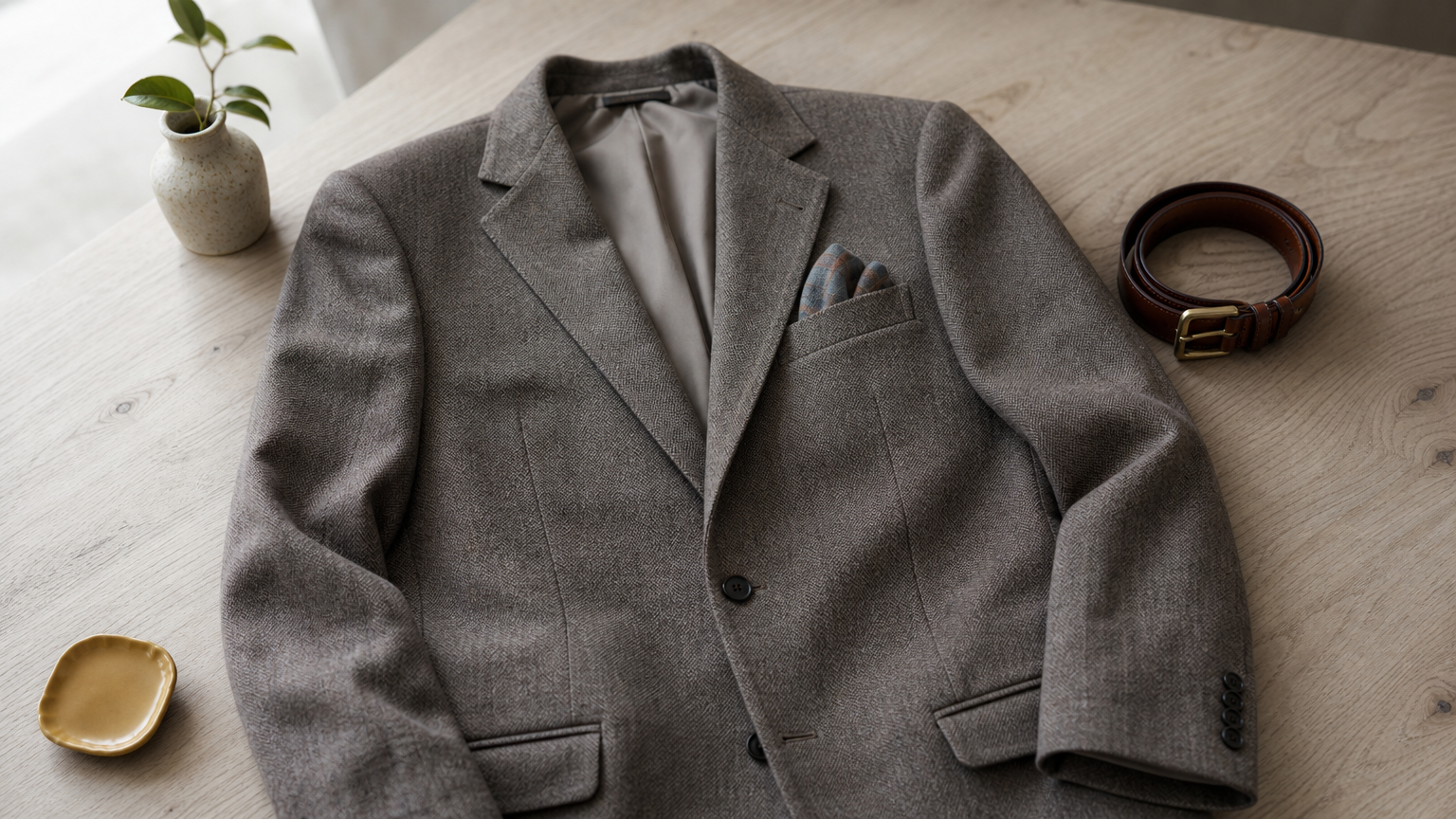
The main types of jackets collar are the notch, peak, shawl, stand (or mandarin), turn-down shirt, and fur or shearling collar. A good pick matches three things: how formal the jacket is, how cold it gets where you wear it, and the width of your shoulders and neck. Notch suits daily business wear, peak suits formal and double-breasted tailoring, and shawl suits black-tie evenings. Stand collars suit minimal or sporty looks, shirt collars suit casual layers, and fur or shearling suits real winter.
Most people searching for jacket collar types hit the same wall. The names overlap, "lapel" and "collar" get used for the same thing, and mandarin, band, and stand collars sound identical. This guide gives each coat collar type a description you can picture, the jackets where you will find it, and the build or occasion it flatters, for men's and women's styles alike.
At ShirtsMockup we make photo-realistic PSD mockups for suits, tuxedos, and jackets, so lapel and collar shapes are what we study every day. The notes below come from that angle: what actually separates one collar from another when you have to draw it, sell it, or show it on a product page.
1. Notch lapel collar
The notch lapel is the standard collar on tailored jackets, and of all the types of jackets collar, it is the one you will meet most often. It sits between the formal peak and the evening shawl, which makes it the safest choice for work and for any jacket you want to wear year-round.
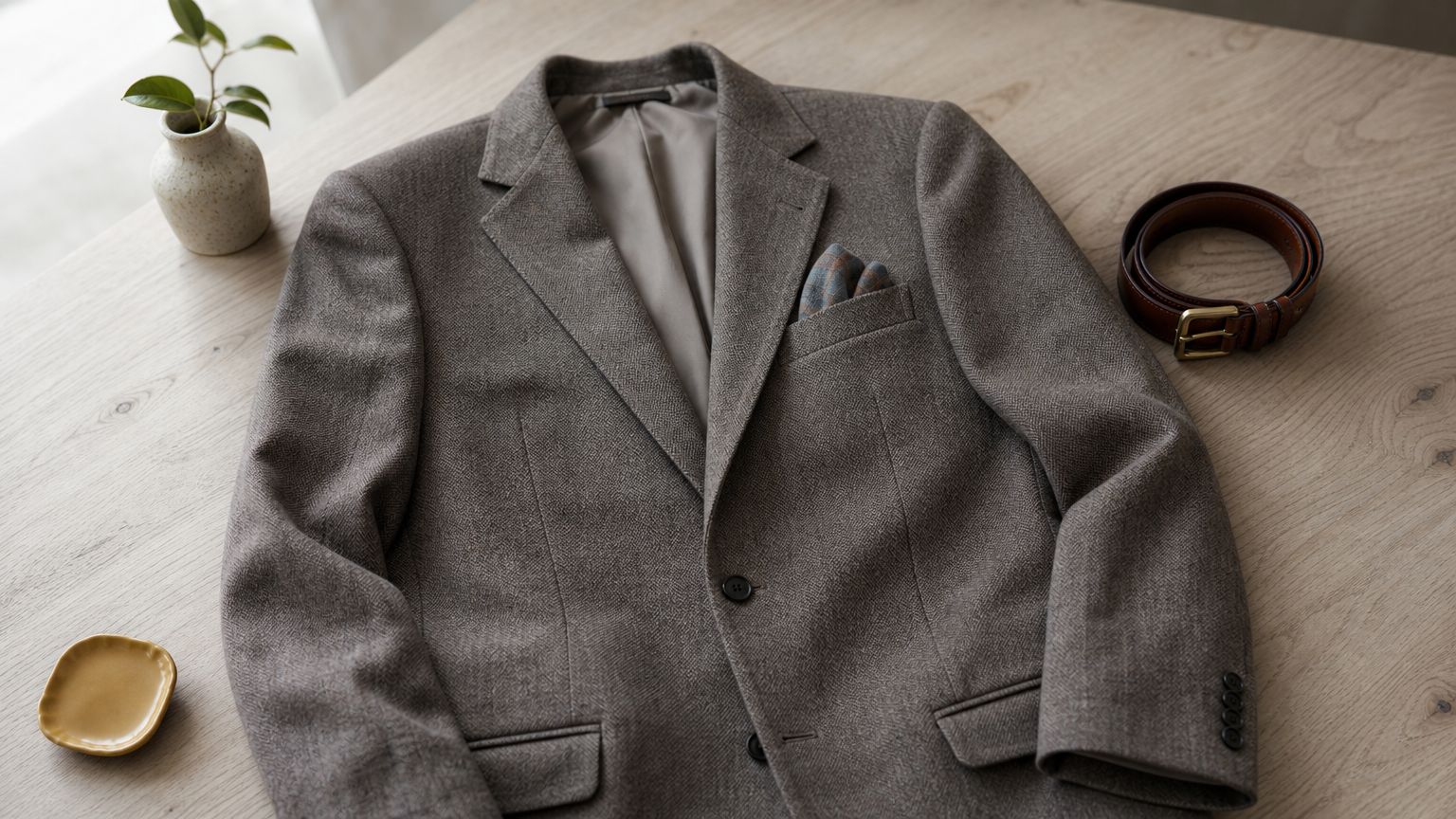
The notch is the small V-shaped step where collar and lapel meet, and it points sideways, never up.
How to recognize it
Look at where the collar meets the lapel. The two pieces are sewn together at a seam, and that seam leaves a small triangular notch. The lapel edge runs down and outward, so the whole shape points sideways rather than up.
A visible step between collar and lapel
Lapel edges that angle toward the sides
Medium width on most modern cuts
Where you will see it
You will find it on business suits, blazers, and sport coats, which makes it the most common of the coat collar types men wear to the office. Women's blazers use it just as often. Designers who need to show this cut can use a notch lapel jacket mockup with double patch pockets, then swap in their own fabric.
Who it suits
It suits almost every build, so choose it when you are unsure. A medium lapel width keeps proportions balanced, and it works for interviews, office days, and smart-casual dinners. Skip it for black tie, where a peak or shawl lapel looks more correct.
2. Peak lapel collar
The peak lapel points upward toward the shoulder, and it is the most formal of the three lapel collars. Among the types of jackets collar used in tailoring, it is the one that makes a jacket look commanding and sharp from across a room.
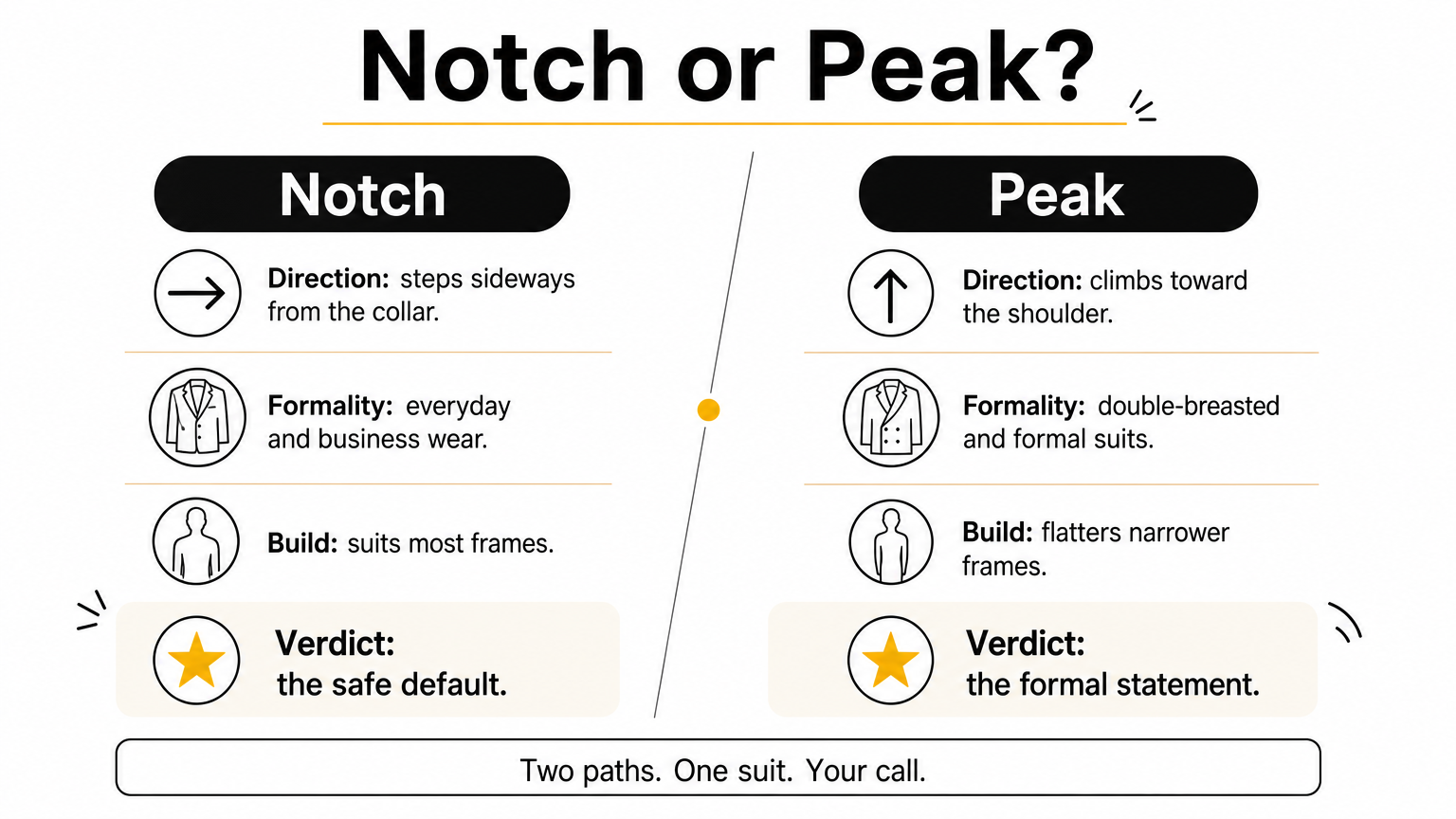
A peak lapel points up and out, and that upward line is what makes a jacket look formal.
How to recognize it
The lapel edge extends past the collar seam and ends in a pointed tip angled toward the shoulder. Compare it with the notch: the notch steps sideways, the peak climbs.
A pointed tip that rises above the seam line
Wide or narrow versions, with narrow peaks reading more modern
A strong diagonal line from chest to shoulder
Where you will see it
Peak lapels are standard on double-breasted jackets and common on formal suits and dinner jackets. If you design in this style, the men's peak lapel jacket mockup lets you replace the fabric through a Photoshop Smart Object while the folds, seams, and shadows stay realistic.
Who it suits
The upward point widens the shoulder line, so it flatters narrower frames and adds visual height to the torso. On a very broad chest a wide peak can feel heavy, so choose a slimmer peak there. Use it for weddings, formal events, and statement tailoring.
3. Shawl collar
The shawl collar is one continuous rounded curve with no notch and no point. Of the common types of jackets collar, it is the softest and the most evening-focused, and it is the classic collar of the dinner jacket.
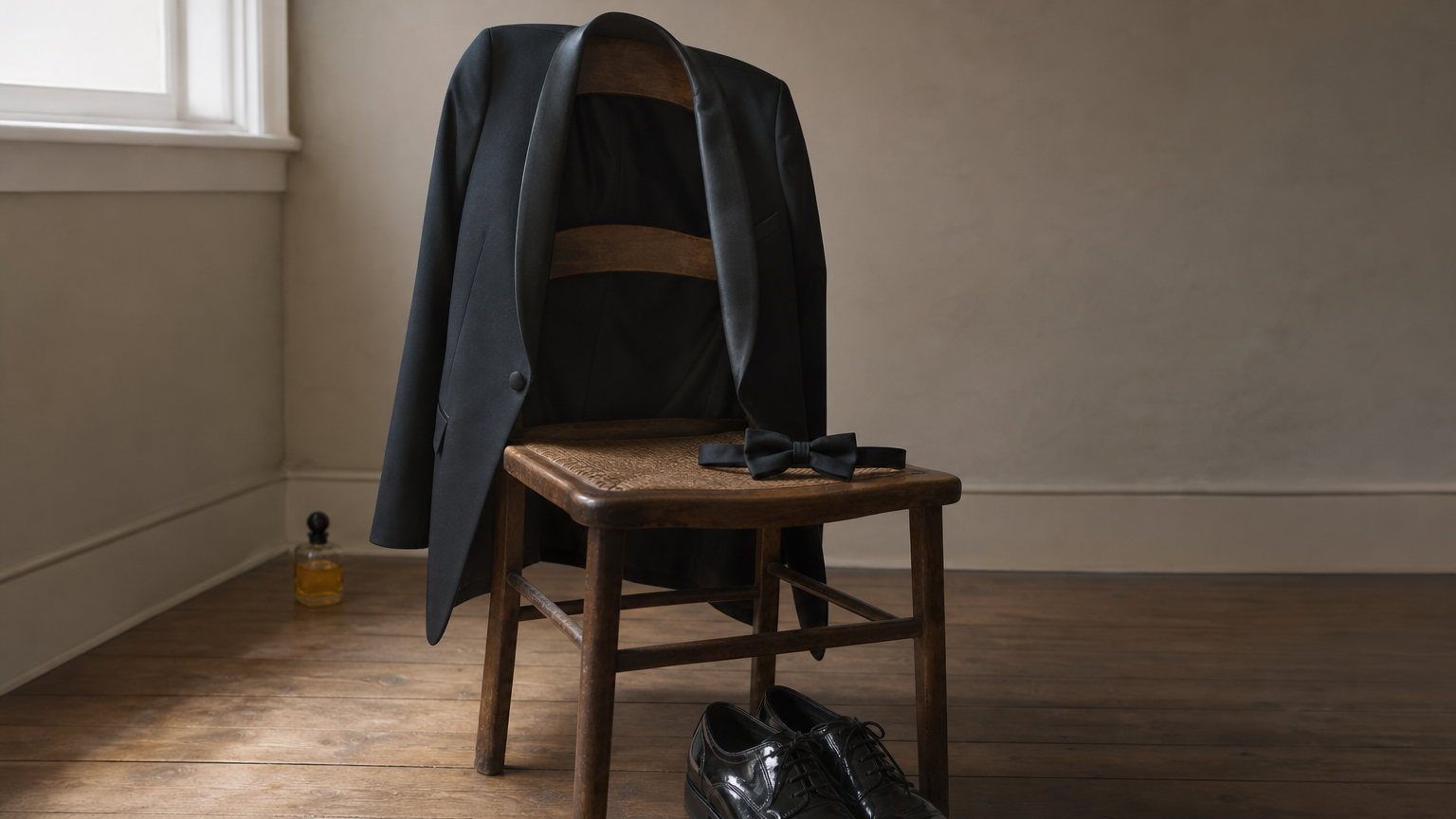
A shawl collar has no notch and no peak, only one smooth curve around the neck.
How to recognize it
Collar and lapel are cut as one piece, so the line flows from the back of the neck down to the first button in an unbroken curve. On formalwear the facing is often satin or grosgrain, which contrasts with the wool body.
No seam break or notch along the edge
Rounded outline from neck to button
Frequently a contrast facing on tuxedos
Where you will see it
Tuxedos and dinner jackets are its home. It also shows up on shawl-collar cardigans, robes, and some long coats. Our shawl lapel tuxedo mockup features this exact shape, so tailors and formalwear brands can preview fabrics before production.
Who it suits
Choose it for black-tie and evening events, where its curve looks relaxed but polished. The rounded line also softens angular shoulders and sharp features. Skip it for daytime business wear, where a notch lapel reads as more appropriate.
4. Stand collar, also called mandarin or band
A stand collar rises straight up from the neckline with no fold and no lapel. Mandarin, band, and funnel collars are all variations, so this family of types of jackets collar causes the most naming confusion.
Stand, band, and mandarin collars all stand upright without folding, and the real differences are height and the front gap.
How to recognize it
Use height as your guide. Many retailers treat stand, band, and mandarin as the same word, so judge the shape rather than the label. The table below sorts the usual names.
Name | Height and shape | Typical jacket |
|---|---|---|
Stand or band collar | Short, upright band | Minimal jackets and coats |
Mandarin collar | Short band, ends meet or nearly meet at the front | Slim, tunic-inspired jackets |
Funnel collar | Tall, wide tube around the neck | Winter coats and outerwear |
Rib-knit collar | Stretchy knit band | Bomber and varsity jackets |
Where you will see it
Bomber and varsity jackets use the rib-knit version. Cafe racer motorcycle jackets often add a snap tab at the front of the stand collar so it stays put in the wind. Minimalist overcoats and some women's jackets use a plain band collar.
Who it suits
It suits clean, modern styling, and it blocks wind without adding bulk. If you have a short neck, wear the collar open or unsnapped, since a fully closed stand collar can crowd the neckline. Keep necklaces and scarves simple.
5. Turn-down shirt collar
The turn-down shirt collar folds over and lies flat against the neck, just like the collar on a dress shirt. It is the relaxed option, and among the coat collar types used on casual jackets, it is the most familiar.
If the collar folds down and ends in two points like a shirt, it is a shirt collar.
How to recognize it
There is no lapel, only two collar points resting on the chest. A few shirt collar types are worth knowing by name:
Point collar: classic points that angle downward
Camp collar: one-piece, lies flat and open with no stand
Fold-over collar: soft collar you can wear up or down
Where you will see it
Denim trucker jackets, field jackets, shirt jackets, and many casual leather jackets use it. If you also design shirts, the professional dress shirt mockup lets you put a different fabric on the collar and cuffs, which helps when planning a matching shirt-jacket set.
Who it suits
It fits casual and smart-casual wardrobes and layers well over hoodies or knitwear because the flat collar does not bunch. Pointed tips add a little vertical line, which helps on rounder faces. Flip it up on windy days for extra coverage.
6. Fur and shearling collar
Fur and shearling collars add warmth and bulk around the neck, and of all the types of jackets collar, they are the most cold-weather focused. Shearling is sheepskin with the wool left attached, while fur trim is usually a separate band sewn or fastened on.
A fur or shearling collar is chosen for warmth first, and the luxury look comes along with it.
How to recognize it
Look for a thick, textured band that frames the neck. Shearling has dense, curly wool and usually pairs with a leather body. Fur trim has longer fibers and often sits on a hood or detaches with buttons or a zipper.
Plush, raised texture instead of smooth cloth
Often removable on parkas and winter coats
Faux versions look similar and are widely made
Where you will see it
Shearling is classic on B-3 style bomber jackets and aviator coats. Fur trim appears on parkas, long winter coats, and some women's wool coats. Because the collar changes the whole silhouette, it is the detail people notice first.
Who it suits
Pick it if you live somewhere properly cold or want a statement winter piece. Skip it in mild climates, where it will overheat you. For care, keep it dry, brush it gently along the nap, and store the jacket with room to breathe.
Pick the collar that fits the job
The right collar comes down to formality, weather, and proportion. Notch is your daily default, peak raises the formality, and shawl belongs to the evening. Stand collars keep things clean, shirt collars keep them casual, and fur or shearling keeps you warm. Once you can name these six, you can read any jacket in a store or a catalog at a glance.
If you design or sell tailored pieces, showing the collar clearly matters as much as naming it. A realistic preview lets customers see the lapel, the fabric, and the fit before anything is cut or photographed. Try a jacket mockup PSD to test your fabrics and patterns on a photo-realistic jacket, with no photo shoot required.
Comments
No comments yet. Start the conversation.