By Tojo8 min read
The best white dress shirt styles come down to four choices: collar, cuff, fabric and fit. If you wear suits or work in an office, a spread collar in pinpoint or a non-iron twill is the safest pick. For weddings and formal evenings, add French cuffs. For black tie, you need a proper tuxedo shirt. For casual days without a jacket, a button-down oxford is the right call.
Most white shirts look identical in a product photo. The differences show up when you wear one under a jacket, sit through a long reception, or try to iron it at 6 a.m. This list gives you five distinct styles, explains what defines each, and tells you where it fits, so you match the shirt to the occasion instead of guessing.
At ShirtsMockup we build layered PSD mockups of dress shirts, so we spend our days looking at how collars, cuffs and plackets are constructed. Use that same eye on the five styles below, and read the fabric and fit notes before you buy.
1. Spread collar pinpoint shirt
What defines it
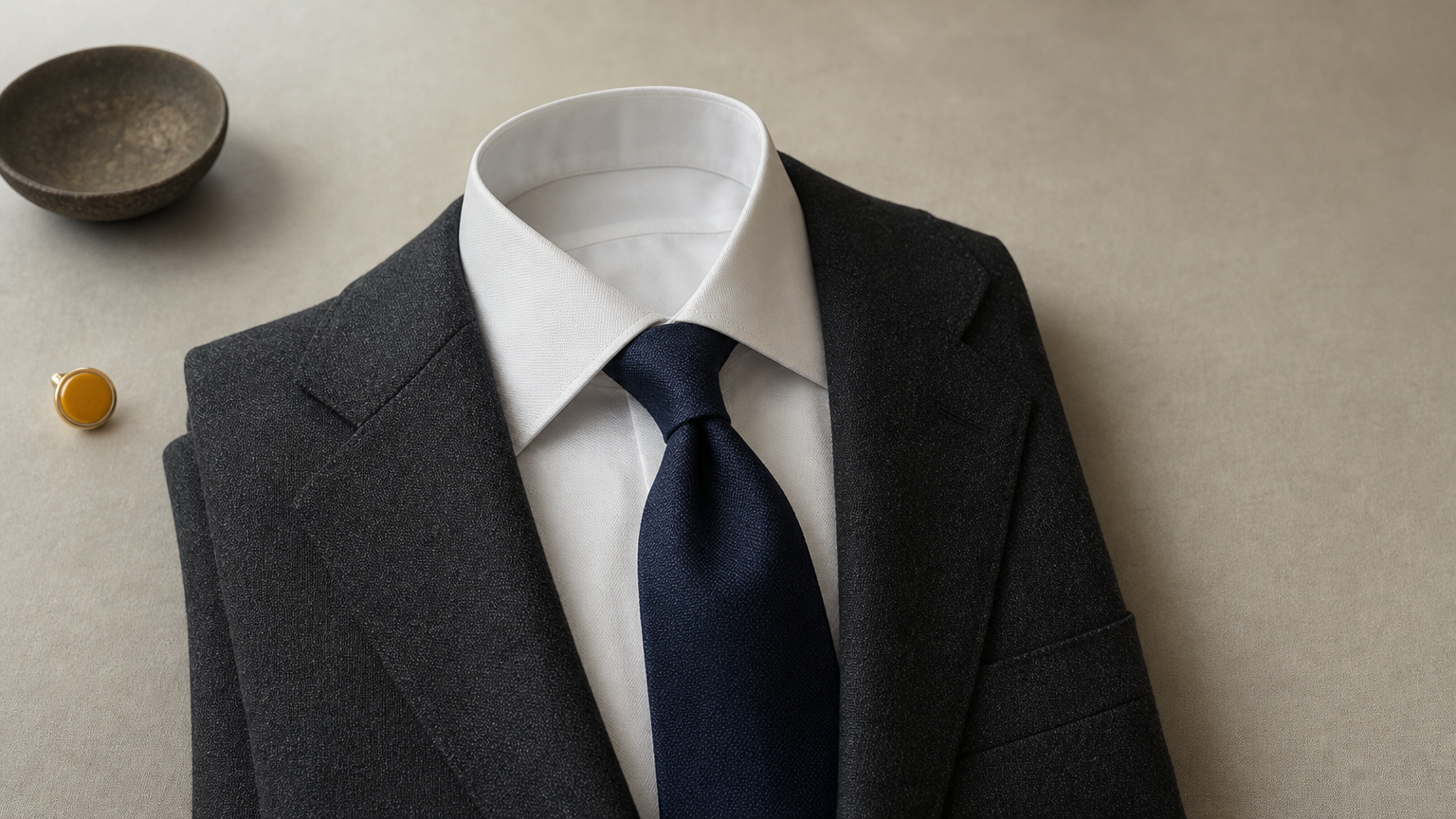
A spread collar has points set wide apart, which makes room for a full tie knot and keeps the collar flat under a jacket. Pinpoint is a tight oxford weave that is smoother than casual oxford and a little heavier than poplin, so white looks crisp and shows less through.
- Collar: spread, with a wide gap between the points
- Cuff: barrel cuff with one or two buttons
- Fabric: pinpoint cotton
- Fit: tailored, trim through the torso without pulling at the buttons
Every style below uses one of these fabric weaves, so this table shows how they compare:
| Fabric | Look and feel | Best for |
|---|---|---|
| Poplin (broadcloth) | Light, smooth, crisp, can look sheer in white | Warm weather, formal wear |
| Pinpoint | Smooth with a faint texture, slightly heavier | Suits, year-round use |
| Twill | Diagonal rib, soft drape, resists wrinkles | Daily work shirts |
| Oxford | Basket weave, textured, sturdy | Casual and smart-casual |
| Royal oxford | Thicker, with a subtle sheen | Dressier occasions |
When to wear it
This is the default white shirt for a suit. It suits interviews, client meetings and any office where the jacket stays on, which makes it the most versatile of all white dress shirt styles. Pair it with a navy or charcoal suit and a solid or fine-pattern tie.
If you own only one white shirt, make it a spread collar in pinpoint.
Mind the sleeve length. Let a quarter to half inch of cuff show below the jacket sleeve, and wear a skin-tone undershirt, because a white undershirt shows through white cloth.
2. Point collar non-iron twill shirt
What defines it
A point collar sets the tips closer together, which frames a smaller tie knot and gives a more traditional look. Twill is woven with a diagonal rib, so it feels softer than poplin, drapes well and resists wrinkles. Many twills carry a non-iron finish, a treatment that cuts ironing time but can feel stiffer and fades after many washes.
- Collar: point, with a narrower spread
- Cuff: barrel cuff
- Fabric: twill, often with a non-iron finish
- Fit: slim or classic, depending on your build
When to wear it
Choose it for daily office wear and business travel, where a shirt has to survive a flight and still look pressed. Twill is also more opaque than thin poplin, which helps white behave under bright light. Among white dress shirt styles, it is the easiest to live with day to day.
A non-iron twill earns its place by saving time, not by looking more formal.
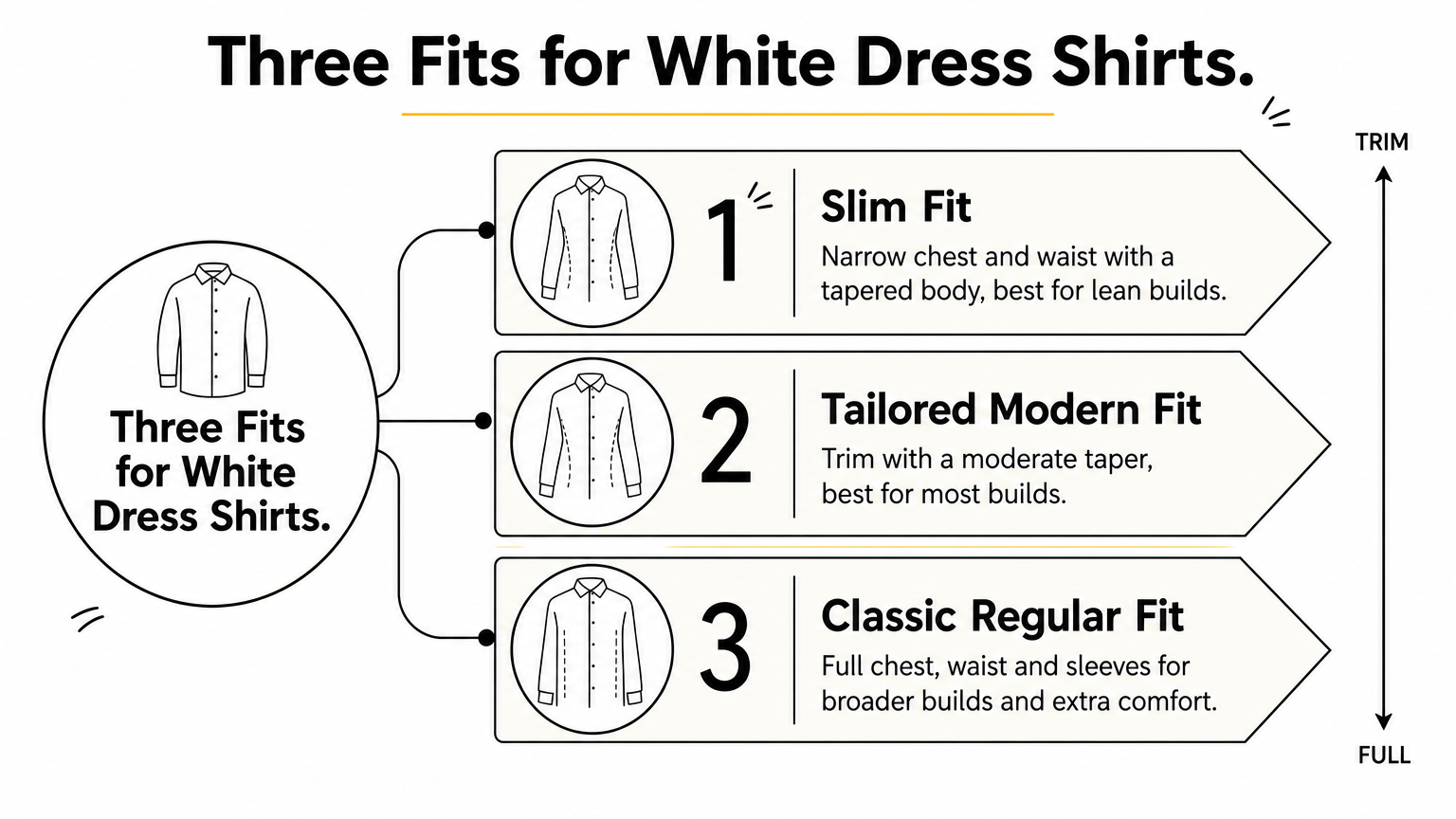
Fit changes how any of these shirts looks, so check the cut before the label. A shirt that pulls at the buttons is too small, whatever size it says.
| Fit | Cut | Best for |
|---|---|---|
| Slim | Narrow chest and waist, tapered body | Lean builds |
| Tailored (modern) | Trim, with a moderate taper | Most builds |
| Classic (regular) | Full chest, waist and sleeves | Broader builds, extra comfort |
3. French cuff dress shirt
What defines it
A French cuff is a long cuff that folds back on itself and closes with cufflinks instead of buttons. It usually pairs with a spread collar and a fine, smooth fabric such as poplin or pinpoint, with royal oxford when you want more body. The cuff is the formal signal, more than the collar.
- Collar: spread, usually with collar stays
- Cuff: double cuff fastened with cufflinks
- Fabric: fine poplin, pinpoint or royal oxford
- Fit: tailored, with sleeves cut to the right length, since cufflinks leave less room to adjust
When to wear it
Wear it to weddings, formal dinners and evening events, as a guest, groom or groomsman, with a suit and a tie or bow tie. Of all white dress shirt styles, French cuffs say "dressed up" most clearly at the wrist. It also works in conservative business settings where the jacket stays on all day.
At a wedding, a white French cuff shirt with a suit is the choice that never looks wrong.
Keep the cufflinks simple. Plain silver or gold-tone links match most suits, and it helps to keep metals consistent with your watch and belt buckle. Because the cuff is the focus, keep the jacket on and let the cuff peek out slightly past the sleeve.
4. Tuxedo shirt with a wing or turndown collar
What defines it
A tuxedo shirt is built for formalwear: a wing or turndown collar, a pleated or piqué bib front, a concealed or stud-fastened placket, and French cuffs. Textured weaves such as piqué or herringbone are common, though plain white poplin also works. Look for a structured front that keeps its shape under the jacket.
- Collar: wing (folded tips that stand up) or turndown
- Cuff: French cuff for cufflinks
- Fabric: fine poplin, piqué or herringbone
- Fit: tailored, with no excess fabric at the waist, since it sits under a cummerbund or waistcoat
When to wear it
Reserve it for black-tie weddings, galas and formal dinners. It is the most formal of the white dress shirt styles. A wing collar is the traditional partner of white tie and is acceptable at black tie, but a turndown collar is the safer choice when you are unsure of the dress code.
A tuxedo needs a tuxedo shirt, because a business shirt cannot fake the front.
Do not swap in a regular business shirt. Its exposed buttons and soft front look out of place against satin lapels. If you wear a bow tie, make sure the collar is cut to hold it and the studs and cufflinks match.
5. Button-down oxford shirt
What defines it
A button-down has collar points that fasten to the shirt front with small buttons, so the collar rolls softly and stays put without a tie. Oxford cloth uses a basket weave that is thicker and more textured than pinpoint. White oxford is the most casual shirt on this list, and it hides wrinkles better than poplin.
- Collar: button-down, with a soft roll
- Cuff: barrel cuff
- Fabric: oxford cloth
- Fit: classic for comfort, tailored for a sharper line
When to wear it
Pick it for smart-casual offices, weekend lunches and layering under a sweater or unstructured blazer. A tie is optional, and rolled sleeves look natural with this fabric.
The button-down is the white shirt for the days you leave the suit at home.
Skip it with a formal suit. The soft collar roll clashes with sharp lapels, and the textured weave reads as casual next to fine wool. Tuck it in at work, and leave it out only if the hem is straight and short.
Picking the right white shirt
The right white shirt depends on what it has to do. Choose a spread collar pinpoint for suits, a non-iron twill for everyday work, French cuffs for weddings and formal evenings, a tuxedo shirt for black tie, and a button-down oxford when you drop the jacket. Across all five white dress shirt styles, fit matters as much as style, because a shirt that pulls at the buttons or bags at the waist undermines the best collar.
If you can only buy one, buy the first. It covers most suits, most offices and most weddings short of black tie, and you can add the others as your calendar demands.
If you design shirts rather than just wear them, the Professional Dress Shirt Mockup gives you five layered PSD files and lets you set different fabrics on the collar and cuffs, so you can test these styles on screen before production.
Comments
No comments yet. Start the conversation.