By RajIn Fashion13 min read
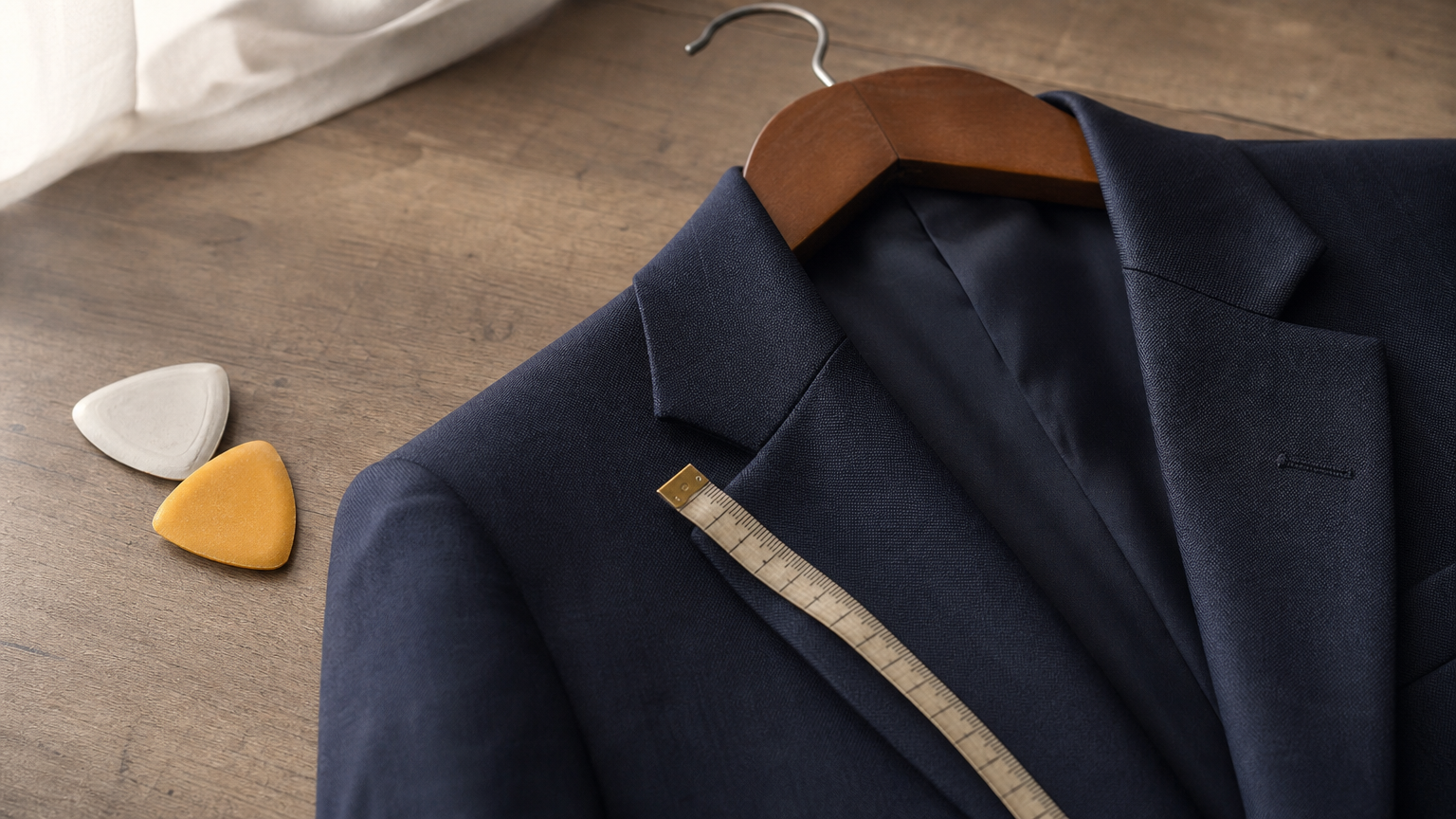
Walk into any tailor shop, and you will notice the collar and lapel decide a suit's personality before the fabric or fit does. Get them wrong, and a sharp jacket looks dated, or worse, out of place. Knowing the main suit collar types takes about five minutes, and it saves you from expensive mistakes in the fitting room or in a product listing.
Here is the short answer. Notch lapels are the default for business and everyday wear. Peak lapels add formality and structure, so they suit weddings, evening events, and double-breasted jackets. Shawl lapels are smooth and rounded, and they belong on tuxedos and dinner jackets. The same logic applies to blazer collar types, though blazers lean casual, and the notch dominates.
Below, we break down each style by what makes it different, which occasions it suits, and which dress shirt collar pairs best. We also point out details that designers often miss, such as lapel width and gorge height. We build suits and tuxedo mockups at ShirtsMockup, so we handle these differences daily, and we wrote this guide to help you see them clearly.
1. Notch lapel collar
What it looks like
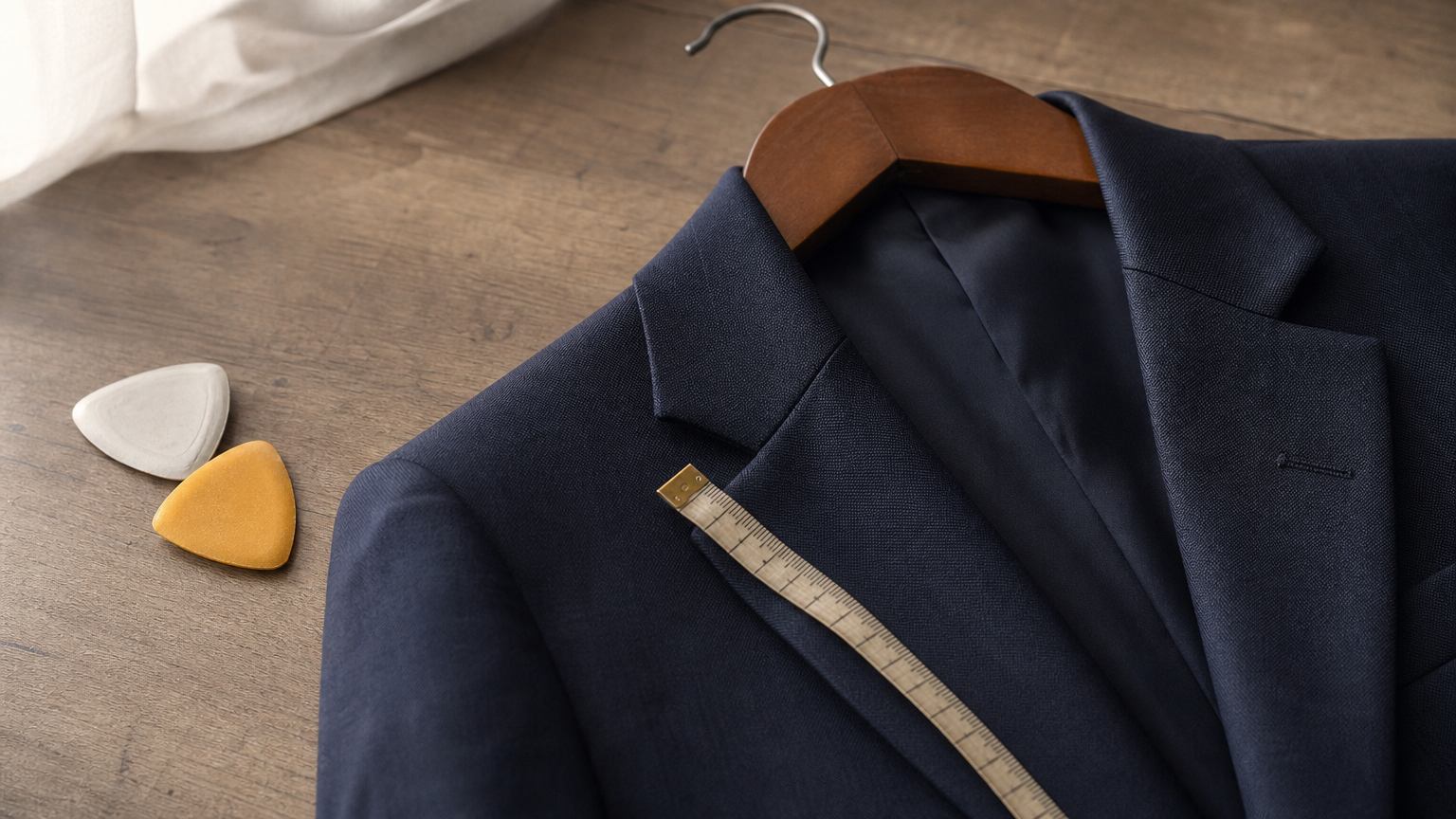
The notch is the most common suit collar type. Look at where the jacket collar meets the lapel, and you will see a small triangular step cut at roughly 75 to 90 degrees. The seam joining the two is the gorge line, and on a notch lapel, it sits low on the chest, which gives the jacket a calm, horizontal look.
Three details tell you whether a notch lapel is well-made:
Width: 3 to 3.5 inches is standard. Slim cuts drop to about 2.5 inches.
Notch angle: a crisp, slightly upward angle looks current. A drooping notch looks tired.
Roll: the lapel should fold in a soft curve from the top button, not lie flat like cardboard.
Best jackets and occasions
Notch lapels appear on single-breasted suits, sport coats, and nearly every blazer, so they dominate blazer collar types as well. They are the safest choice for the office, interviews, client meetings, and daytime weddings.
Jacket | Notch lapel fit |
|---|---|
Single-breasted business suit | Standard choice |
Blazer or sport coat | Standard choice |
Daytime wedding suit | Works well |
Cocktail or evening suit | Acceptable, less dressy |
Tuxedo or black tie | Avoid |
That last row matters. A notch lapel on a tuxedo reads as a business suit in costume, and traditionalists will notice.
Who it suits and how to style it
Notch works on almost every build because its low gorge and horizontal lines do not exaggerate any one feature. Shorter or broader men get a clean, balanced silhouette. Taller, narrower men can wear a slightly wider lapel to add presence. If you only buy one jacket, make it a notch.
The notch lapel is the default for a reason: it fits the widest range of bodies, jackets, and dress codes.
For shirts, a point collar or spread collar gives the cleanest line under a notch lapel. A button-down collar suits blazers and sport coats, but skip it with a sharp business suit. If you present apparel designs, keep the lapel width proportional to the jacket and never stretch it to fit a layout. A distorted notch is the fastest way to make a mockup look fake.
2. Peak lapel collar
What it looks like
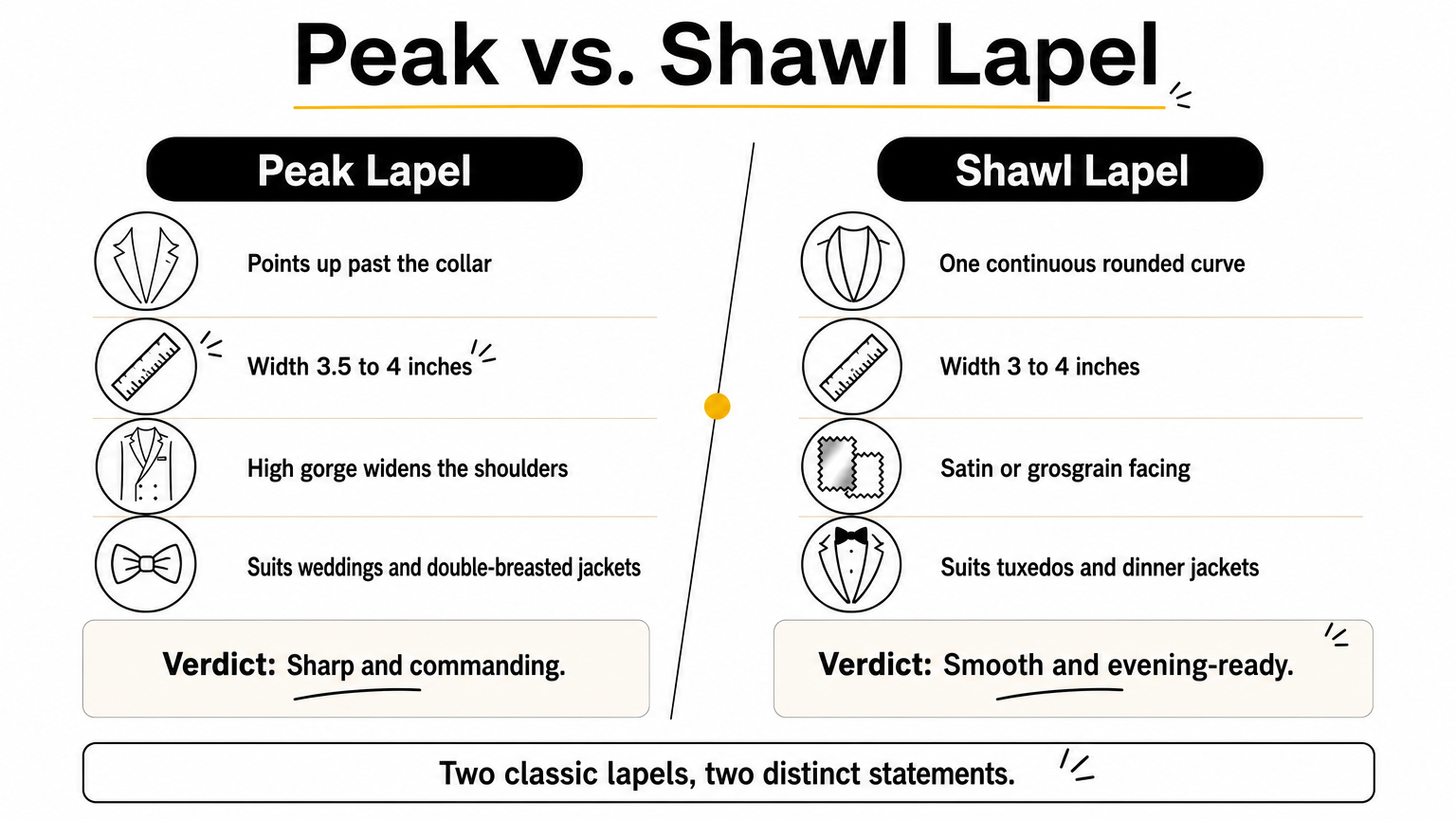
The peak is the most assertive of the everyday suit collar types. The lapel edge points up and out past the collar, ending in a sharp spike instead of a notch. The gorge line sits higher than on a notch lapel, so the eye travels toward the shoulders, and the chest looks broader.
Width: 3.5 to 4 inches, wider than a typical notch.
Peak tip: it should aim toward the shoulder tip, not straight at the ceiling.
Gorge: high and angled, with a clean rising line.
Best jackets and occasions
Peak lapels are standard on double-breasted jackets and common on formal single-breasted suits. They suit weddings, evening events, and any setting where you want the jacket to command the room. Skip them on casual blazers, where the sharp edge fights the relaxed cut.
Jacket | Peak lapel fit |
|---|---|
Double-breasted suit | Standard choice |
Wedding or evening suit | Excellent |
Single-breasted business suit | Works well, more formal look |
Tuxedo | Classic alternative to a shawl |
Casual blazer | Avoid |
A peak lapel is a statement of formality: it turns any jacket into dress-up wear.
Who it suits and how to style it
Slim and average builds gain the most because the upward lines add visual width across the shoulders. Very broad or heavyset men should keep the peak narrow and the gorge moderate, or the jacket can look top-heavy.
For shirts, a spread collar gives the peak room to breathe, and a point collar works for a sharper, more traditional look. Add a tie knot with some volume, such as a half Windsor, to balance the lapel. In mockups, keep the peak angles symmetrical and crisp. A rounded or uneven tip is the quickest giveaway of a poor render.
3. Shawl lapel collar
What it looks like
The shawl is the smoothest of all suit collar types. There is no notch and no peak. The lapel and collar form one continuous rounded curve that wraps the neckline like a shawl, with no seam breaking the line at the gorge.
Width: 3 to 4 inches, often a touch wider on dinner jackets.
Facing: usually silk, satin, or grosgrain, set against a wool body.
Edge: a clean, rounded sweep with no visible break.
Best jackets and occasions
Shawl lapels belong on tuxedos and dinner jackets. They are the classic pick for black tie, galas, and New Year's Eve, and velvet versions work well for holiday parties. Keep them away from business suits and everyday blazers, where the satin facing looks out of place.
Jacket | Shawl lapel fit |
|---|---|
Tuxedo or black tie | Classic choice |
Velvet dinner jacket | Excellent |
Evening or cocktail suit | Works well |
Business suit | Avoid |
Casual blazer | Avoid |
The shawl lapel is the quiet signature of the tuxedo: rounded, seamless, and made for evening.
Who it suits and how to style it
The curved line softens the frame, so it flatters slim and athletic builds best. Broader men can wear it too, since there are no sharp angles to add bulk. Just choose a matte or subtle finish, because a glossy wide facing adds visual width.
For shirts, a spread collar with a bow tie is the modern standard. A wing collar is the traditional alternative to a strict black tie. In a shawl-lapel tuxedo mockup, build the facing as a separate layer so you can control the satin sheen independently of the wool. If both share the same texture, the jacket immediately loses its evening look.
4. Double-breasted and blazer collar variations
What it looks like
A double-breasted jacket overlaps across the chest and closes with two columns of buttons, usually six with two that fasten. That wide overlap pushes the lapel outward, so it is typically cut at 3.5 to 4 inches. Most carry a peak lapel, though a double-breasted notch exists and reads as more relaxed. Blazers add their own cues: metal buttons, patch pockets, and a softer shoulder.
Best jackets and occasions
Double-breasted jackets suit weddings, formal business settings, and evening events. Among blazer collar types, the notch lapel still leads, and the double-breasted blazer is the dressier cousin.
Jacket | Usual lapel | Best for |
|---|---|---|
Double-breasted suit | Peak | Weddings, formal business, evenings |
Double-breasted blazer | Notch or peak | Smart casual, resort, dinner |
Single-breasted blazer | Notch | Office casual, travel, weekends |
Peak lapel for formal double-breasted, notch for casual: that one rule settles most choices.
Who it suits and how to style it
Slim and average builds carry the extra fabric best, because the overlap adds chest and shoulder volume. Shorter or heavier men should pick a 6x2 button layout with a narrower overlap, so the jacket does not swallow the frame. Always keep it buttoned when standing. An open double-breasted jacket looks sloppy.
Pair it with a spread collar or point collar and a tie with a firm knot. Skip button-down collars on a peak-lapel version, since they clash with the formality. In a double-breasted jacket mockup, keep both button columns perfectly symmetrical and add a soft shadow under the overlap. Without it, the jacket looks flat, and these suit collar types lose their structure.
5. Spread collar dress shirt
What it looks like
The spread collar is the shirt that pairs most naturally with the suit collar types above. Its points angle away from each other, leaving a wide gap at the throat where the tie knot sits.
Angle: points sit roughly 100 to 140 degrees apart. Cutaway collar versions go wider.
Point length: 2.5 to 3 inches is standard.
Collar stays: removable stays keep the points flat under the lapel.
Best jackets and occasions
Few shirts handle formality as well. A spread collar is the most versatile choice under peak lapels, shawl lapels, and double-breasted jackets, and it works just as well with a notch-lapel business suit.
Jacket or occasion | Spread collar fit |
|---|---|
Peak lapel or double-breasted suit | Excellent |
Tuxedo with bow tie | Modern standard |
Notch lapel business suit | Works well |
Blazer, open neck | Works well |
A spread collar frames the tie knot and the lapel together, which is why it works almost everywhere.
Who it suits and how to style it
Narrow or longer faces gain the most, because the horizontal line of the collar widens the face. Round faces can wear it too, but a point collar gives them more vertical length.
Choose a half Windsor or full Windsor knot, since the open gap is built for volume. A thin knot disappears and leaves visible shirt placket. If you design apparel, build the collar as its own layer with a subtle stay shadow beneath the points. That one detail makes a mockup read as real fabric and lets you recolor the shirt without touching the jacket.
6. Point collar dress shirt
What it looks like
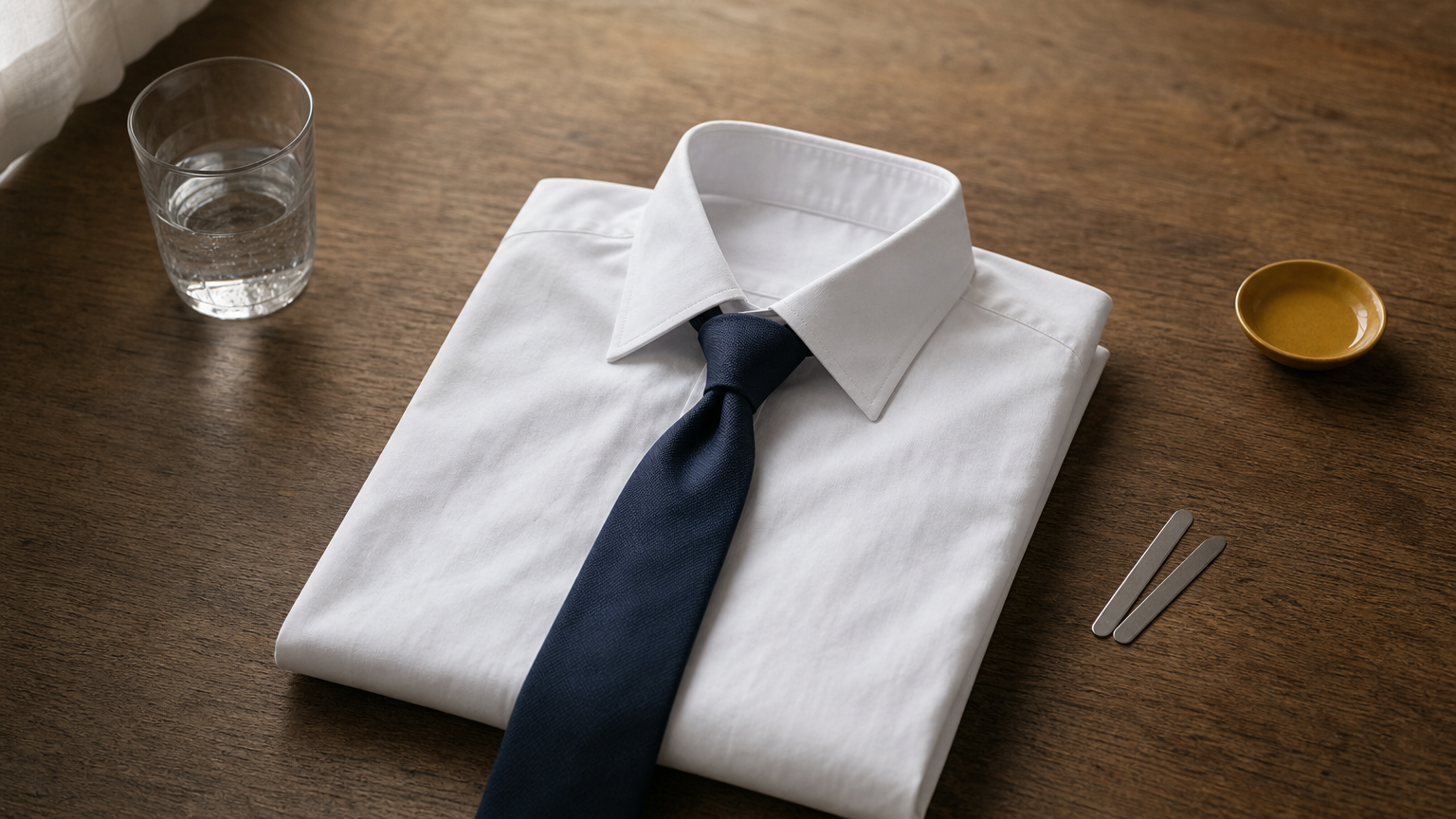
Point collars are the traditional dress shirt style, and the one most people picture first. The points angle downward and sit close together, which leaves a narrow gap at the throat that a slim tie knot fills completely.
Angle: points sit about 60-90 degrees apart.
Point length: 2.75 to 3.25 inches.
Fit: the collar should hug the neck with no visible gap behind the tie.
Best jackets and occasions
Under a notch lapel, nothing looks cleaner. A point collar is the safe pick for a notch-lapel business suit, and it carries you through interviews and client meetings without a second thought.
Jacket or occasion | Point collar fit |
|---|---|
Notch lapel business suit | Excellent |
Peak lapel suit | Works well, traditional look |
Blazer with a tie | Works well |
Tuxedo | Avoid |
Open neck, no tie | Avoid the points collapse |
A point collar needs a tie: without one, the narrow points flop and the whole look falls apart.
Who it suits and how to style it
Rounder, wider faces benefit most because the downward points add vertical length and break up the face's width. Narrow faces can look even longer, so those men are usually better off in a spread collar.
Pair it with a four-in-hand or small half Windsor knot. A big knot pushes the points apart and defeats the shape. Among all the suit collar types and shirts, this combination is the most forgiving for beginners. If you build mockups, keep both points symmetrical and tucked under the lapel, and add a faint shadow where the collar meets the jacket. Without that detail, the shirt looks pasted on.
7. Button-down collar dress shirt
What it looks like
The button-down is the casual member of the shirt family. Each collar point buttons to the shirt body, so the collar never lifts or shifts. It began as sportswear, and it still carries that relaxed spirit.
Roll: the collar edge should curve softly, not lie flat.
Point length: 2.75 to 3.25 inches.
Fabric: often Oxford cloth, with a visible basket-weave texture.
Best jackets and occasions
Smart-casual settings are this shirt's home turf. It is the natural partner for blazers and sport coats, and it works well with relaxed notch-lapel suits in tweed or linen. Formal jackets are another story.
Jacket or occasion | Button-down fit |
|---|---|
Blazer or sport coat | Excellent |
Relaxed notch lapel suit | Works well |
Open neck, no tie | Works well, the collar holds its shape |
Sharp business suit | Avoid |
Peak lapel or double-breasted | Avoid |
Tuxedo | Avoid |
Button-down collars are for blazers and weekends, not for peak lapels.
Who it suits and how to style it
Most faces and builds can wear it, because the soft roll adds no hard angles. Average and rounder faces look better in a relaxed frame, while very narrow faces still look better in a spread collar.
Style it with a knit tie or no tie at all, and keep the knot small. This is the one collar that looks good open. If you build mockups, put the collar buttons on their own layer and paint a gentle highlight along the roll. Without that curve, even a well-drawn button-down reads as a flat point collar among the other suit collar types.
8. Wing and tab collar shirts
What it looks like
Wing and tab collars are the specialist end of the shirt range, and they look nothing alike. A wing collar stands upright around the neck, about 1 to 1.5 inches tall, with small tips folded down like wings. A tab collar looks like a close point collar, but a small strip of fabric fastens behind the tie knot.
Wing: stiff and starched, made for a bow tie, often paired with a piqué bib front.
Tab: points sit close together, and a snap or button joins them under the knot.
Effect: the tab pushes the knot forward and up, so the tie stands out.
Best jackets and occasions
Wing collars are part of white tie and strict black tie, where tradition still rules. Tab collars suit three-piece suits and vintage-inspired looks, especially under a notch lapel.
Jacket or occasion | Wing collar | Tab collar |
|---|---|---|
Tailcoat, white tie | Required | Avoid |
Tuxedo, shawl, lapel | Traditional | Avoid |
Notch lapel business suit | Avoid | Works well |
Three-piece suit | Avoid | Excellent |
Casual blazer | Avoid | Acceptable with a tie |
Who it suits and how to style it
Tall, upright collars add length to the neck, so a wing collar flatters men with average to longer necks. Shorter necks can look swallowed. A tab collar is more forgiving, since it sits snug and shows off a slim tie.
Wear a wing collar only when the invitation says white tie or strict black tie.
Style a tab collar with a slim tie and a small knot, and keep the tab hidden. Among all the suit collar types and shirts, these two reward precision the most. If you build mockups, put the wing tips and the tab on separate layers, and add a faint shadow under each. Flat, shadowless tips are the quickest giveaway of a weak render.
Choosing the right collar for your look
Start with the jacket, then match the shirt. Among all suit collar types, the notch is the everyday default, the peak adds formality, and the shawl is for black tie. Pair spread and point collars with business suits, button-downs with blazers, and save wing collars for white tie and strict black tie. Choose the lapel for the occasion, then pick the collar that frames the tie knot you plan to wear.
If you design apparel, the same rules keep your visuals believable. Correct lapel width and crisp angles make a render read as real cloth, and separate layers for collar and facing give you control over every detail. You can test your fabrics on a peak lapel jacket mockup and compare plaid, stripe, and solid options before you cut a single yard of fabric.
Comments
No comments yet. Start the conversation.