By Tojo14 min read
The most common t-shirt collar types are the crew neck, V-neck, scoop neck, boat neck, henley, polo, mock neck, and ringer. Choose the crew neck as a safe, print-friendly default. Choose the V-neck or henley for a slightly dressier men's look. Choose the scoop or boat neck for relaxed women's and fashion lines. Choose the polo or mock neck when you want a smart-casual or premium feel. A good pick fits the wearer, the occasion, and the artwork that has to sit on the chest.
The trouble is that collar names get used loosely. Retailers call a V-shaped opening a "collar," printers call it a "neckline," and only the polo has a true collar. The wrong choice shows fast: a print that crowds the point of a V, or a band that sags after ten washes.
This guide names each style, tells you how to spot it, says who it suits, and flags what changes when you print on it. We build Photoshop mockups of dress shirts, jackets, and other apparel at ShirtsMockup, so collar decisions matter to the designers and sellers we work with. The advice below is written for them.
1. Crew neck
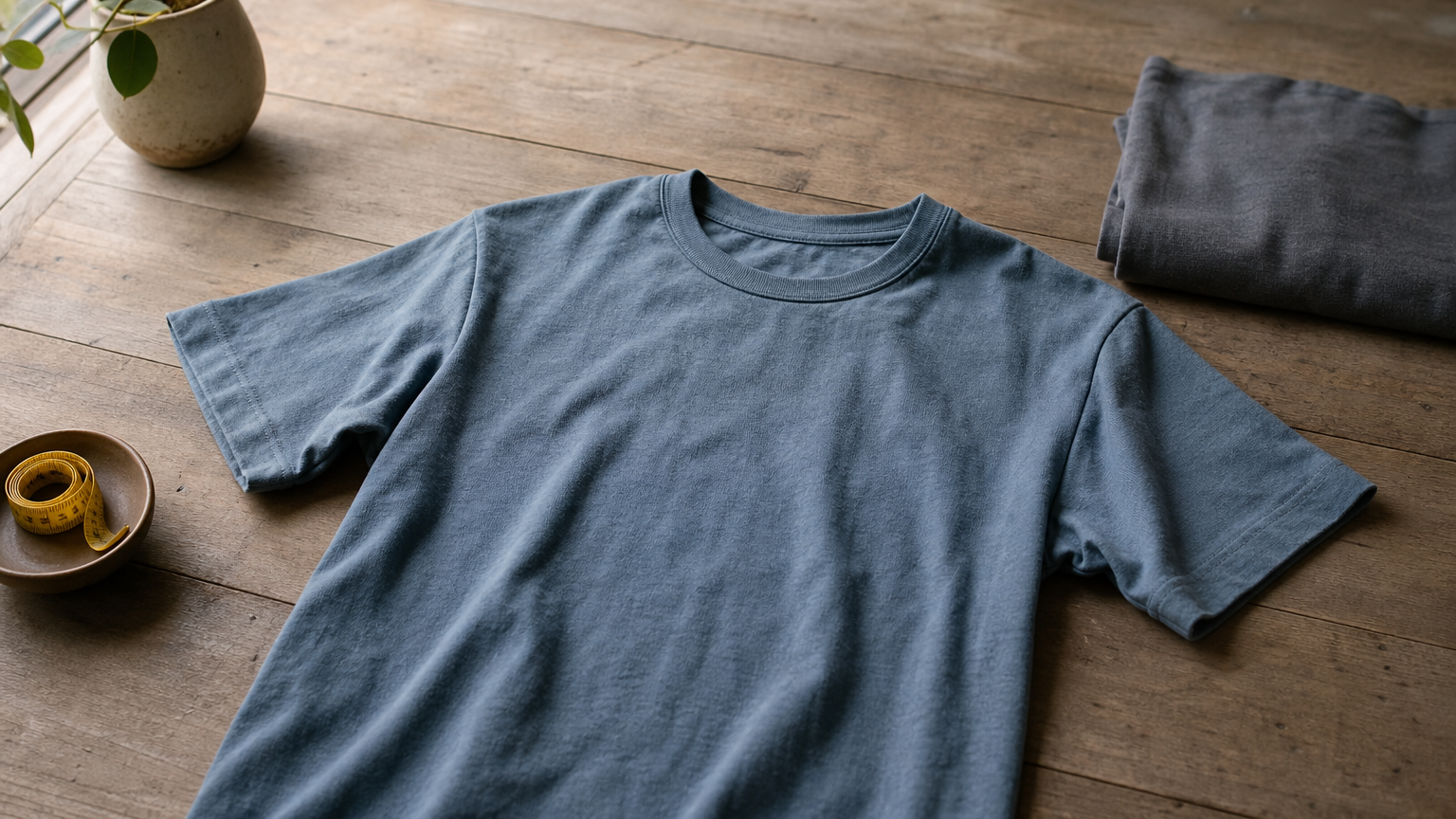
The crew neck is the default tee collar and the one every other style gets measured against. If you only stock one neckline, this is it.
How to spot it
The crew neck is a round opening that sits close to the base of the neck. It is finished with a ribbed band that stretches over your head and springs back into shape. Look for these features:
- A plain round opening with no points, buttons, or folds
- A ribbed band, usually with reinforced stitching on the inside
- A high position that covers the collarbone area
Who it suits
Crew necks work for men, women, and unisex lines alike, which is why they fill most blank-apparel catalogs. They cover more of the chest and neck than any other tee collar. That makes them a good fit for cooler weather, layering under shirts, and conservative workplaces.
If you are unsure which of these t-shirt collar styles to start with, start here. It is the lowest-risk choice for uniforms, team wear, and event merchandise, because nearly everyone is comfortable in it.
Print and design notes
A crew neck gives you the largest clean print area on the front of a tee, so it suits big graphics and detailed artwork. A common starting point for a full-chest design is about 2 to 3 inches below the bottom of the neckband.
The crew neck is the safest canvas for a big graphic because nothing interrupts the chest.
Two quality checks matter more than anything else:
- Look for a double-stitched band, since a thin single-stitched band stretches out first.
- Choose pre-shrunk cotton or a cotton-poly blend for bulk orders so the shirt and print keep their proportions after washing.
2. V-neck
The V-neck is the most popular alternative to the crew neck in men's t-shirt collar styles. It reads a little sharper without adding any buttons or folds.
How to spot it
The V-neck dips to a point at the center of the chest, and the band follows the V and joins at the tip. Depth varies a lot. A standard V falls an inch or two below the collarbone, while a deep V plunges several inches and is a clear fashion statement.
- Pointed opening at center front
- Band that meets in a seam at the tip
- Depth that ranges from shallow to plunging
Who it suits
The V draws the eye downward, so it visually lengthens the neck and torso. Men with broader shoulders or a shorter neck often prefer it to a crew. It is also the usual choice for undershirts, because it stays hidden under an open dress shirt collar.
Deep V styles suit fashion-forward men's and women's lines. They need stretchy, well-fitted fabric, because a loose deep V gapes when the wearer bends over.
Print and design notes
The point of the V eats into the printable area at the center of the chest. Start artwork a few inches below the tip, or move to a left-chest placement. Wide horizontal designs work better than tall narrow ones here.
On a V-neck, place the print relative to the tip of the V, not the top of the shirt.
- Check the stitching at the tip, because that is where cheap shirts tear or fray.
- Match the depth to your audience: shallow for professional and service uniforms, deep for bold retail lines.
3. Scoop neck
The scoop neck is the open, relaxed cousin of the crew neck. You will see it most often in women's tees and warm-weather collections.
How to spot it
The scoop neck has a wide, U-shaped curve that sits lower than a crew neck. It frames the collarbone and upper chest, and the band follows the curve without any point. The curve ranges from a modest scoop to a wide, low one.
- Rounded U shape, wider than a crew
- Lower front than a crew neck
- Visible collarbone
Who it suits
Scoop necks are common in women's t-shirts and increasingly in unisex fashion lines. They breathe well, so they suit summer collections, resort wear, yoga, and fitness brands. The low neckline also shows off necklaces, which makes it popular with style-focused customers.
Men's lines rarely use a deep scoop. If you want a softer men's option, a shallow scoop or a slightly wider crew gets the same relaxed effect.
Print and design notes
Because the neckline sits lower, you can start a print closer to the opening than on a crew. About 1 to 2 inches below the lowest point of the curve is a reasonable range to test. Smaller, centered artwork looks better than a huge block graphic.
A scoop neck calls for smaller, centered artwork placed relative to the lowest point of the curve.
- Choose fabrics with good drape and recovery, such as tri-blends, so the curve holds its shape.
- Pair the open neckline with a body fit that is not boxy, or the whole shirt looks baggy.
4. Boat neck
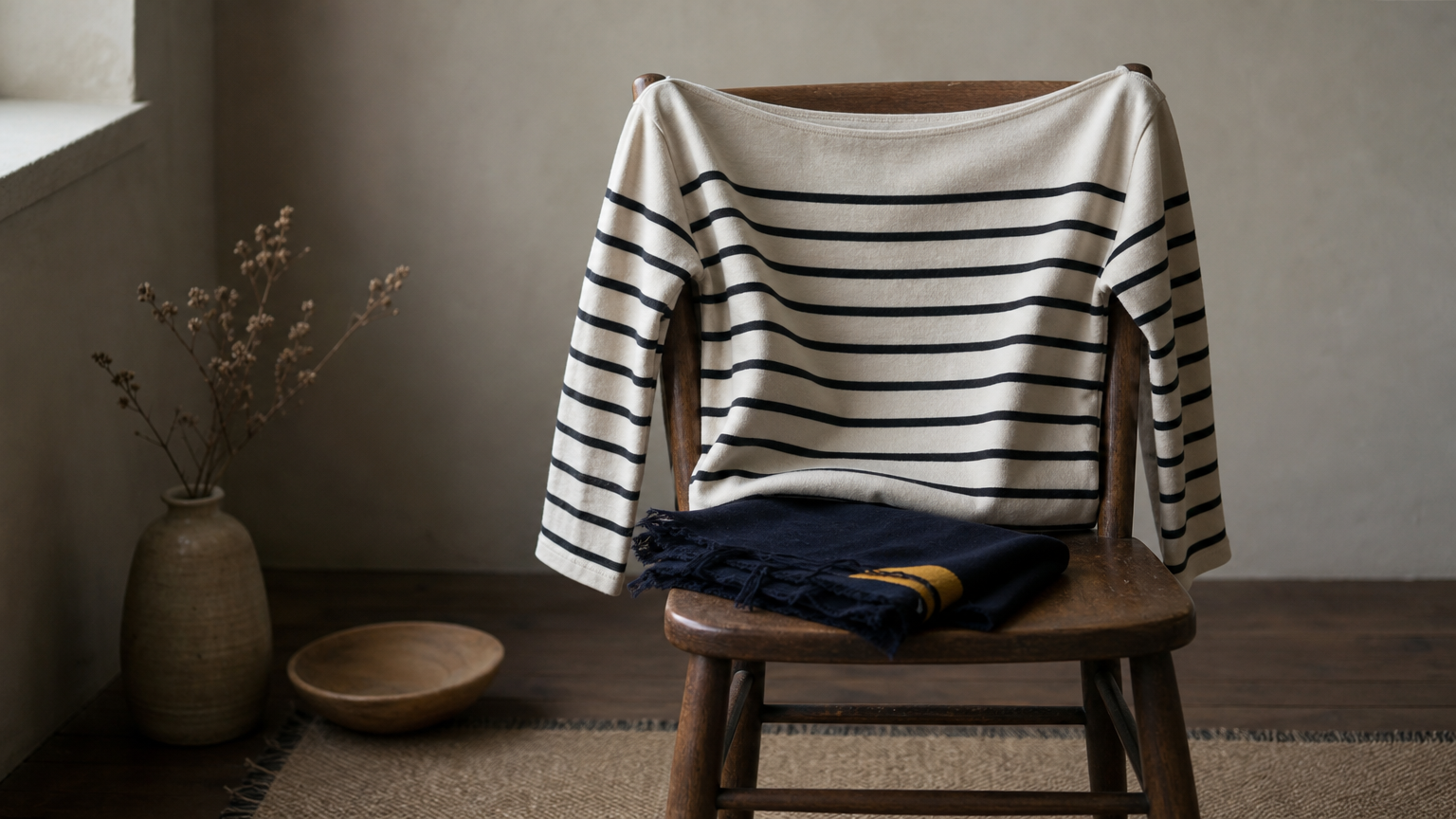
The boat neck, or bateau, is the elegant, slightly nautical option. It is less about coverage and more about a clean horizontal line.
How to spot it
The boat neck is a wide, shallow neckline that runs nearly shoulder to shoulder. It sits high at the front and back, and it shows the collarbones. The classic example is the French Breton striped top.
- Very wide, shallow opening
- Straight horizontal line across the chest
- Exposed collarbones, high front and back
Who it suits
Boat necks are strongest in women's and boutique lines, and they give coastal, resort, and Parisian-style brands an easy visual identity. They are a rare men's option. The wide opening shows more shoulder, so it suits customers who want a polished casual look rather than a sporty one.
Fit matters more here than on any other neckline. A wide opening on a poorly cut shoulder slides sideways and looks careless.
Print and design notes
The boat neck sits high, so the front chest area stays workable. Even so, the style looks best with minimal branding: a small chest emblem, a sleeve print, or fine stripes. Large central graphics fight the clean horizontal line.
The wide, flat line of a boat neck suits small, deliberate prints, not loud graphics.
- Ask for snug, well-constructed shoulder seams so the neckline stays put.
- Pick structured fabrics like a heavier jersey knit. Thin jersey makes the neckline droop.
5. Henley
The henley adds a button placket to a round neckline. It is the easiest way to make a tee look more considered without moving to a full polo.
How to spot it
The henley has a round, collarless neckline and a short button placket at the front. Most have two to five buttons, and you can leave them open or closed. It takes its name from the rowing town of Henley-on-Thames, where the style was worn by rowers.
- Round band, no folded collar
- Vertical button placket, usually two to five buttons
- Often seen in long-sleeve and waffle-knit versions
Who it suits
Henleys suit men and women who want a casual shirt with a little more structure. The vertical placket lengthens the torso, and the open buttons let you adjust ventilation. They fit lifestyle, heritage, and outdoor brands well, and they make comfortable uniforms for cafes, breweries, and creative offices.
If you offer custom shirt collar styles to small businesses, the henley is a good "step up" option from a basic crew. It looks professional without feeling stiff.
Print and design notes
Treat the placket as a no-print zone. Heat and ink do not behave well over buttons and stitching, and the print distorts. Put artwork on the left chest, on a sleeve, or well below the last button.
On a henley, print around the placket, never over it.
- Look for a reinforced placket and sturdy buttons so the front keeps its shape.
- Consider the long-sleeve version if you want extra print locations on the sleeves.
6. Polo
The polo collar is the only style in this list with a true folded collar. It sits between a tee and a dress shirt.
How to spot it
The polo has a soft, turn-down knit collar attached to a short placket with two or three buttons. Most polos use a piqué knit, which has a textured, waffle-like surface. The collar points sit flat against the chest.
- Folded-down collar, usually knit
- Placket with two or three buttons
- Textured piqué fabric in many versions
Who it suits
Polos are the standard smart-casual uniform. They work for corporate staff, golf and tennis clubs, trade shows, and hospitality. They suit men and women, and many brands offer separate men's and women's cuts. A polo signals more polish than any other tee-style shirt, so use it when you want to look professional without a button-up.
For premium merchandise, a plain polo with a small logo often outsells a printed tee at the same price point, because it reads as clothing people wear to work.
Print and design notes
The standard logo spot is the left chest, in the space between the placket and the sleeve seam. A design 3 to 4 inches wide is typical. Large chest graphics are awkward because the placket splits the front.
A polo is a left-chest garment, so design the logo small and let the collar do the talking.
- Test fine detail on piqué first, because the texture can blur thin lines and small text.
- Protect the buttons during heat pressing and use a pillow to flatten the placket area.
7. Mock neck
The mock neck gives you some of a turtleneck's coverage without the bulk. It is the minimalist, fashion-forward pick.
How to spot it
The mock neck has a short, close-fitting band that rises up the neck and stays upright. It does not fold over, which is the difference from a turtleneck, whose taller tube folds down on itself. It sits somewhere between a crew and a turtleneck.
- Short standing band, a bit taller than a crew
- No fold, no collar points
- Smooth, architectural look at the neck
Who it suits
Mock necks suit minimalist, premium, and streetwear-leaning brands, and they work for both men's and women's collections. They layer cleanly under blazers and open shirts and add warmth without a heavy knit. Creative studios, galleries, and upscale retail use them for staff apparel because they look intentional.
They are less common as blanks than crews, so check availability and minimums with your supplier before you commit to a design.
Print and design notes
The collar is already the statement, so keep artwork restrained. Think a small chest print, a sleeve print, or a mark on the back just below the band. Comfort is critical, because a tight band is the first thing wearers complain about.
With a mock neck, let the collar be the feature and keep the print small.
- Pick stretch fabrics such as cotton with a little spandex so the band is snug but not restrictive.
- A good fit test is two fingers between the band and the neck.
8. Ringer
The ringer is a crew neck with a contrasting band. It adds color and attitude without changing the shape.
How to spot it
The ringer tee looks like a crew neck, but the collar band and sleeve hems use a contrasting color. The band is often slightly thicker than a standard crew band. The body is usually a solid, which lets the trim stand out.
- Crew neck shape
- Contrasting ribbed collar band
- Matching contrast trim on the sleeve hems
Who it suits
Ringers give a retro, sporty look that suits youth brands, teams, camps, and casual retail lines. They work for men, women, and kids. They also give you a simple way to add brand colors to a shirt without printing anything.
If you are building custom shirt collar styles for a club or school, the contrasting trim is a ready-made brand element. A navy shirt with red trim says "team" before anyone reads the logo.
Print and design notes
The shirt body is a crew-neck canvas, so you can print the same way, about 2 to 3 inches below the band. The main decision is color: your print either harmonizes with the trim or deliberately contrasts with it.
On a ringer, the collar trim is part of the design, so choose print colors to match or contrast with it.
- Confirm the trim colors are available in the quantities you need before you commit.
- Check that the trim color does not bleed into the body color when the shirt is washed.
How to choose between t-shirt collar styles
Choose by working from the use of the shirt, not the neckline you like best. Start with who wears it and where, then check what the artwork needs, then check the collar construction.
Side-by-side comparison
This table sets the eight collars against the things that usually decide the purchase.
| Collar | Neckline shape | Look | Front print room | Best for |
|---|---|---|---|---|
| Crew neck | Round, high | Classic casual | Largest | Uniforms, graphic tees, layering |
| V-neck | Pointed, dips at center | Slightly dressier | Reduced near the tip | Men's casual, undershirts |
| Scoop neck | Wide U, low | Relaxed, open | Reduced, starts lower | Women's tees, warm weather |
| Boat neck | Wide, shallow, shoulder to shoulder | Nautical, elegant | Good, suits small prints | Boutique, coastal brands |
| Henley | Round with button placket | Rugged casual | Placket interrupts center | Lifestyle brands, long sleeves |
| Polo | Folded collar and placket | Smart casual | Left chest only | Corporate, clubs, hospitality |
| Mock neck | Short standing band | Minimal, premium | Small or sleeve prints | Layering, cooler weather |
| Ringer | Crew with contrast band | Retro, sporty | Same as crew | Teams, brand-color merchandise |
Match the collar to the use
Think about the occasion and audience first. These pairings cover most situations:
- Giveaways, events, and uniforms: crew neck
- Business casual and client-facing staff: polo, henley, or mock neck
- Hot weather and resort lines: scoop or V-neck
- Fashion and boutique collections: boat neck, mock neck, or scoop
- Big, detailed graphics: crew neck or ringer
Pick the collar for the wearer and the occasion first, then fit the artwork to it.
Check construction before you order
Collar construction decides whether a shirt still looks right after a year. A ribbed band gives stretch and recovery, which keeps the neckline from going wavy. A self-fabric band cut from the shirt's own material gives a smoother, more modern look, but it holds its shape less forcefully. Narrower, finer bands usually read as premium, while wide, chunky bands read as basic.
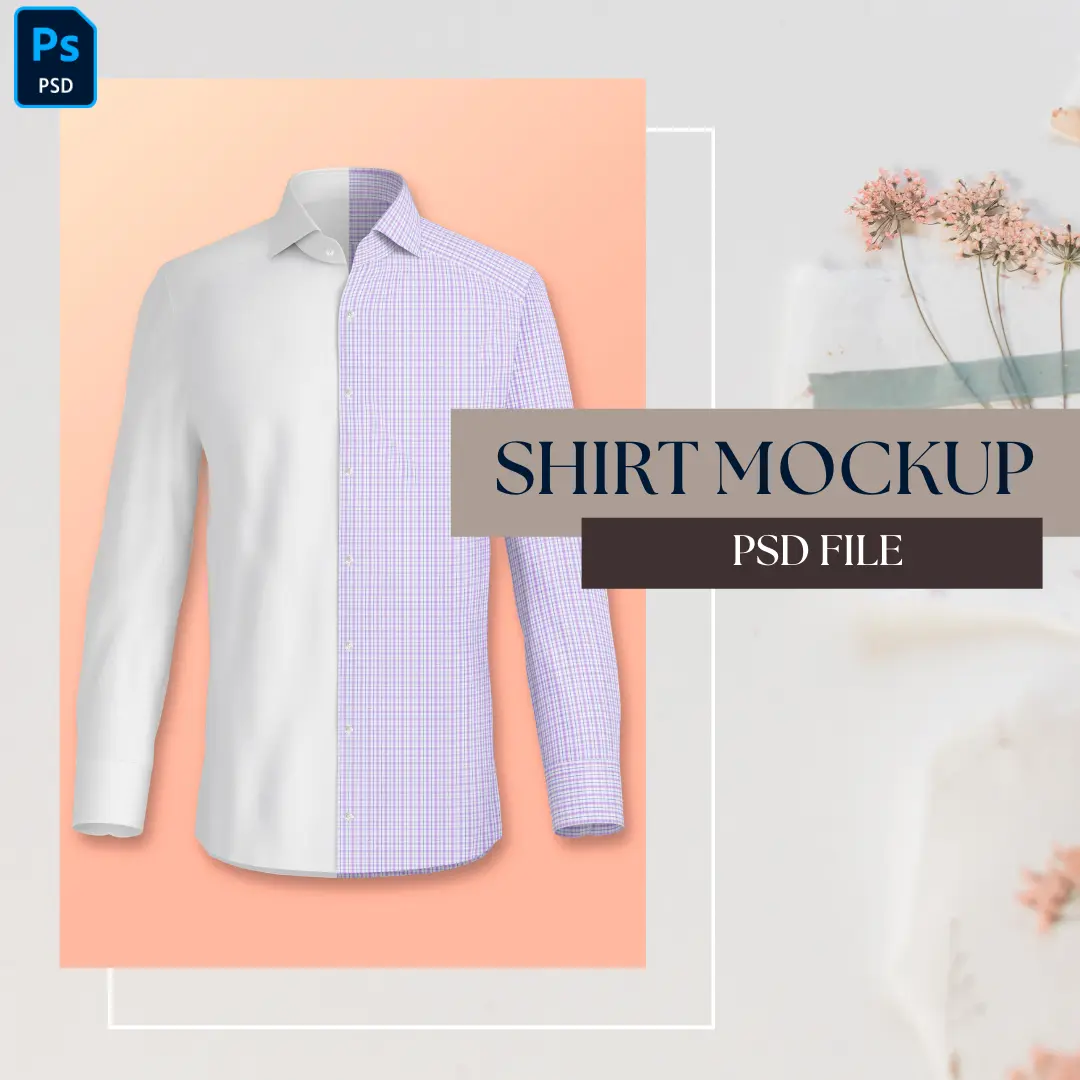
Order a sample before a bulk run, and wash it. If you present designs digitally, preview them on the right collar first. At ShirtsMockup, the Professional Dress Shirt Mockup lets you add different fabrics on the collar and cuffs, which helps when you show a client a collared shirt before production.
Choosing your collar
The right collar comes down to fit, occasion, and print space. The crew neck is the safe default, the V-neck and henley add polish, the scoop and boat neck relax the look, and the polo, mock neck, and ringer each add a clear point of view. Settle the neckline before you finalize the artwork, because the collar decides where the design can go.
If you design collared shirts and want to show them to clients without a photo shoot, you can preview collars and cuffs in a collar-and-cuff dress shirt mockup. Swap fabrics in Photoshop, compare options, and export images for your store or presentation.
Comments
No comments yet. Start the conversation.