By Tojo15 min read
Business suit color combinations are the pairings of suit, shirt, tie, shoes, belt, and accessories that make up a professional outfit. The safest formula works almost everywhere: a navy or charcoal suit, a white or light blue shirt, a tie in burgundy, navy, or silver, and black or dark brown leather that matches your belt. Keep the visible palette to about three colors, and the outfit reads as deliberate.
That formula is a starting point, not the whole answer. This guide gives you a chart for the core suit colors, a step-by-step method for building an outfit, rules for pairing a jacket with different pants, adjustments for skin tone, setting and season, and a few unusual combinations that still pass in an office.
We build PSD suit mockups at ShirtsMockup, so designers and tailors can test color pairings on-screen before any fabric is cut or a photo shoot is booked. The final section shows you how to run the same test yourself.
Why business suit color combinations matter
Color combinations matter because people read them before they notice fit or fabric, and because a few reliable pairings let one suit do several jobs. A good combination is a system you can repeat, not a lucky guess.
What a combination includes
A combination is every visible color from the jacket down to the socks. Think of it in four parts. The base is the suit. The contrast is the shirt. The accent is the tie and pocket square. The leather is the shoes and belt, which follow the base.
You may have heard of a "3 color rule" for men. This is its practical form: keep the suit, shirt, and accent to three colors, and treat leather and socks as neutrals that follow the suit. Pattern adds interest but does not count as a new color if it repeats a color you already have.
- Base: navy, charcoal, grey, brown
- Contrast: white, light blue, pale pink, cream
- Accent: burgundy, silver, gold, forest green, deep navy
- Leather: black or dark brown, matched between shoes and belt
How color changes the message
Dark suits such as navy and charcoal read as serious and dependable. Lighter suits read as relaxed and approachable. The shirt then sets the level of contrast, and contrast is what signals formality.
A white shirt under a navy jacket is the sharpest, most formal contrast. A light blue shirt under the same jacket with a quiet tie is softer. Choose the contrast to match the stakes. A contract negotiation calls for the strongest version, and a Friday with no external meetings does not.
One suit, many outfits
A single navy suit can cover most of a working week once you change the shirt, tie and shoes. Here are three outfits built on the same base:
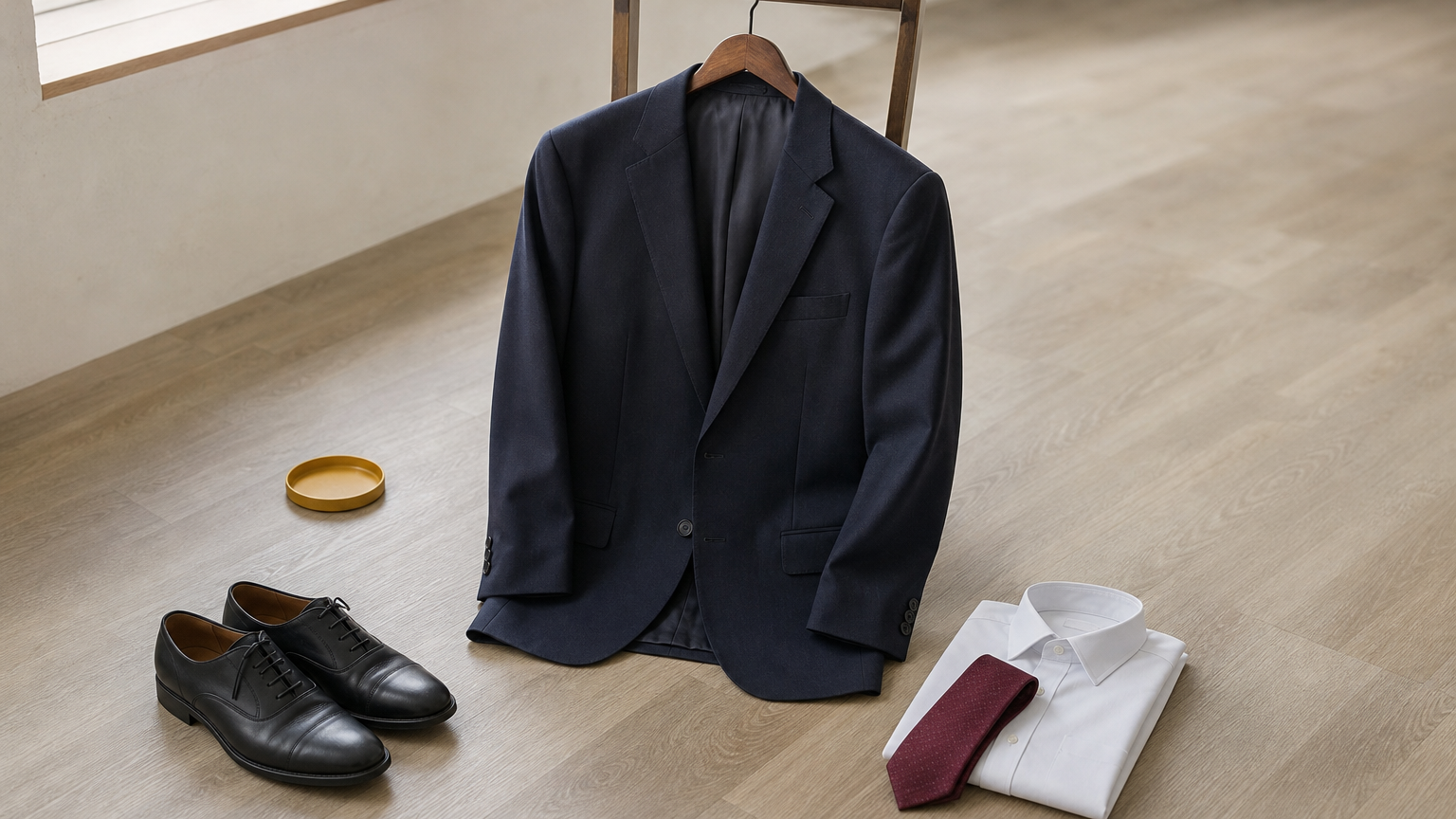
- Interview: white shirt, burgundy tie, black oxfords, black belt.
- Client lunch: light blue shirt, textured silver-grey tie, dark brown shoes and belt.
- Casual Friday: light blue shirt with an open collar, no tie, brown loafers.
One suit, one contrast, one accent, and leather that follows the suit: that is the whole system.
The core business suit colors and what pairs with each
Navy and charcoal carry business wear. Mid and light grey, brown and black fill narrower roles. The chart below gives you the pairings in one place, and the notes after it explain the reasoning.
Quick-reference chart
Use this table as a men's suit color combinations chart. Every row follows the same logic: a contrasting shirt, a tie darker than the shirt, and leather that suits the jacket.
| Suit color | Shirts | Ties | Shoes and belt | Best for |
|---|---|---|---|---|
| Navy | White, light blue, pale pink | Burgundy, gold, dark green, silver | Black, dark brown, burgundy | Interviews, client meetings, daily office wear |
| Charcoal | White, light blue, pale pink, lavender | Navy, burgundy, silver, deep green | Black, dark brown, oxblood | Conservative offices, formal meetings |
| Mid to light grey | White, light blue, pale pink | Navy, burgundy, forest green | Dark brown, black | Warmer months, daytime business |
| Black | White | Black, silver, deep red | Black only | Evening events, ceremonies |
| Brown or tan | White, cream, light blue | Navy, olive, burgundy | Dark brown | Business casual, creative offices |
Navy and charcoal: the two to rely on
Navy is the most flexible suit you can own. It works in daylight and under office lighting, flatters most complexions, and pairs well with both black and brown shoes. If you buy one suit, buy this one.
Charcoal is slightly more serious and the more neutral of the two. It does not compete with your shirt or tie, so it accepts bolder accents than navy does. A textured tie in knit or grenadine keeps a charcoal outfit from feeling like a uniform. Pair it with black or dark brown shoes, or oxblood for warmth.
Navy gives you range and charcoal gives you authority, so a two-suit base covers nearly every business situation.
Grey, brown and black: where each earns its place
Light and mid grey suits suit spring, summer and daytime meetings. They look fresh but show every fit flaw, so tailoring matters more than with dark cloth. White or light blue shirts with a navy tie are the clean choice.
Brown and tan suits fit business casual and creative offices. Traditional finance and law still lean conservative, so check the room before you wear one to an important meeting. Navy ties and cream or white shirts are the safest partners.
Black is the most formal color and the most often misused. It belongs to evening events and ceremonies, can look harsh in daylight offices, and takes black shoes only. Treat it as an occasion suit, not a work default.
You may see a "five suit rule" mentioned online. Treat it as a buying order rather than a law: navy, charcoal, light grey, a brown or tan, then black. Three to five suits cover most careers.
How to build a suit outfit from jacket to shoes
Build the outfit in a fixed order: suit first, then shirt, tie, leather, and finally small accessories. Deciding in that order stops the small items from dictating the big ones.
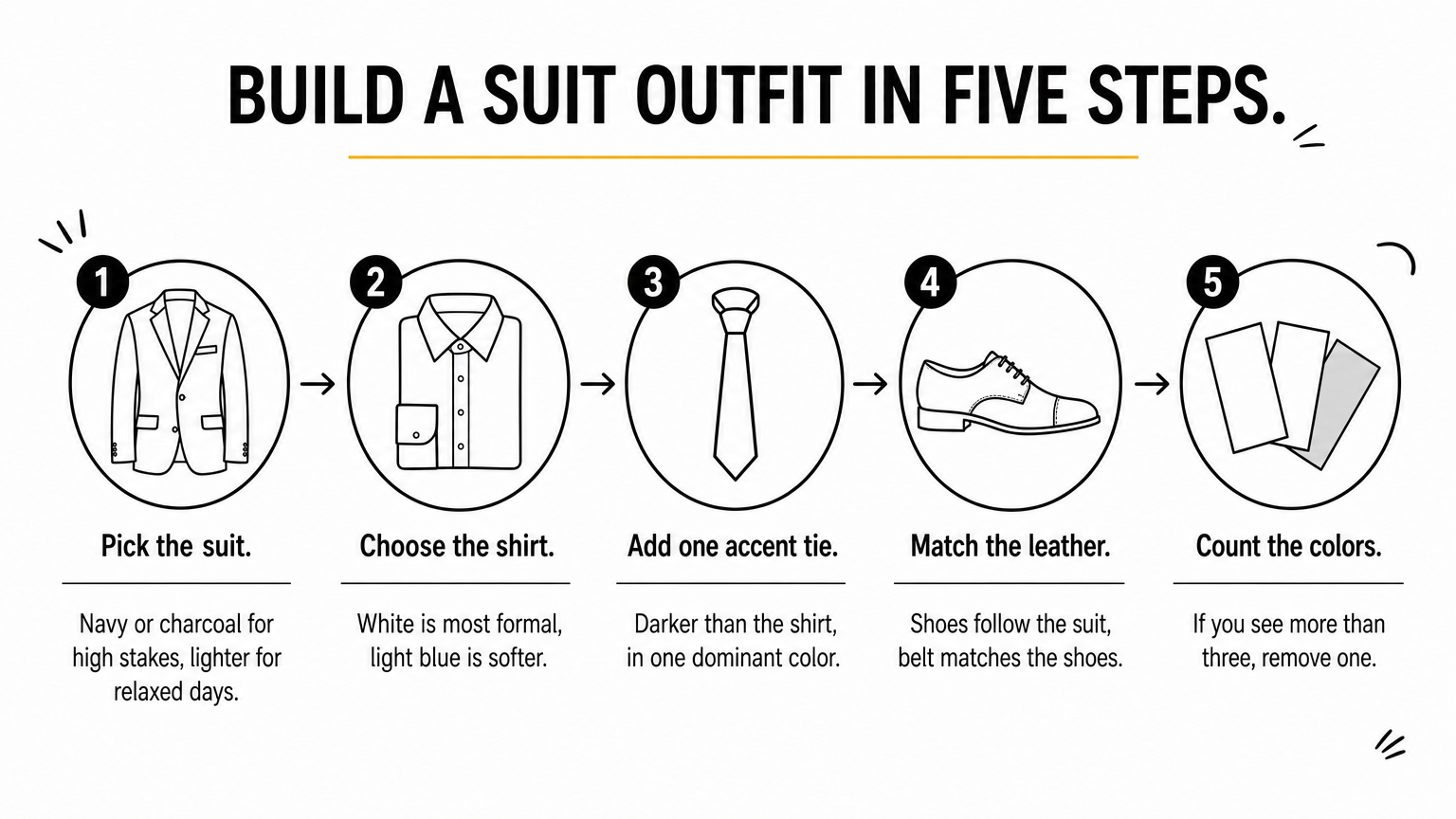
The step-by-step method
- Pick the suit by the stakes. Navy or charcoal when the meeting has consequences, lighter or brown when the setting is relaxed.
- Choose the shirt for contrast. White is the most formal; light blue and pale pink are softer.
- Choose one accent tie. It should be darker than the shirt and in a single dominant color.
- Match the leather. Shoes follow suit, and the belt matches them in color and finish.
- Match socks to the trousers. Dark, plain socks never draw attention.
- Add a pocket square that complements the tie. It should echo a color, not copy the tie.
- Match metals. Watch, belt buckle, cufflinks, and tie bar should share one tone, silver or gold.
- Count the colors. If you see more than three, remove one.
Shirt and tie rules
The tie should be darker than the shirt, and the outfit should have at least one clear point of contrast in color, pattern or texture. Dark ties on light shirts look anchored, while a light tie on a dark shirt can look top-heavy.
When you mix patterns, vary their scale. A fine pinstripe shirt takes a larger-scale tie, and a bold check jacket takes a micro stripe shirt. Match tie width to lapel width as well. A narrow tie under wide lapels looks off.
| Shirt | Tie colors that work | Note |
|---|---|---|
| White | Burgundy, navy, silver, forest green, gold | Works with every core suit |
| Light blue | Navy, burgundy, silver, gold | Keep the tie visibly darker |
| Pale pink | Navy, charcoal, burgundy | Keep it dark and quiet |
| Lavender | Charcoal, navy, silver, plum | Best under grey and navy |
| Cream | Navy, olive, burgundy | Best with brown, tan and green |
Shoes, belt and finishing details
Black shoes are right with every core suit and the only choice with black. Dark brown works with navy, charcoal, grey, and brown, and is generally a poor match for a black suit. The belt color should match the shoe color, and a thin dress belt looks better than a thick casual one.
Here are two complete examples, each within the three-color limit:
- Navy suit, white shirt, burgundy tie, black oxfords, black belt, navy socks, silver watch and tie bar. The three colors are navy, white, and burgundy.
- Charcoal suit, light blue shirt, navy knit tie, dark brown shoes and belt. The three colors are charcoal, light blue, and navy.
Leather follows the suit, the tie stays darker than the shirt, and three visible colors is plenty.
Suit coat and pants color combinations for separates
If you want to match, keep the jacket and pants identical. If you split them, keep the jacket the same shade as the trousers or darker, and make any difference obvious rather than close. Two near-matching shades read as a mistake, not a choice.
When a matched suit is the right call
Wear a matched suit for interviews, formal meetings and anything where you want no questions asked. A matched suit also lets you recombine the pieces later. A navy jacket with grey trousers is a business casual staple once you drop the tie. For this reason, separates are best built from a suit you already own and trust.
Jacket and pants pairing chart
This table answers most "suit pants color" questions. It assumes a solid jacket and solid trousers.
| Jacket | Pants | Result |
|---|---|---|
| Navy | Mid grey | Classic, works from business to business casual |
| Navy | Charcoal | Works if the navy is clearly blue, otherwise it looks accidental |
| Charcoal | Light grey | Good for warm months, keep the shirt light |
| Tan or camel | Navy | Smart casual, not for conservative offices |
| Brown | Grey | Works in tobacco or chocolate brown with mid grey |
| Black | Grey or navy | Avoid, it looks like a mismatched formal suit |
| Navy | Black | Avoid, the two dark shades fight each other |
Rules that prevent mismatched pairs
First, keep a one-step contrast between the pieces: charcoal over light grey, or navy over mid grey. Second, keep the fabric weight consistent, since a flannel jacket paired with lightweight summer trousers looks like it was assembled from two outfits. Third, check the pair in daylight, because navy and black are far closer in a dim room than outdoors. Shirt, tie, and leather then follow the jacket, not the trousers.
Match for stakes, split for style, and never pair two shades that are almost the same.
How to match combinations to your skin tone and setting
Choose the suit by setting first, then adjust shade and accent for your coloring and the season. Setting decides what is acceptable, and your coloring decides what looks best within that range.
Skin tone, undertone and hair contrast
A quick check for undertone is the veins on your inner wrist in daylight. Blue or purple veins suggest a cool undertone, green suggests a warm undertone, and a mix suggests neutral. This is a rough guide, not a diagnosis.
Cool undertones sit well with blue-based and grey-based suits: navy, charcoal and cool greys. Warm undertones suit chocolate brown, olive, warm navy and camel, and tend to look better away from icy greys. Neutral undertones work with almost everything.
Contrast between hair and skin matters too. High contrast, such as dark hair and fair skin, can carry deep colors. Lower contrast does better in mid tones like mid grey or a lighter navy, because very dark suits can overpower the face.
Industry and dress code
This table sets suit, shirt and tie against the setting. It also answers the "most popular suit colors" question: trend colors change from year to year, but navy and charcoal remain the dependable business choices.
| Setting | Suit | Shirt | Tie |
|---|---|---|---|
| Job interview | Navy or charcoal | White | Conservative solid or small pattern |
| Finance, law, consulting | Navy, charcoal | White, light blue | Solid or subtle stripe |
| Creative or business casual | Mid grey, brown, muted green | Light blue, cream, pale pink | Knit tie, or none |
| Summer client event | Light grey, tan | White, light blue | Navy or soft pattern |
| Evening dinner | Charcoal, dark navy, black | White | Silver, deep red, black |
Season and fabric
In spring and summer, lighten up with light grey, tan and light blue shirts in cotton, linen or lightweight wool. In autumn and winter, move to charcoal, navy and brown in heavier wool or flannel, with ties in burgundy, olive or rust. The rules above stay the same; only the shade and weight change.
They also carry over to women's suits. Keep a base color, a contrasting blouse or shell, one accent, and neutral shoes.
Setting decides what is acceptable, and your coloring decides what looks best inside that range.
Unique suit color combinations that still look business
Unusual combinations work in a business setting when you change only one variable at a time. Keep the suit conservative and add the surprise in the tie, shirt or lining, or keep the accessories quiet and let a muted suit color carry the outfit.
One surprise, everything else quiet
Here are five combinations that are distinctive without leaving business territory:
- Charcoal suit, lavender shirt, plum or navy tie. Soft color on a neutral base.
- Navy suit, white shirt, dark green tie, burgundy lining. The surprise is hidden until you open the jacket.
- Forest green suit, cream shirt, burgundy or chocolate brown tie, brown shoes. The cream shirt softens the green.
- Chocolate brown suit, light blue shirt, russet or navy tie. Warm and calm, suited to creative offices.
- Light grey suit, white shirt, navy tie, dark brown shoes. A clean modern contrast.
Tonal and earth-tone approaches
A tonal outfit stays in one color family, such as a navy suit, light blue shirt, and dark blue silk tie. It reads polished and takes little effort. Earth tones such as brown, olive, and camel suit warmer coloring and relaxed offices, but check the culture before wearing them to a first meeting.
Where to hide the personality
The safest place for individuality is small and hidden: a patterned lining, a pocket square, socks. If you are making suits for clients, a contrasting lining is a low-risk way to offer something personal. A conservative exterior with an expressive interior sells well because the wearer controls who sees it.
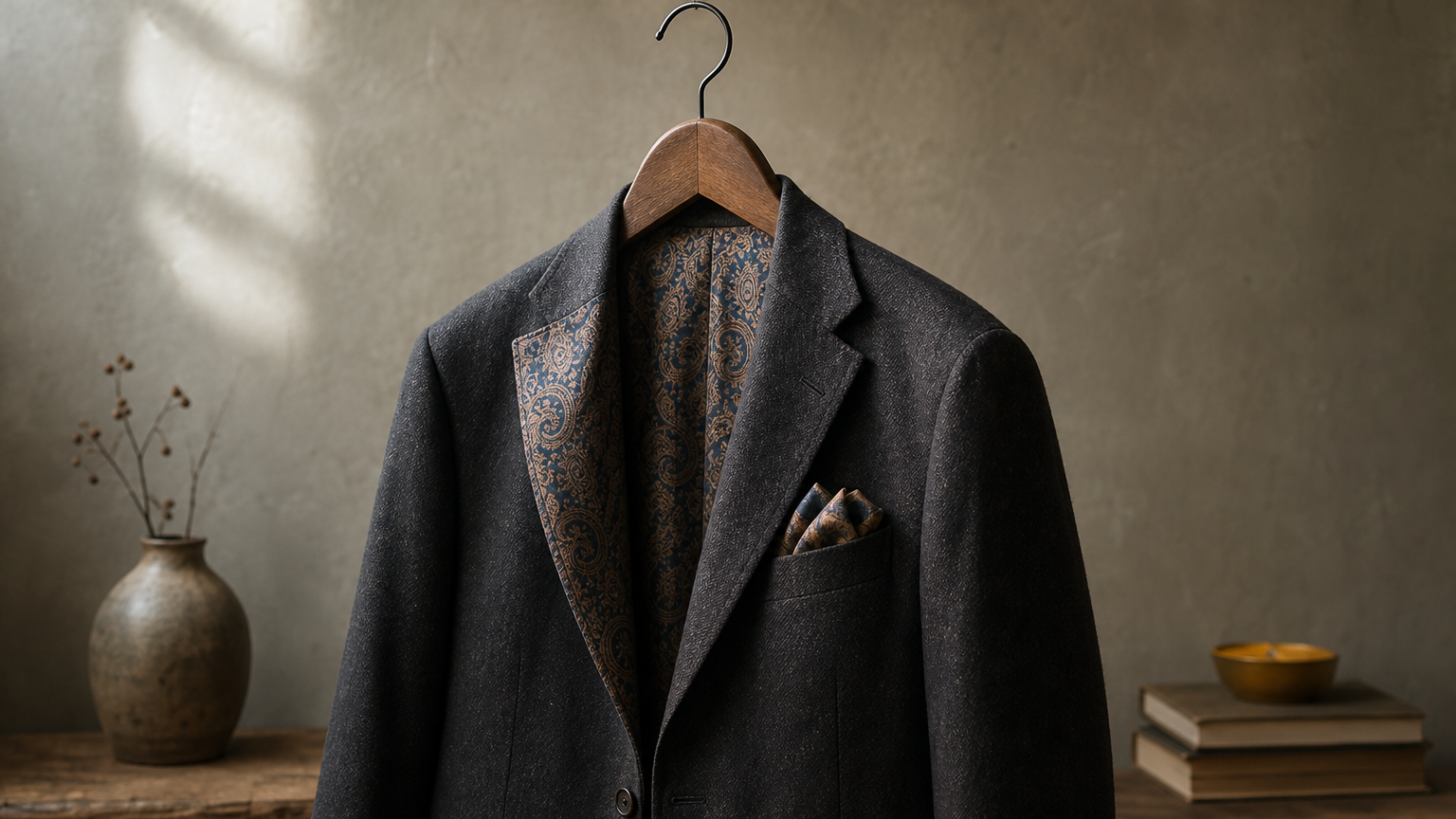
Change one thing at a time, and let the rest of the outfit stay quiet.
How to test suit color combinations before you commit
You can test a combination on screen before you buy cloth, order stock, or book a shoot. A layered PSD mockup lets you swap suit, trouser, shirt, and tie fabrics in seconds, which is especially useful for designers, tailors, and online sellers.
Why designers and brands test first
A color that looks good in a swatch can look different across a full jacket. Comparing five combinations on one body shape shows which pairings feel balanced. It also gives you product images without a physical sample.
ShirtsMockup suit mockups use a smart layer for the fabric. You open it, drop in your texture or pattern, and save, and the suit keeps its folds and shadows. The Men's Tailored Suit Mockup ($25) comes with 10 repeatable suit fabrics and works with Photoshop CC 2023 or later. The PSD Custom Suit Mockup Template ships with sample fabrics for the suit (7), trousers (7), shirt (5), and tie (6), so you can build a whole outfit straight away.
A workflow for comparing combinations
- Open the mockup and replace the suit fabric with your first color.
- Replace the shirt and tie fabrics with your first pairing.
- Save, export, and repeat for each combination on your list.
- Place the exports side by side and cut any outfit with more than three colors.
- For separates, test jacket-and-trouser pairings from the chart in section four.
For a jacket lining or a trouser style, the shop also carries dedicated lining and trouser mockups.
What to check before you publish
Screens do not reproduce cloth exactly. Calibrate your monitor if you can, and compare the final choice against a physical swatch before you commit. Avoid pure black on screen, since it hides fabric detail, and test the outfit against a plain background and a lighter one. If a combination only works in one of the two, it is too fragile for a product page.
A mockup tells you whether a combination works, and a physical swatch tells you whether the cloth will match it.
Start with navy or charcoal, then add one variable
Business suit color combinations come down to a short list of habits. Start with a navy or charcoal base, add a contrasting shirt, choose a darker accent tie, and let your shoes and belt follow suit. Keep to three visible colors, split jacket and pants only with an obvious contrast, and save bolder choices for one small detail at a time.
If you design, tailor, or sell suits, you can check all of this before spending on fabric. Try the combinations on the custom suit mockup PSD template, which includes sample fabrics for the suit, trousers, shirt, and tie.
Comments
No comments yet. Start the conversation.